Seoul is world-famous for high-tech skincare, so it would be easy to spend your entire trip focused on the latest K-beauty trends. But if you look at how locals maintain their long-term health and beauty, you’ll discover a parallel universe centred around hanbang, or traditional Korean medicine.

Over the years, I’ve tried out these traditional hanbang clinics in Seoul firsthand to fix my own health and alignment issues – and I’ve got a pretty good handle on how the entire system works. Here’s my personal, practical breakdown of what traditional Korean medicine treatments actually feel like, what they can realistically fix, and how to book an appointment yourself with zero stress.
*Any purchases made through affiliate links here help run this site. This post is based on my personal experience only and is not intended as medical advice. Please consult a qualified healthcare professional before undertaking any treatment.
TITLE: 🌿 Korean Medicine in Seoul: Treatment Snapshot INTRO_START Finding the right traditional Korean medicine clinic in Seoul is one way to access deep, systemic healing without harsh chemical side effects. However, trying to figure out which specialty hanbang you actually need — and booking them without speaking fluent Korean — can be overwhelming. I’ll demystify the entire process here, describe some common Korean traditional medicine treatment options, and show you exactly how to navigate it all without any added stress. INTRO_END INFO1_ICON: 💆♀️ INFO1_LABEL: Core Benefits: INFO1_TEXT: Non-invasive, zero surgical downtime, root-cause healing INFO2_ICON: 🦴 INFO2_LABEL: Top Treatments: INFO2_TEXT: Chim (acupuncture), Buhwang (cupping), Chuna (manual alignment), and Hanyak (custom herbal medicine) INFO3_ICON: 🏥 INFO3_LABEL: Ideal for: INFO3_TEXT: Chronic alignment pain, facial asymmetry, systemic healing, and long-term internal health. INFO4_ICON: 🗺️ INFO4_LABEL: Booking Hack: INFO4_TEXT: Use English-friendly platforms to see transparent flat-rate prices BTN_TEXT: SKIP TO QUICK-REFERENCE TREATMENT & CLINIC COMPARISON ↓ BTN_URL: #traditional-korean-medicine-treatments-at-a-glanceWhat Is Traditional Korean Medicine?
If you’ve grown up in the West, it’s easy for your brain to drift towards alternative wellness trends or unverified home remedies when you hear about traditional medicine. But in South Korea, it’s the exact opposite. Hanbang clinics are part of a highly regulated, mainstream medical system that operates right alongside big hospitals in Seoul.

The practitioners you see at a traditional Korean medicine clinic in Seoul aren’t alternative therapists; they’re fully licensed Doctors of Korean Medicine who complete six years of intense university medical training and pass grueling government licensing exams before they can ever treat a patient.
So why should you step out of a standard hospital to try one? The answer comes down to how they approach your health.

While a dermatologist might prescribe a strong steroid cream to quickly clear up a sudden breakout, a traditional medicine doctor in Korea looks at your skin as a direct mirror of your gut and liver health.
They’ll use targeted acupuncture to stimulate sluggish circulation, physically adjust your joints to release nerve pressure, and prescribe customized plant-based hanyak herbs to calm inflammation from the inside out. It’s all about healing the body using holistic methods that have been studied and perfected over generations.

If you’re looking for sustainable, long-term body wellness without harsh chemical side effects or surgical recovery time, traditional medicine in Korea is an incredible health system to explore. It’s what I personally turn to first whenever I feel unwell.
HEADLINE: 🧘♀️ DETOX YOUR MIND WITH A MEDITATIVE SOUND REBOOT IN GANGNAM DESC_START Want to escape the noise and chaos of the city? Try pairing your physical body treatments with immersive sound healing therapy. This three-hour mindfulness experience combines deep, therapeutic singing bowls with a peaceful guided walk through the historic grounds of Bongeunsa Temple. It’s the perfect way to release deep mental tension and restore inner balance. DESC_END BTN_TEXT: RESERVE YOUR SINGING BOWL & TEMPLE EXPERIENCE HERE ➔ BTN_URL: https://creatrip.com/en/spot/12808?utm_source=AFF-recWirkTraditional Korean Medicine Treatments at a Glance
Because every Korean medicine clinic in Seoul specializes in slightly different areas of healing, figuring out where to start can feel a bit overwhelming. To save you scrolling through endless clinic pages trying to match your symptoms with the right therapies, I’ve created this chart with well known traditional medicine treatments and hanbangs for your reference.

Whether you’re trying to find a posture correction clinic to fix a stiff neck from traveling, want a targeted acupuncture face lift to balance a drooping smile, or looking into traditional korean dermatology treatment options to repair a damaged skin barrier, I hope this helps to point you in the right direction.
H1: Health Concern (Swipe ➔) H2: Recommended Clinic H3: Traditional Remedy H4: How it Helps H5: Starting Price H6: More Info ROW_START NAME: Spine and joint issues, growth clinic for kids TYPE: REBOM Korean Medicine Clinic LOC: Space Spine Correction, Chuna Therapy PRICE: Realigning structural posture issues like tech-neck, scoliosis, and pelvic tilts through physical manipulation PERK: ₩20,000 Acupuncture / ₩50,000 Bone growth exam / ₩400,000 Space Spine Alignment URL: https://creatrip.com/en/spot/15188?utm_source=AFF-recWirk ROW_END ROW_START NAME: TMJ, Facial asymmetry, buffalo hump TYPE: DUNA Korean Medicine Clinic LOC: Aesthetic Acupuncture (Mee-yong Chim), Chuna Manual Therapy, Buccal Massage PRICE: Balancing posture & facial symmetry naturally without using artificial fillers PERK: packages from around ₩180,000 URL: https://creatrip.com/en/spot/14840?utm_source=AFF-recWirk ROW_END ROW_START NAME: Sluggish metabolism, skincare aesthetics TYPE: Ri& Korean Medical Clinic LOC: Hanbang Skincare Treatments, Ear Seeding, Fire Cupping PRICE: Sluggish metabolism, weight loss, skincare PERK: starts from ₩44,000 URL: https://creatrip.com/en/spot/13411?utm_source=AFF-recWirk ROW_END ROW_START NAME: Weight management or difficulty dropping stubborn weight TYPE: Acro Korean Medicine Clinic LOC: Capsule Diet Hanyak Pills, Fat dissolving Yakchim PRICE: Appetite control and metabolism boosting via 100% herbal capsules PERK: ₩165,000 10cc yakchim / ₩650,000 3 month diet pills URL: https://creatrip.com/en/spot/15797?utm_source=AFF-recWirk ROW_END ROW_START NAME: Poor circulation, ongoing fatigue, genetic body type DNA insights TYPE: CDG (Changdeokgung) Korean Medicine Clinic LOC: Genetic Testing & 1-Day Packages PRICE: Modern genetic testing with custom herbal medicine, cupping, and pelvic alignment to pinpoint your body’s exact needs PERK: ₩260,000 1 Day Package / ₩330,000 Genetic Body Type Test URL: https://creatrip.com/en/spot/15271?utm_source=AFF-recWirk ROW_ENDWhat Hanbang Clinics in Seoul can Actually Treat
Korean traditional medicine doesn’t just offer general relaxation; they focus on targeted clinical fixes. Instead of trying to guess what a clinic does based on its name alone, it’s much easier to look at what physical issues you’re trying to solve.
Posture, Spine, Joint, and Musculoskeletal Issues
If your joints are stiff from a cramped long-distance flight or you’re suffering from unsightly tech neck, traditional Korean medical care offers structural relief. A specialized posture correction clinic in Seoul looks at your skeletal framework as part of a complete system.

Instead of just rubbing a sore lower back or prescribing medication, Korean medicine doctors assess the alignment of your entire body to find the root causes.
I actually first ended up exploring this side of traditional Korean medicine for my daughter. We wanted to try non-invasive pediatric growth treatments at REBOM Hanbang Hospital, where the doctors use precise adjustments to create space in the spine and straighten out posture to help kids grow properly.

Watching how effective they were made me jump on the table myself to deal with my own postural issues and a brutal pinched nerve in my neck.
Along with more well known Korean medicine treatments like acupucture and Chuna, they use a unique Space Spine correction program to treat spine and joint issues. It’s a fantastic structural fix that I can recommend firsthand for both kids and adults.
➜ Fix your alignment and book a posture correction session here.
NAME: REBOM Korean Medicine Clinic DESCRIPTION_START A highly regarded structural clinic in Gangnam famous for its specialized posture corrections and soft-tissue Chuna manual therapies. DESCRIPTION_END TRANSIT_LABEL: Getting There: TRANSIT_TEXT: Seoul Subway Line 7, Hakdong Station (Exit 8) ENG_LABEL: Address: ENG_TEXT: 241-16 Nonhyeon-dong, Gangnam-gu, Seoul KOR_TEXT: 서울특별시 강남구 논현동 241-16Facial Asymmetry, TMJ, and Body Contouring
If you’ve noticed a slight droop in your smile, an uneven jawline, or shoulders that sit at completely different heights, traditional Korean medicine therapies work to balance things out naturally.

Instead of relying on invasive bone shaving or painful cosmetic surgeries, practitioners use precise manual adjustments and physical muscle mapping to naturally lift loose skin, drain fluid retention, and release deep facial tension that pulls your features out of alignment.

I went to Duna Korean Medicine Clinic in Seongsu to address my own buffalo hump and facial alignment issues. They use a down-to-the-millimetre AI facial mapping tool, buccal massage, acupuncture, and other traditional Korean medicine techniques to release deep structural imbalances without any artificial fillers or surgical downtime.
➜ Get an AI facial symmetry analysis and book your buffalo hump and asymmetry treatments at DUNA Clinic here.
NAME: DUNA Korean Medicine Clinic DESCRIPTION_START A trendsetting clinic in Seongsu that specializes in natural facial muscle contouring and anti-aging aesthetic acupuncture Maps. DESCRIPTION_END TRANSIT_LABEL: Getting There: TRANSIT_TEXT: Seoul Subway Line 2, Seongsu Station (Exit 4) ENG_LABEL: Address: ENG_TEXT: 2nd Floor, STOWER, 314-5 Seongsu-dong 2-ga, Seongdong-gu, Seoul KOR_TEXT: 서울특별시 성동구 성수동2가 314-5 STOWER 2층Traditional Korean Dermatology, Skincare, and Systemic Healing
K- medicine skin therapies target deep, internal inflammation, but they also offer serious, medical-grade structural adjustments.
While traditional Korean dermatology in Seoul does offer soothing herbal products and hanyak to cool down and detoxify the skin, they also perform clinical procedures like targeted acne scar remodeling, collagen-boosting microneedling, and even professional thread lifting to reshape and lift sagging facial tissue from the root without invasive surgical downtime.
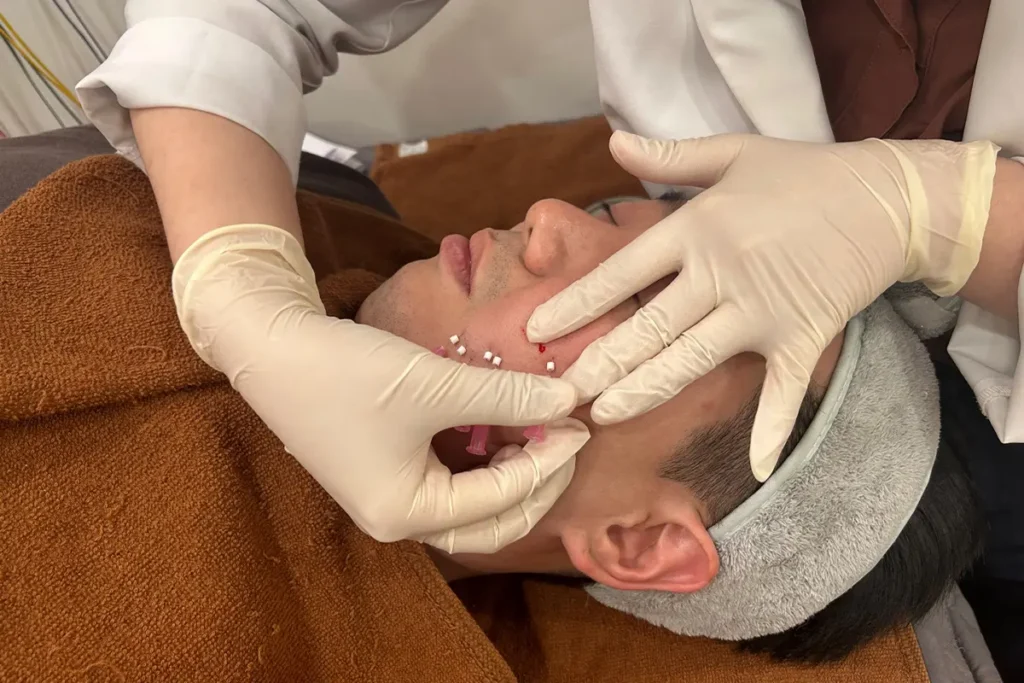
For targeted wellness and physical recovery right in the middle of Myeongdong, I visited the expert, all-female team at RI& Korean Medical Clinic. If you’re planning your trip around these treatments, Myeongdong is a super convenient place to choose a hotel that’s within easy walking distance.
I wanted a complete physical reset to handle my ongoing upper back pain and daily fatigue, so I went in to test their traditional fire cupping and therapeutic ear seeding.

It completely sorted out the chronic knots in my shoulders, while the unique ear seeding treatment calmed my digestion and helped settle my stress.
➜ Check details and book a cupping, acupuncture, or ear seeding treatment at RI& Traditional Korean Medicine Clinic here.
NAME: Ri& Korean Medical Clinic DESCRIPTION_START An all-female team of expert doctors in Myeongdong known for highly effective, sustainable metabolic programs and customized diet herbal medicine. DESCRIPTION_END TRANSIT_LABEL: Getting There: TRANSIT_TEXT: Seoul Subway Line 4, Myeongdong Station (Exit 10) ENG_LABEL: Address: ENG_TEXT: 9th Floor, Sunshine Building, 27 Myeongdong 8ga-gil, Jung-gu, Seoul KOR_TEXT: 서울특별시 중구 명동8가길 27 선샤인빌딩 9층Genetic Testing and Full-Body Rebalance
General wellness advice can feel like a total shot in the dark sometimes (even though it is not), but some traditional medicine clinics in Seoul are shifting towards using a more clinical approach in combination with Korean medicine principles.

Instead of only using pulse checks to determine your body type, advanced traditional medicine treatments in Korea are using modern diagnostic tools. Practitioners are now mapping your physical conditions alongside your actual biology to figure out exactly how your health is affected.
This data-driven approach is exactly why CDG (Changdeokgung) Korean Medicine Clinic is totally unique. I personally haven’t seen any other traditional Korean clinics using in-depth genetic body type testing to build custom lifestyle plans tailored explicitly to your DNA.
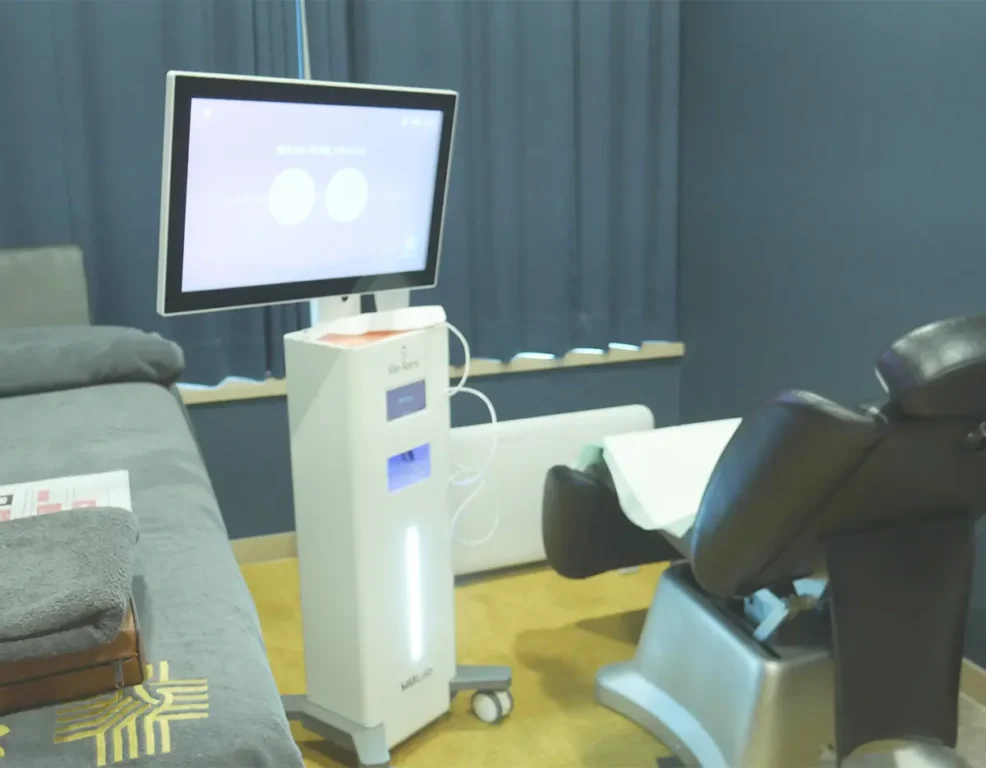
Whether you want to try out their genetic body type testing, a brain wave sleep test, or their 1-Day Package that includes traditional cupping, moxibustion, and pelvic balance therapy, CDG Korean Medicine Clinic gives you a highly personalized analysis to complement your health and wellness journey.
➜ Check out packages and reserve your genetic testing session at CDG Korean Medicine Clinic here.
NAME: CDG (Changdeokgung) Korean Medicine Clinic DESCRIPTION_START A modern traditional Korean medicine clinic specializing in custom genetic body type testing, tailored herbal medicine prescriptions, and comprehensive holistic health management. DESCRIPTION_END TRANSIT_LABEL: Getting There: TRANSIT_TEXT: Suin-Bundang Line or Shinbundang Line, Jeongja Station, Exit 3 (approx. 1-minute walk, located on the 3rd floor of the Jeongja Star Building) ENG_LABEL: Address: ENG_TEXT: 3F, Jeongja Star Building, 7 Seongnam-daero 331beon-gil, Bundang-gu, Seongnam-si, Gyeonggi-do KOR_TEXT: 경기도 성남시 분당구 성남대로331번길 7 정자스타빌딩 3층 (정자동)Weight Loss and Metabolism
Between long flights and hours spent walking around Seoul’s 5 royal palaces, traveling can easily throw your metabolism completely out of whack. At a hanbang in Seoul, Korean medicine doctors will evaluate your specific body type to prescribe custom diet hanyak (or herbal medication). The hurdle here is always the taste – hanyak is typically bitter liquid mud, and it can be difficult to stomach 3 times a day.
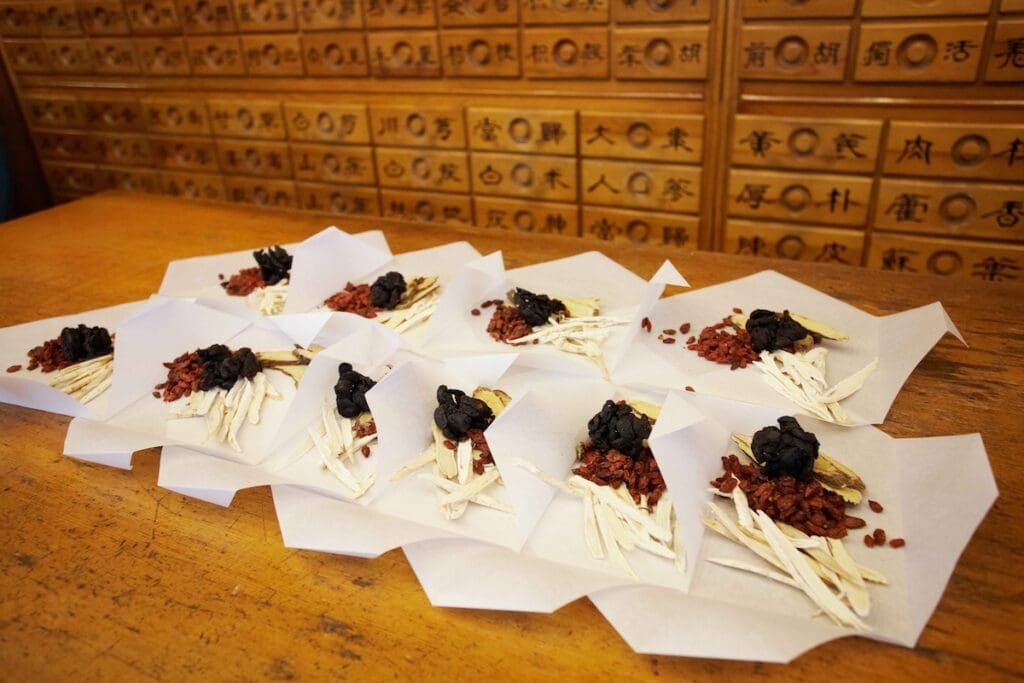
This is exactly why Acro Korean Medicine Clinic figured out how to pack 100% herbal ingredients into tasteless, easy-to-swallow capsules. This traditional Korean medicine clinic in Seoul is run by three published author-doctors who handle your consultations directly, so you get the absolute best results.
➜ Check treatment options and reserve a capsule diet consultation at Acro Korean Medicine Clinic here.
NAME: Acro Korean Medicine Clinic DESCRIPTION_START A popular traditional Korean medicine clinic specializing in customized healthy weight loss programs, localized fat-dissolving injections, high-frequency lifting treatments, and therapeutic pain management. DESCRIPTION_END TRANSIT_LABEL: Getting There: TRANSIT_TEXT: Subway Line 9 or Shinbundang Line, Sinnonhyeon Station, Exit 3 (1-minute walk, 2nd floor of the Volatial Building) ENG_LABEL: Address: ENG_TEXT: 2F, Volatial Building, 480 Gangnam-daero, Gangnam District, Seoul KOR_TEXT: 서울특별시 강남구 강남대로 480 보라티알빌딩 2층 (논현동)Common Korean Medicine Treatments Explained
Stepping inside a traditional Korean hanbang clinic for the first time can feel pretty intimidating. It’s easy to get confused when you’re looking at medical terms you’ve likely never encountered before… and in a foreign language on top of that! To help you figure out what you’re actually signing up for, I’ll break down the most common treatments used at Korean medicine clinics in Seoul.

Clinical Acupuncture (Chim / 침)
Clinical acupuncture is the absolute foundation of any traditional Korean medicine treatment. Acupuncture is treated as a highly strategic, mechanical treatment to restore circulation and trigger muscle tissue recovery. I’ve had it for everything from knee pain to knots in my shoulders, with great results.

Using ultra-fine, sterile disposable needles, a licensed Korean medicine doctor builds a precise physical map across your body’s specific meridian lines and hyper-tight muscle groups. It’s definitely not random. By tapping these needles to very specific depths, compressed nerves are released, blood flow is altered, and over-activated muscles are relaxed.
Traditional Korean Dermatology & Aesthetic Acupuncture
Traditional Korean dermatology clinics in Seoul go way beyond simple spa facials. Traditional hanbang clinics use intense, physical procedures to remodel the skin and adjust facial structure from the inside out.

Here’s a quick rundown of some of the traditional Korean dermatology treatments they might use:
- Aesthetic Acupuncture (Mee-yong Chim/ 미용침): 50 to 100 ultra-fine needles are used on facial muscles to relax tight areas, firm up sagging skin, and boost natural collagen. It’s the core of any natural acupuncture face lift in Seoul.
- Thread Lifting (Maesun / 매선): Inserting dissolvable PDO collagen threads under the skin to physically pull up a drooping jawline and mechanically fix facial asymmetry without fillers.
- Herbal Peeling (Saeng-Chae Peel / 생채필): Rubbing microscopic, plant-derived needles into the skin to force a total epidermal shed, clearing deep acne scars and stubborn pigmentation.
- Scar Subcision (Saesal-Chim / 새살침): Using specialized needles to physically break apart the hardened fiber bands underneath deep, depressed acne scars so the skin can bounce back.
Jeongi Chiryo (전기치료)
Jeongi Chiryo simply means “electrotherapy.” Korean medicine clinics use it to describe two different treatments that deliver painless, rhythmic electrical pulse to make your muscles twitch and heal.

Round Suction Cups (ICT): The clinic staff places round, rubber suction cups with wet sponges inside onto your back. A machine uses a light vacuum to stick them to your skin, then passes electrical currents through the tissue. This creates a deep, vibrating, rhythmic pulse that relieves broad muscle tension and boosts circulation. It’s not painful.
Needle Clamps (Electroacupuncture): The Korean medicine doctor places acupuncture needles into your deep muscle knots, hooks them up to tiny alligator clamps, and runs a microcurrent directly down the needle. This forces hyper-tight, specific knots to release their grip and stops deep nerve inflammation fast.

Clinics often use both in one session—the round cups to loosen your entire back, and the needle clamps to target the exact spot causing your pain.
HEADLINE: 🌿 DETOXIFYING ENZYME SAUNAs ARE THE LATEST WELLNESS TREND IN KOREA DESC_START Want to sweat out your toxins using pure, natural microbial fermentation instead of needles? At Enzyme Forest, you’ll lie buried in a warm organic bed that naturally heats up to 60–70°C using live, healthy microorganisms to melt away deep travel stiffness and reset your skin barrier. DESC_END BTN_TEXT: RESERVE YOUR PRIVATE ENZYME BATH HERE ➔ BTN_URL: https://creatrip.com/en/spot/15781Cupping Therapy (Buhwang / 부황)
This is the famous Korean medicine treatment that leaves those intense, perfectly circular purple bruises all over your back. At a traditional hanbang, they place glass or plastic cups onto your skin and use a vacuum pump – or actual fire – to create heavy suction.

That outward pull physically lifts your skin and fascia away from the muscle, breaking up stagnant blood stasis, flushing out waste products, and forcing fresh circulation into tight areas. It feels like a deep, heavy massage pulling outward instead of pushing down, and I can tell you from experience that it’s a huge relief for shoulder knots or stiffness.
TITLE: LOCAL TRAVEL TIP BODY_START Because these indoor Korean medicine therapies require zero recovery downtime, they make a perfect addition to a rainy day in Seoul itinerary when you want to escape the weather and focus on a total body reset. BODY_ENDChuna Manual Therapy (추나)
Think of Chuna as the Eastern cousin to Western chiropractic care, but with a much heavier focus on your soft tissue. Instead of just cracking your joints and sending you out the door, a licensed Korean medicine doctor uses their hands, elbows, and specialized traction tables to work deeply into your muscles and fascia.

It’s an active structural correction that realigns your skeletal framework, decompresses your spine, and relieves that deep, aching pressure built up from years of slouching over a desk.
Visiting a posture correction clinic in Seoul like Rebom Hanbang Hospital or Duna Korean Medicine Clinic for Chuna treatments is one of the best ways to sort out those deep physical aches.
Hanyak (한약)
Hanyak is personalized Korean herbal medicine brewed to rebalance your internal wellness. Your prescription starts with a thorough pulse diagnosis where the Korean medicine doctor checks the energy pathways in both of your wrists to see how your body is functioning.

Based on your specific constitution, they create a custom blend of medicinal roots and herbs. Locals traditionally drink these as bitter liquid teas packaged in small pouches for a period of 3 weeks or longer.
Pharmacopuncture (Yakchim / 약침)
Think of pharmacopuncture as a hybrid treatment that combines standard acupuncture with herbal medicine. Instead of just inserting dry needles to stimulate a nerve, the doctor uses a syringe to inject a highly purified, sterile herbal extract directly into painful muscle knots or inflamed joints. It can even be used to break down fats!

I’ve had more pharmacopuncture injections than I can count, and It sounds a lot scarier than it actually is. It’s worth it because the anti-inflammatory herbal components get delivered directly to the root of the tissue, which speeds up regeneration and cuts down chronic pain much faster than regular acupuncture alone.
Korea Travel Essentials
Don’t board that plane to Seoul until you’ve sorted out accommodation, transport from the airport, and your data on the ground.
What Does it Actually Cost? (Insurance vs. Cash)
As a resident of Seoul, I pay monthly into the Korean National Health Insurance (NHI) system. Korean medicine treatments like standard acupuncture, cupping, and Chuna manual therapy are partially covered, so my out-of-pocket co-pay at a neighbourhood hanbang in Seoul can be very affordable.

Tourists visiting the city aren’t part of this system of course. Foreign travel insurance policies rarely cover traditional medicine treatments, so you’ll likely be paying out of pocket, but the good thing is that healthcare pricing in Korea is incredibly transparent and affordable compared to the West.
How to Book a Traditional Korean Medicine Clinic in Seoul
Booking a traditional Korean medicine clinic in Seoul comes with its own set of challenges. Unlike K-beauty clinics geared towards tourists, hanbang clinics are rarely set up for foreigners.
You’re likely run into a wall of resident ID requirements for online booking, complex medical jargon, and front desk staff who mostly do not speak English. While the doctors themselves often speak some English, getting an appointment on your own can be difficult.

That’s why I recommend book through Creatrip. I’ve used them myself to book special palace night events, and it’s the most practical workaround because it handles the booking logistics, provides clear English descriptions, and lists flat-rate prices so you avoid any unexpected tourist taxes.
Several top traditional Korean medicine clinics also participate in their Beauty Cashback program, so you can even get 10% back on your treatment costs.

Here’s how the booking process works in a nutshell:
- Select your treatment: Search the platform for the specific therapy you need, whether you’re hunting for a quick posture tune-up or looking for dermatology care at a place like Ri& Clinic.
- Check the pricing: Review the English menus to see the upfront costs. For example, if you book facial symmetry care at DUNA Clinic, the total price is listed in plain sight.
- Reserve a time: Choose your date, input your information in English, and pay the required deposit. Booking a bone growth exam or alignment session at REBOM Korean medicine hospital generally takes just a couple of minutes.
- Arrive at the clinic: Present your email or mobile voucher at the reception desk.

My Honest Take as a Long-Term Seoul Local
After living in Seoul for 15 years and testing out different traditional Korean medicine clinics to fix everything from buffalo hump to a pinched nerve and sluggish digestion, I’ve become a huge believer in traditional medicine.

It isn’t a mystical wellness trend, but a practical, deeply grounded medical system that locals rely on every single day to stay balanced.
If you’re living in Seoul yourself or visiting on holiday, I definitely recommend trying out a traditional Korean medicine clinic. Stepping inside a Korean hanbang is a wonderful way to reset your body, invest in your long-term health, and truly experience local wellness before you leave.
Traditional Korean Medicine FAQs
LABEL: 🌿 People Also Ask FAQ_START Q: What is aesthetic acupuncture, and does it actually work? A: Aesthetic acupuncture, known locally as Mee-yong Chim, involves placing micro-fine needles into facial muscle meridian lines. It works by stimulating deep collagen production, increasing blood circulation, and relaxing tight muscles. It’s a highly effective, non-chemical way to naturally lift sagging jawlines and balance facial asymmetry. FAQ_END FAQ_START Q: Is traditional Korean dermatology different from regular Western skincare? A: Yes, traditional Korean dermatology treats skin conditions by addressing internal root causes rather than just masking surface symptoms. Instead of harsh chemical peels or aggressive lasers, a traditional Korean medicine clinic in Seoul uses plant-based herbal scaling, natural toxin extractions, and custom herbal medicine to repair a broken skin barrier from the inside out. FAQ_END FAQ_START Q: Is Creatrip reliable for booking medical treatments in Korea? A: Yes, Creatrip is an exceptionally reliable and fully certified global platform for medical tourism bookings in South Korea. Booking through them guarantees transparent, flat-rate pricing to prevent tourist price gouging. It also completely removes the language barrier by providing english-friendly clinic options and exclusive booking perks. FAQ_END FAQ_START Q: Does Chuna manual therapy hurt? A: Chuna manual therapy performed by a licensed Korean medicine doctor is generally not painful and is highly relieving. They use targeted manual pressure and specialized drop-tables to gently realign your joints and spine. You will feel a deep release of physical tension and pressure, making it an excellent recovery treatment after a cramped, long-haul flight. FAQ_END FAQ_START Q: What should I expect during my first visit to a traditional Korean medicine clinic? A: Your appointment will begin with a comprehensive diagnostic exam. The doctor will analyze your tongue, take your pulse at both wrists, and evaluate your physical posture. This allows them to identify internal organ imbalances and structural misalignments before creating your custom acupuncture, Chuna, or hanyak herbal medicine treatment plan. FAQ_END FAQ_START Q: Can I get Hanbang treatments done if I am only visiting Seoul for a few days? A: Absolutely. Many traditional Korean medicine clinics have specific “One-Day Wellness” packages tailored for tourists. Treatments like posture checks, Chuna skeletal adjustments, facial lifting acupuncture, and herbal skin scaling require zero recovery downtime, meaning you can resume sightseeing immediately. FAQ_END FAQ_START Q: Are there any side effects to Korean traditional medicine? A: Hanbang treatments are non-surgical and exceptionally safe, but minor reactions can occur. Standard acupuncture or cupping can sometimes leave mild, harmless skin bruising or temporary redness that fades in a few days. Always inform your traditional medicine clinic beforehand if you are pregnant, have metal medical implants, or take blood thinners. FAQ_END FAQ_START Q: What is the difference between a tradtional Korean medicine clinic and a K-beauty spa? A: A Korean medicine clinic is a fully licensed, professional medical facility staffed by certified Doctors of Korean Medicine (DKMs) who undergo six years of strict university training. Unlike a beauty spa that offers superficial, temporary relaxation massages, a Hanbang clinic diagnoses systemic structural flaws and internal illnesses to prescribe clinical-grade healing treatments. FAQ_END HEADING: 🩺 READY TO TAKE YOUR HEALTH UPGRADES EVEN FURTHER? TEASER_START Holistic alignment is only one piece of the puzzle. If you want to make the absolute most of South Korea’s world-class medical system, consider combining your clinical wellness treatments with a comprehensive, ultra-efficient preventive health screening. I spent a morning testing out a full-body package featuring over 70 diagnostic tests, a sedated gastroscopy, and specialized advanced scans — all finished in under three hours for a super affordable price. TEASER_END BTN_TEXT: HOW TO GET A FULL MEDICAL SCREENING AT KMI SEOUL ↓ BTN_URL: https://travel-stained.com/medical-check-up-in-korea-for-foreigners-kmi-seoul/*This post is based entirely on my personal experience and is for informational purposes only. It is not intended to be a substitute for professional medical advice, diagnosis, or treatment. The treatments described were performed by qualified Korean medicine doctors at a licensed clinic. Individual results will vary. Always consult a qualified healthcare professional before undertaking any medical or wellness treatment.
I originally researched, wrote & published this guide on October 14, 2026. I review & update my content for accuracy regularly. Watch out for copycats.This post was last updated on October 14, 2026. Copyright © 2026 Travel-Stained. All rights reserved.