

In autumn, Yangju Nari Park is one of the most captivating gardens near Seoul. While it’s famous for hosting the annual Cheonilhong Festival and having Korea’s largest globe amaranth colony, you’ll also find stunning, expansive fields of pink muhly grass, bright orange cosmos, and fiery red kochia bushes spread across the grounds. This place belongs right at the top of your fall itinerary.
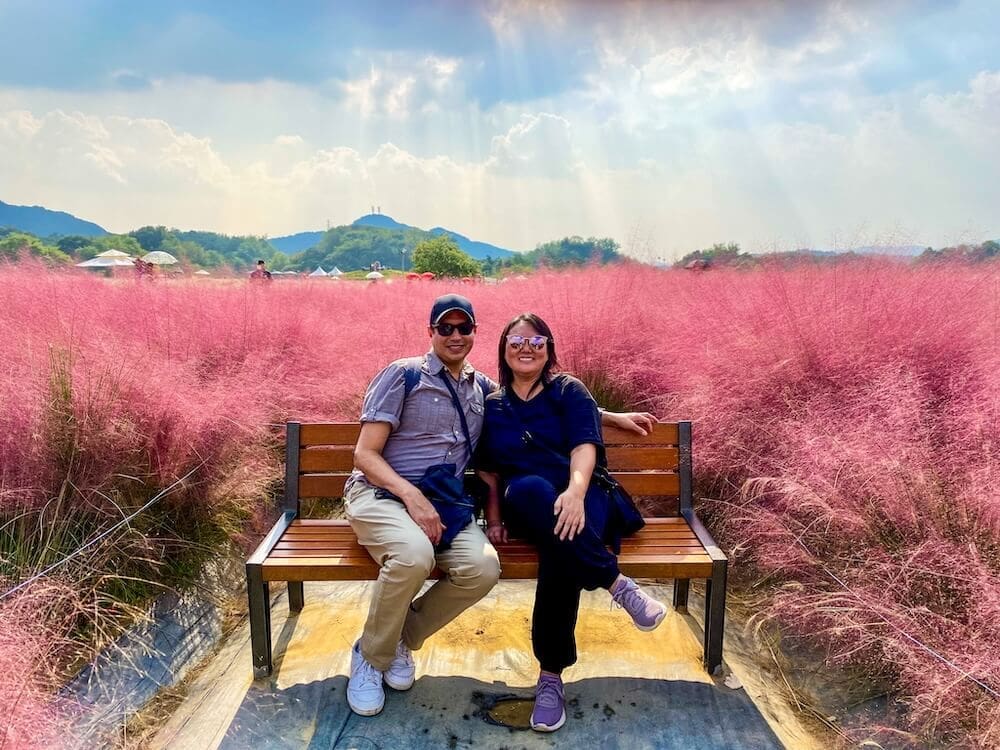
I checked out the Yangju Nari Park in mid-October, and the whole area was lovelier than I expected. If you’re planning a visit, I’d budget at least an hour or two to wander around, snap some gorgeous pictures, and take in all the wonderful autumn landscapes around you.
*Any purchases made through affiliate links here help run this site.
ATTR_NAME: Yangju Nari Park ATTR_DESC: A captivating autumn garden near Seoul famous for its vibrant pink muhly grass fields and thousands of globe amaranth flowers. ATTR_STREET: 731, Gwangsa-dong ATTR_LOCALITY: Yangju-si ATTR_REGION: Gyeonggi-do ATTR_HOURS_SCHEMA: Mo,Tu,We,Th,Fr,Sa,Su 09:00-20:00 ATTR_FREE: false MAIN_TITLE: 🌾 Yangju Nari Park: Quick Guide & Essential Info INTRO_START Yangju Nari Park is one of the most captivating autumn day trips from Seoul, with stunning pink muhly grass fields and Korea’s largest globe amaranth colony. It’s only open for a tight six-week window each fall, so I’ve put together all the updated details you need to plan your visit without any stress. INTRO_END LABEL_ENG: English Address: TEXT_ENG: 731 Gwangsa-dong, Yangju-si, Gyeonggi-do | Road Address: 131-66 Gwangsa-ro, Yangju-si, Gyeonggi-do LABEL_KOR: Korean Address: TEXT_KOR: 경기도 양주시 광사동 731 LABEL_HOURS: Operating Window: TEXT_HOURS: Strictly seasonal! Only open from mid-September to late October (9:00 to 20:00 daily during opening weeks). LABEL_FEE: Admission: TEXT_FEE: 7,000 KRW for adults, 5,000 for children, entry drops to 5,000 / 3,000 KRW for festival dates (5,000 KRW given back in the form of a Yangju Love Gift Certificate) LABEL_TRANS: Best Transport: TEXT_TRANS: DIY by public transit: take Subway Line 1 to Yangju Station (Exit 2), then hop on local Bus 80 or 77-1 straight to the park gates BTN_TEXT: Skip to Public Transit Directions for Seoul to Yangju Nari Park ↓ BTN_URL: #how-to-get-to-yangju-nari-park-from-seoulYangju Nari Park Autumn Day Trip Guide | 양주 나리공원
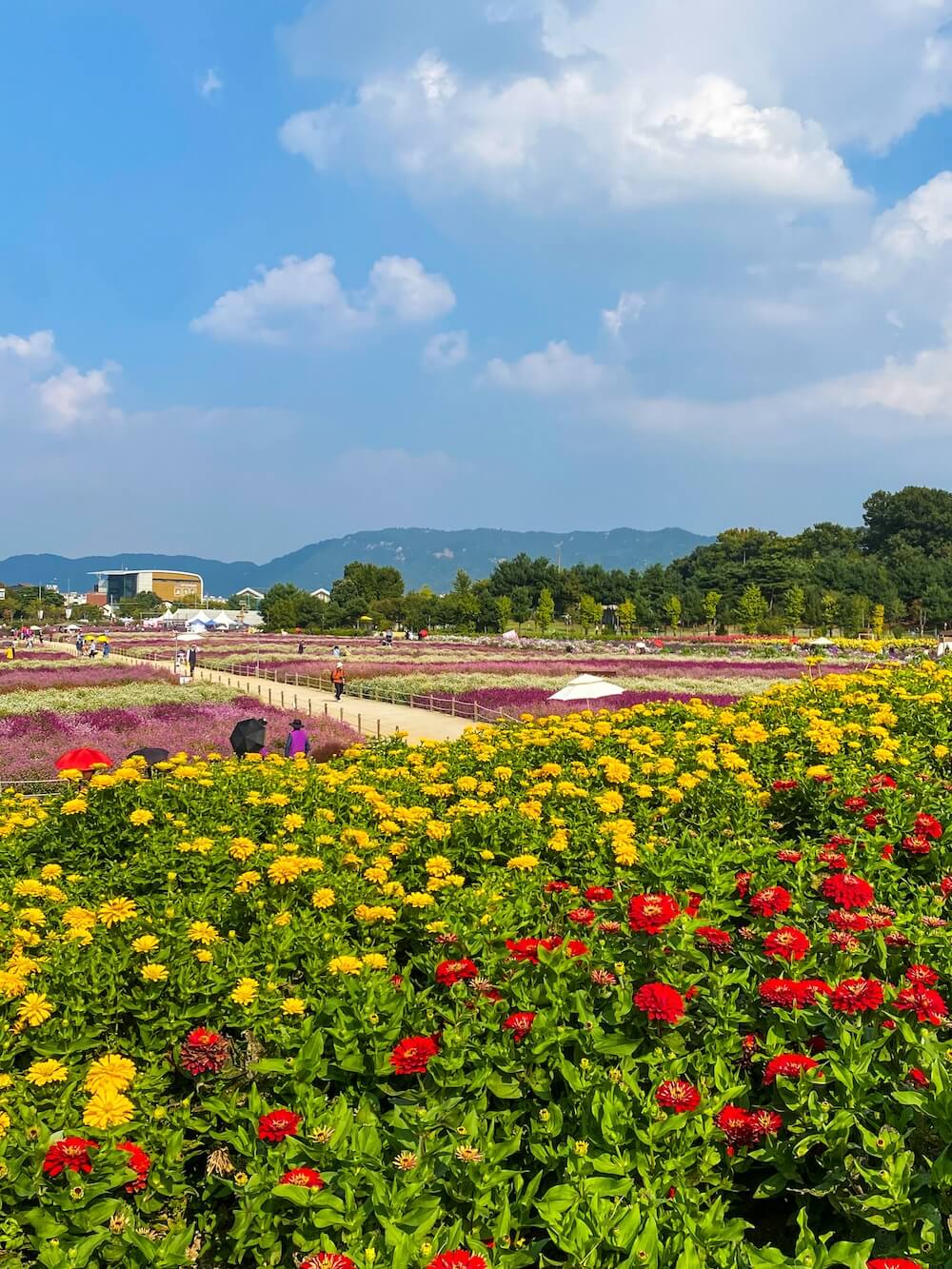
While Yangju Nari Park is famous for its pretty pink muhly, and thousands and thousands of globe amaranth flowers, the farm is actually a sprawling floral paradise featuring dozens of unique autumn plant varieties.
The entire property is divided into a series of manicured plots with flat walking pathways cut between them, making it incredibly easy to navigate and enjoy the spectacular colours of fall in Seoul.
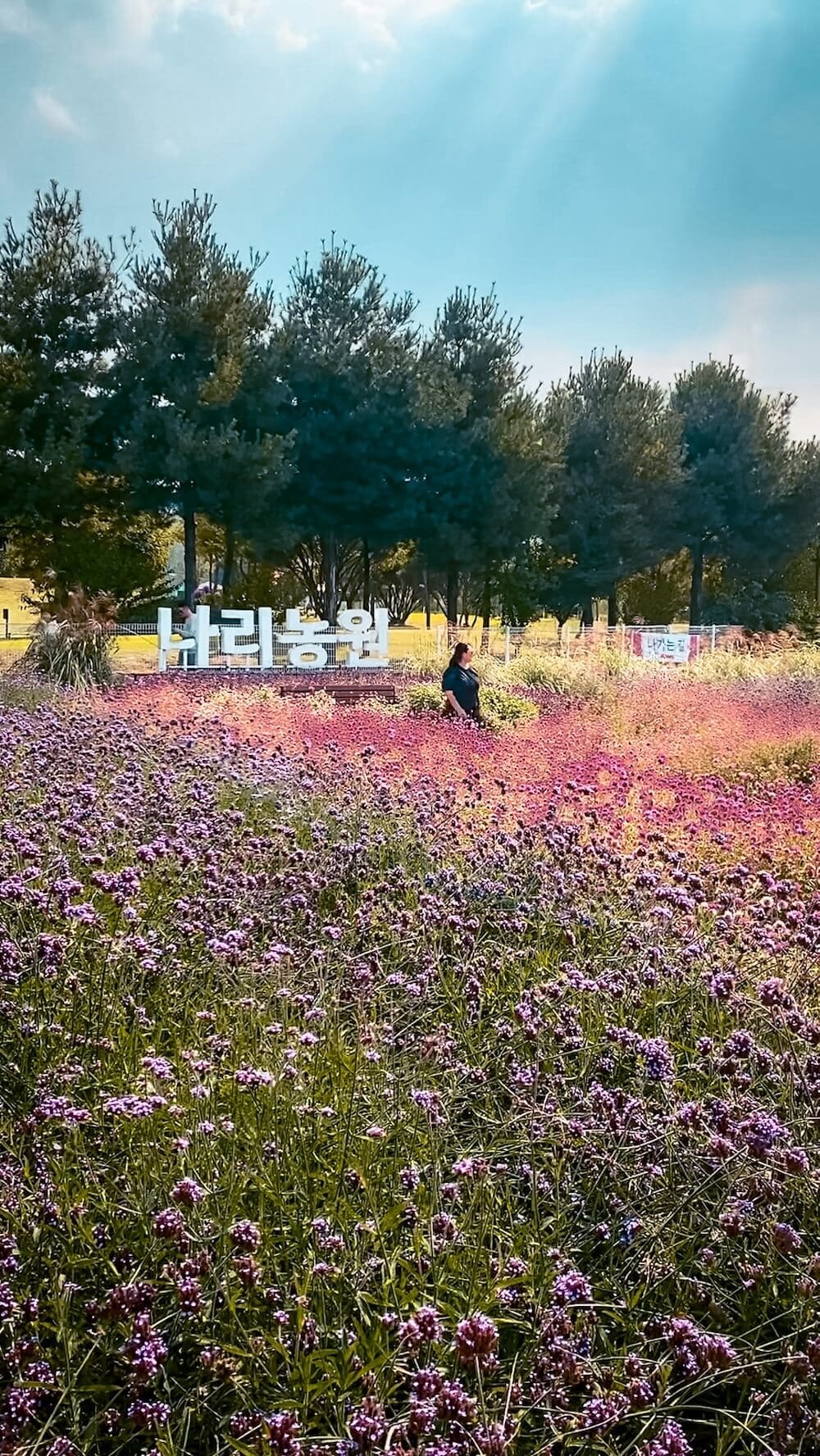
Nari Farm is only open to the public for approximately 6 weeks every year, so if you’re lucky enough to be visiting South Korea at that time, make sure to make the day trip north of Seoul to see it. It’s worth it!
Is there pink muhly grass at Yangju Nari Park?
Yes! Yangju Nari Park is one of the best places near Seoul to see pink muhly grass fields.
There’s a large plot full of some of the fluffiest, cotton candy pink grass I’ve seen near Seoul.

Time your visit for late September to late October, and you’re sure to catch it. Just make sure to get to Yangju Nari Farm before it closes to the public on October 25th, 2026.
My understanding is that all the pink muhly gets cut down around that time anyway. So if your goal is pink – I personally wouldn’t risk missing it by going too late.
When is the best time to visit Yangju Nari Farm?
NAME: Yangju Nari Park Autumn Opening DESCRIPTION_START A stunning autumn garden north of Seoul featuring massive fields of globe amaranth, pink muhly grass, and vibrant seasonal flowers. It’s a fantastic day trip for taking in the best fall colours in Korea. DESCRIPTION_END DATES_LABEL: Operating Window: DATES_TEXT: September 18th – October 25th, 2026 ENG_LABEL: Address: ENG_TEXT: 731, Gwangsa-dong, Yangju-si, Gyeonggi-do KOR_TEXT: 경기도 양주시 광사동 731 START_DATE: 2026-09-18 END_DATE: 2026-10-25Autumn is not only the ideal time to visit, it’s pretty much the ONLY time.
Nari Park is an actual operating farm, so opening dates for visitors are limited to just a few months of every year. In 2026, these dates are scheduled for September 18th to October 25th (the opening date was shifted 1 week later due to a lingering heat wave in Korea).
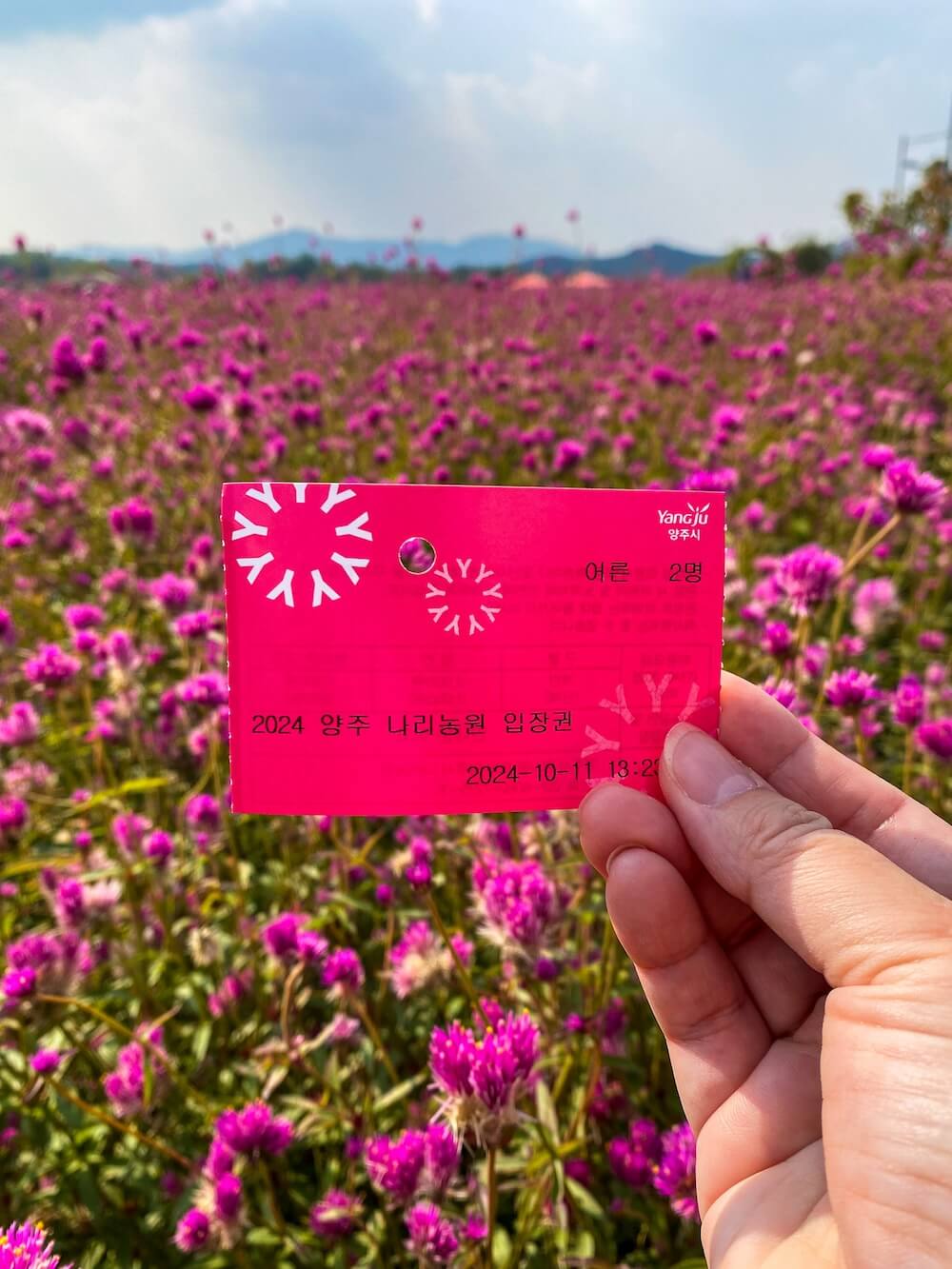
At this time, 28 different fall flowers and grasses are expected to be in full bloom. If you can swing it, weekdays are much quieter inside the garden than weekends, with mornings the quietest times of all.
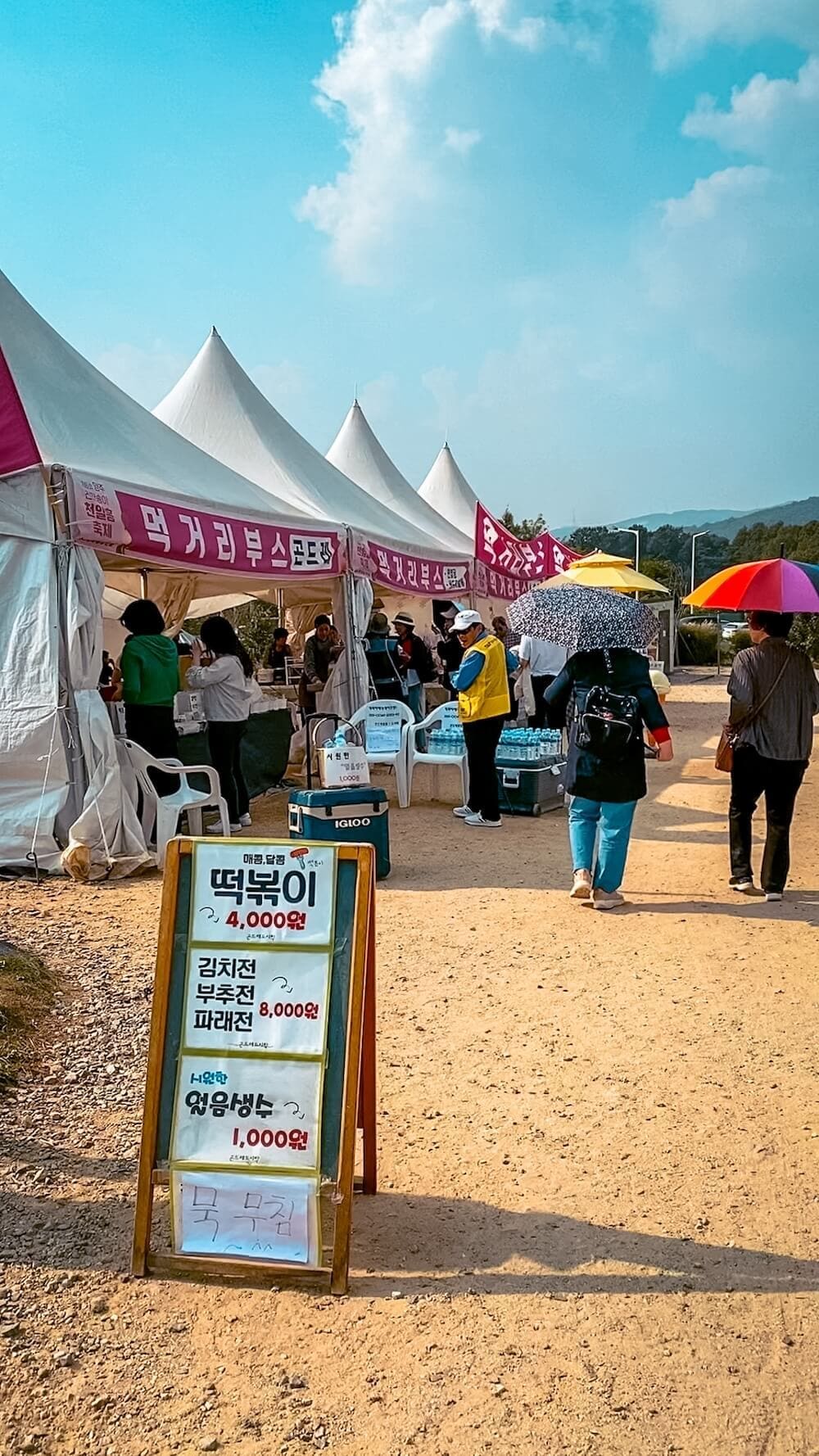
There’s also various experience programs, a food street area, and a local marketplace in operation during these weeks too.
Yangju Nari Park Opening Hours
The park is open daily from 9:00 AM to 8:00 PM during the six-week festival window, but keep in mind that the ticket booth closes 1 hour before the park shuts down at 7:00 PM. I recommend showing up by mid-afternoon at the absolute latest if you want enough time to stroll through the flower fields without feeling rushed.

It’s worth noting that this year, Yangju city extended the opening hours until 8:00 PM to showcase the flower fields under night lights. If you stay just past sunset, the illuminations will be turned on, and the garden will have a completely different vibe.
TITLE: LEAVE YOUR DRONE AT HOME BODY_START While you can capture incredible photos from the walking paths with your phone or camera, please keep in mind that Yangju sits in restricted military airspace, and drones are strictly prohibited. There’s a big fine if you try, so don’t risk it at all. BODY_ENDThe Cheonilhong Festival at Nari Farm | 천일홍 축제
NAME: Yangju Cheonilhong Festival Weekend Events DESCRIPTION_START The main event weekend for the Yangju Cheonilhong Festival features live busking performances, local street food stalls, and hands-on cultural activities right alongside the pink muhly fields. DESCRIPTION_END DATES_LABEL: Main Festival Weekends: DATES_TEXT: September 26th – 28th, 2026 | October 3rd – 4th, 2026 ENG_LABEL: Location: ENG_TEXT: Yangju Nari Park, Gyeonggi-do KOR_TEXT: 경기도 양주시 광사동 731 START_DATE: 2026-09-26 END_DATE: 2026-10-04Every September in Korea, Yangju Nari Park celebrates its massive globe amaranth colony (cheonilhong in Korean), with a gorgeous autumn festival. And this year, the Cheonilhong Festival has been expanded into October. Keep in mind that while the park itself is open daily for a full six weeks, these official festival events only run for a few select weekends.

For Koreans, the Cheonilhong (천일홍) represents eternal and committed love, because it keeps its vibrant colour, even after being wilted and dried – so you’ll likely see many couples taking pics among these vibrant blooms.
During the main festival weekends, you can also enjoy busking performances, local street food, hands-on activities and more.

Not to worry if you can’t make it during the specific Cheonilhong Festival dates though – the flowers and the main food streets are always there throughout the entire six-week opening window at Yangju Nari Park.
Fun Fact: Cheonilhong translates to 1000 day flower.
TITLE: PLANNING THE REST OF YOUR FALL TRIP? BODY_START If you’re mapping out your autumn schedule and want to see what else is happening around the country, check out my full guide to October in Korea for weather updates, local autumn foliage tips, and upcoming regional festivals. BODY_ENDHow to get to Yangju Nari Park from Seoul?
LABEL: Address: ENG_TEXT: 731, Gwangsa-dong, Yangju-si, Gyeonggi-do KOR_TEXT: 경기도 양주시 광사동 731The easiest, fastest way to get to Nari Park in Yangju is to drive, but if you don’t have access to a car, public transit is fairly simple too. It does take quite a bit longer though, so make sure to budget your time effectively.
If you’d like to rent a car to explore other rural areas in Korea (recommended), you can check prices here.

How to take Subway Line 1 from Seoul to Yangju Nari Park
Using the subway to visit Yangju Nari Park is incredibly straightforward. Just note that local transit routes have changed recently, so older blogs directing you to take other routes are out of date.
For instance, a lot of inaccurate guides still tell you to look for Bus 2-4. Avoid that one entirely now. The city altered that route, and if you take it today, it drops you off way down a residential back alley, leaving you to wander down dirt roads just to find the gate. Stick to Bus 80 or Bus 77-1—they are the fastest, most direct options.

Here’s exactly how to do the trip step by step:
- Get to Yangju Station on Seoul Subway Line 1. This takes around an hour from central neighbourhoods like Myeongdong or Jongno.
- Go out Exit 2 and turn left. Cross the street to the bus stop on the left-hand side.
- Hop on Bus 80 or 77-1. Get off at either the Haedong Village (해동마을) or Nari Park stops. I highly recommend getting off at Haedong Village because it drops you right next to the entrance gate. If you miss it and end up at the Nari Park stop, you will just have to walk back a bit.
- Budget around 25 minutes for the bus ride. The bus interval runs between 15 to 30 minutes depending on the day and time, so factor in a bit of waiting time.
Alternatively, you can just jump in a taxi from the station to Nari Farm. It takes about 10 minutes and costs less than 8,000 won, which is well worth it if you are travelling with a small group and want to skip the waiting.
Korea Travel Essentials
Don’t board that plane to Seoul until you’ve sorted out accommodation, transport from the airport, and your data on the ground.
Taking the Express Bus From Jamsil Station
If you’re staying on the south side of the river or anywhere near Gangnam, skipping the long Line 1 subway ride and taking the express bus is a more convenient way to go. Express buses use the highway system to head straight north, and are very comfortable with a seat for every rider.

Here’s the easiest way to find the underground terminal and catch the express bus to Yangju Nari Park:
- Get to Jamsil Station on Seoul Subway Line 2.
- Follow the signs to the Jamsil Metropolitan Transfer Center. This is on the B1 level, in the underground plaza between Lotte World Mall and Lotte Department Store.
- Take red bus G1300 and get off at the Yuseung Hannaedeul Apt 9-danji / Hanyang Sujain Apt 2-danji stop. The total bus ride takes about 40 minutes.
- Cross the road and take green bus 80 for 3 stops to the Sports Centre stop. It only takes a few minutes.
- Walk 200 metres straight to the Yangju Nari Park entrance.

Alternatively, you can skip that second bus transfer and walk directly to Yangju Nari Farm from the red bus stop in about 20 minutes. Just keep in mind how much walking you’ve already got ahead of you inside the park before you commit to that extra stretch.
Make sure you rely on Naver Maps or Kakao Maps to navigate your way around. Google Maps is notoriously bad for walking directions across Korea and will just end up frustrating you.
TITLE: 🚌 GETTING BACK TO SEOUL BODY_START When you’re done exploring Yangju Nari Park and ready to head back to Seoul, don’t cross the street looking for the return bus. Head back to the exact side of the road where the bus dropped you off near the main parking fields. The local bus route loops around in the same direction, so you’ll catch the return transit from the same side. BODY_END
Yangju Nari Park Admission Fees & Ticket Prices
Nearly every online source says the admission fee for Nari Park is a couple thousand won, but this is outdated information. Admission fees for Nari Park in 2026 are as follows:
HEADERS: Visitor Class | Entrance Fee | Seasonal Window | Daily Operating Hours | Inclusions & Notes ROW: Adult (Regular Days) | 7,000 KRW | Sept 18 to Oct 25, 2026 | 09:00 – 20:00 | Ticket includes a 5,000 KRW local gift certificate given at the gate (Net cost: 2,000 KRW). Ticket window closes strictly at 19:00. ROW: Child & Youth (Regular Days) | 5,000 KRW | Sept 18 to Oct 25, 2026 | 09:00 – 20:00 | Ticket includes a 3,000 KRW local gift certificate given at the gate (Net cost: 2,000 KRW). Infants under 24 months enter free. ROW: Adult (Main Festival Days) | 5,000 KRW | Sept 26–27 & Oct 3–4, 2026 | 09:00 – 20:00 | Main event weekends only. Ticket includes a 5,000 KRW local gift certificate given at the gate, making net entry effectively free. ROW: Child & Youth (Main Festival Days) | 3,000 KRW | Sept 26–27 & Oct 3–4, 2026 | 09:00 – 20:00 | Main event weekends only. Ticket includes a 3,000 KRW local gift certificate given at the gate, making net entry effectively free. ROW: Yangju Local Residents | 1,000 KRW | Sept 18 to Oct 25, 2026 | 09:00 – 20:00 | Flat discounted rate applies to legal residents of Yangju City only. Must present a valid Korean ID card at the ticket window.How to Actually Spend the Yangju Love Gift Certificate
When you pay at the gate, they hand you a 5,000 won Yangju Love Gift Certificate. It’s basically a local coupon that works like cash, but only within the Yangju district. Instead of wandering around the neighbourhood trying to find a store that takes it, here are the easiest ways to use it up before you head back to Seoul.
The Snack Booths at the Back: Walk right through the flower plots to the very back of Yanju Nari Park garden. This is where the main cluster of snack stalls is set up, and it’s the best spot to immediately burn through your voucher on street food staples like eomuk fish cake broth, tteokbokki, or a cold drink.

By the Front Gate: If you just want something small right when you arrive, there are usually a couple of basic snack options set up near the main ticketing entrance where you can grab a quick water or ice cream before starting the walk around the garden.
Neighbourhood Cafes and Restaurants: If you prefer to leave the grounds to escape the direct sun, take a short walk out toward Gwangsa-dong street. The city actually registered around 400 local business affiliates in the area that accept the Yangju Love Gift Certificate coupons, so you aren’t just limited to what’s inside Yangju Nari Park.
Keep an eye out for a small orange and green window sticker on the storefronts that says 양주사랑상품권 가맹점. Most independent coffee shops, bakeries, and traditional Korean restaurants within a kilometre of the park will gladly take them instead of cash.
Personally, I recommend using the voucher right away at the snack stalls located at the rear of Yangju Nari Park.

I had a similiar type of coupon when I visited Goseokjeong Flower Garden last year, and it was great for buying snacks and drinks on-site.
TITLE: 🚌 COMBINE YANGJU NARI PARK & GOSEOKJEONG FLOWER GARDEN IN ONE DAY BODY_START Trying to see Yangju Nari Park and the Goseokjeong flower fields in Cheorwon using rural buses can be a real logistical headache that eats up hours of your day. If you want to skip the transit stress, jumping on a day tour is the smartest way to see 2 of the best autumn gardens I’ve seen in Korea back-to-back. Check available tour dates here. BODY_ENDAutumn Flower Plots at Yangju Nari Farm
While the globe amaranth and pink muhly definitely steal the spotlight, the farm is split into vast, colour-coordinated plots highlighting distinct autumn botanical varieties.
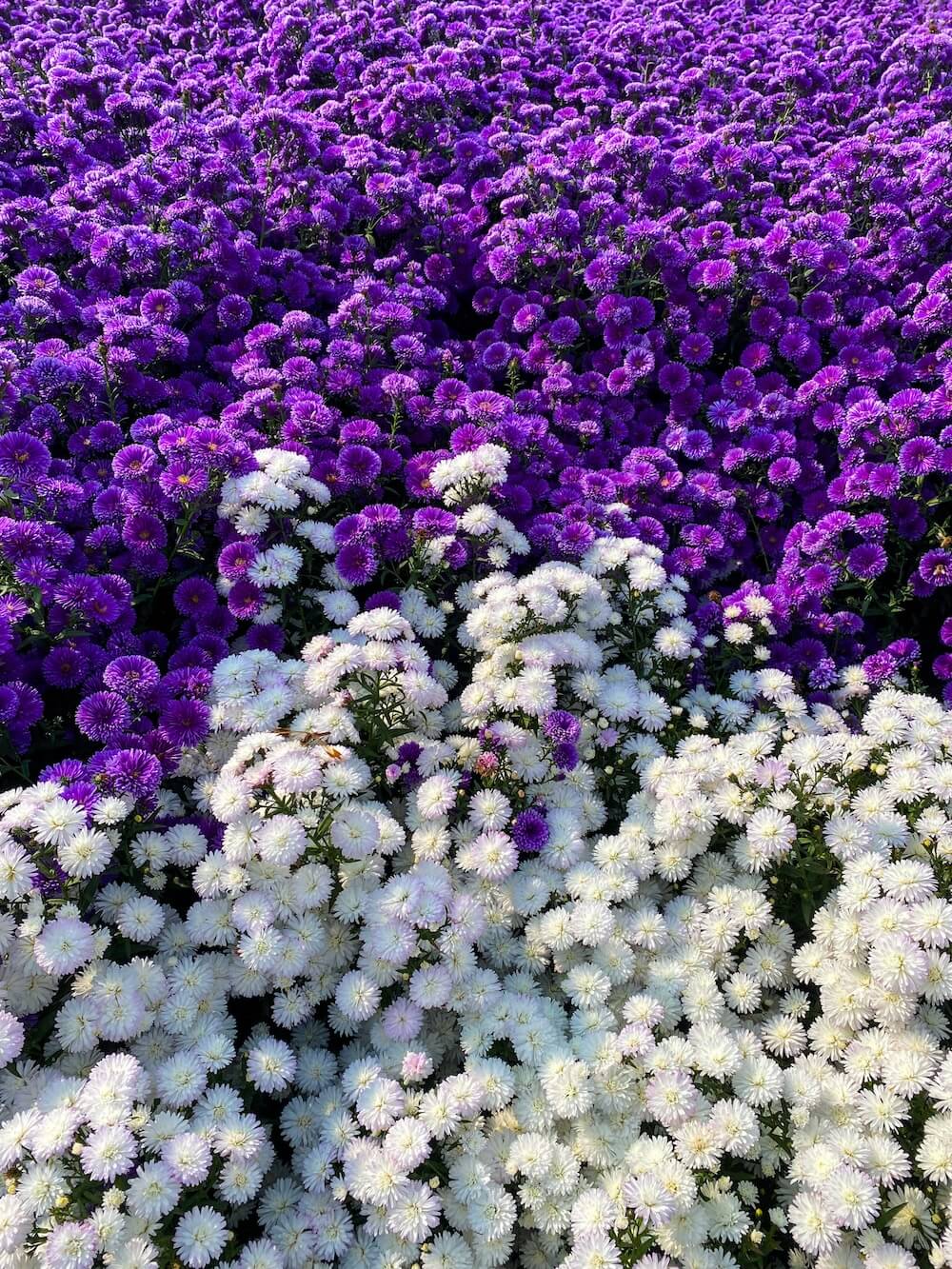
Globe Amaranth (천일홍)
This massive, purple-magenta sea is the main visual anchor of Yangju Nari Park, forming Korea’s largest single cultivation colony. The flowers are split into expansive, beautifully manicured rows that make it incredibly easy to step between the plots for clean, wide-angle landscape photos.
Kochia Scoparia / Burning Bush (댑싸리 / 꽃담싸리)
These quirky, round, structural shrubs completely alter their personality as the autumn chill settles over Gyeonggi-do. They transition rapidly from a bright lime green to a deep, fiery crimson hue by mid-October, making them a dream to walk amongst.

Whirling Butterflies / Gaura (나비바늘꽃)
This delicate white and pastel pink flower field creates a spectacular moving cloud effect when the autumn wind picks up. The petals dance on tall, thin stalks, perfectly mimicking a swarm of real butterflies resting in the garden plots.
Cockscomb & Pink Asters (맨드라미 / 아스타국화)
Wander deeper into Yangju Nari Park to find beautifully layered, velvet-textured cockscomb alongside neon-purple pink asters. These hardy varieties stay resilient and colourful through the very final weeks of October.
Yellow & Orange Cosmos (노랑코스모스)
Unlike the traditional soft pink and white cosmos found scattered across Seoul’s riverbanks, Nari Farm features dense fields of vibrant orange and yellow cosmos. They grow tightly packed along the main walking paths under the clear autumn skies in Korea.

Essential Tips for Visiting Yangju Nari Park
Here are my personal tips for visiting Yangju Nari Park that can help make your time more enjoyable.
Bring your own shade and sun protection
Even though the weather in Korea is pretty much ideal in autumn, the sun at Nari Farm can still be very strong, and there’s not a lot of shade. It’s useful to wear sunglasses and a hat, or carry a sunbrella / parasol with you.
If you burn easily, you’ll definitely want to slather on the sunscreen. The sun here is direct and intense.
Wear comfortable shoes
Nari Farm is quite large, with over 3.5-km / 2.2-miles of walking routes, covering 33-acres of land. The pathways have some gravel or dirt, so you’d be most comfortable in closed toe shoes or sneakers vs sandals.
Carry your own water
While there is a snack area at the entrance of Nari Park in Yangju, and a food stall area in the back corner, there mostly isn’t water or beverages easily available on the rest of the farm. You’ll get thirsty from all the sun and walking, so make sure to stay hydrated by carrying your own water.
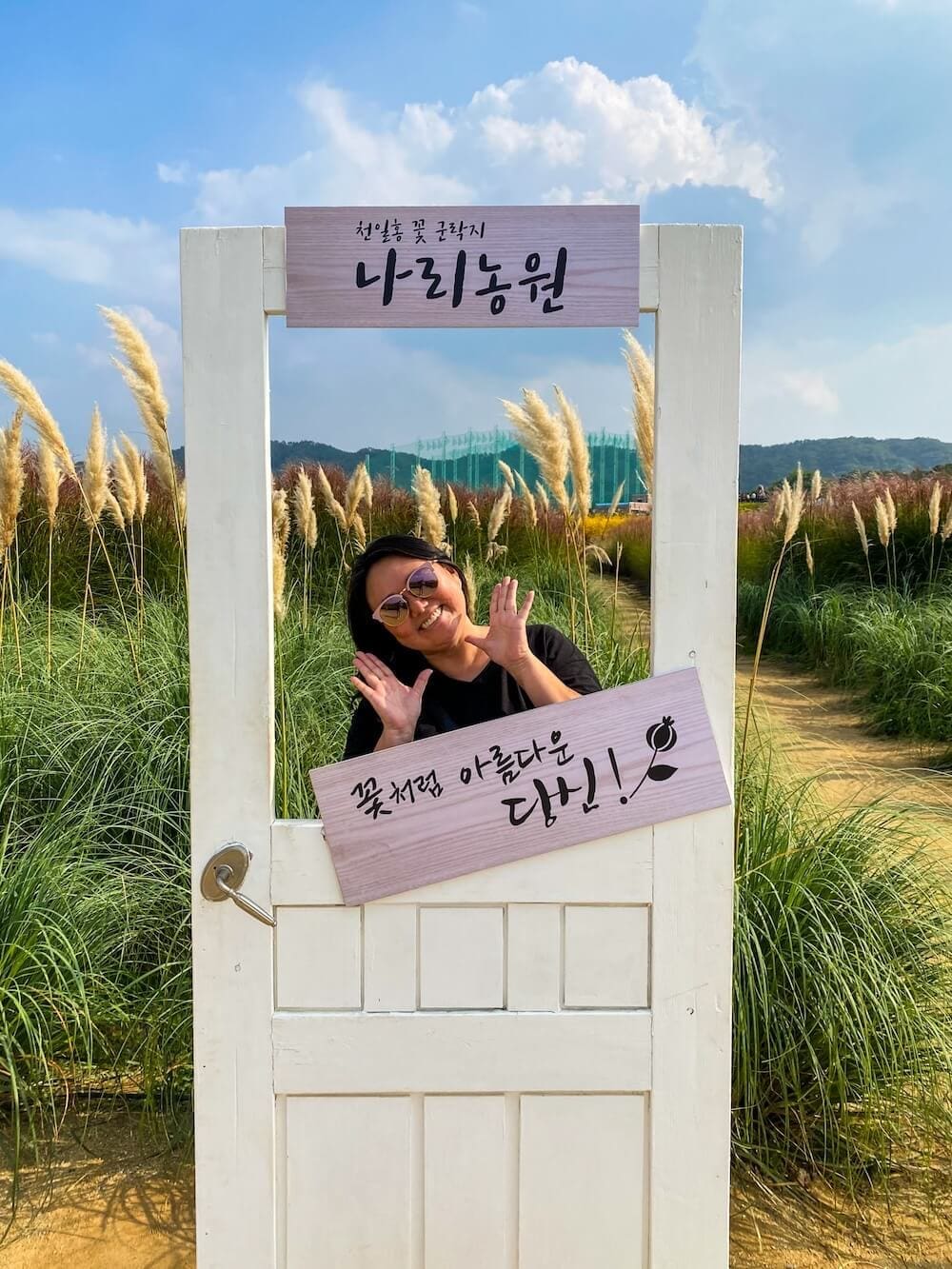
Find the Best Yangju Nari Park Picture Spots
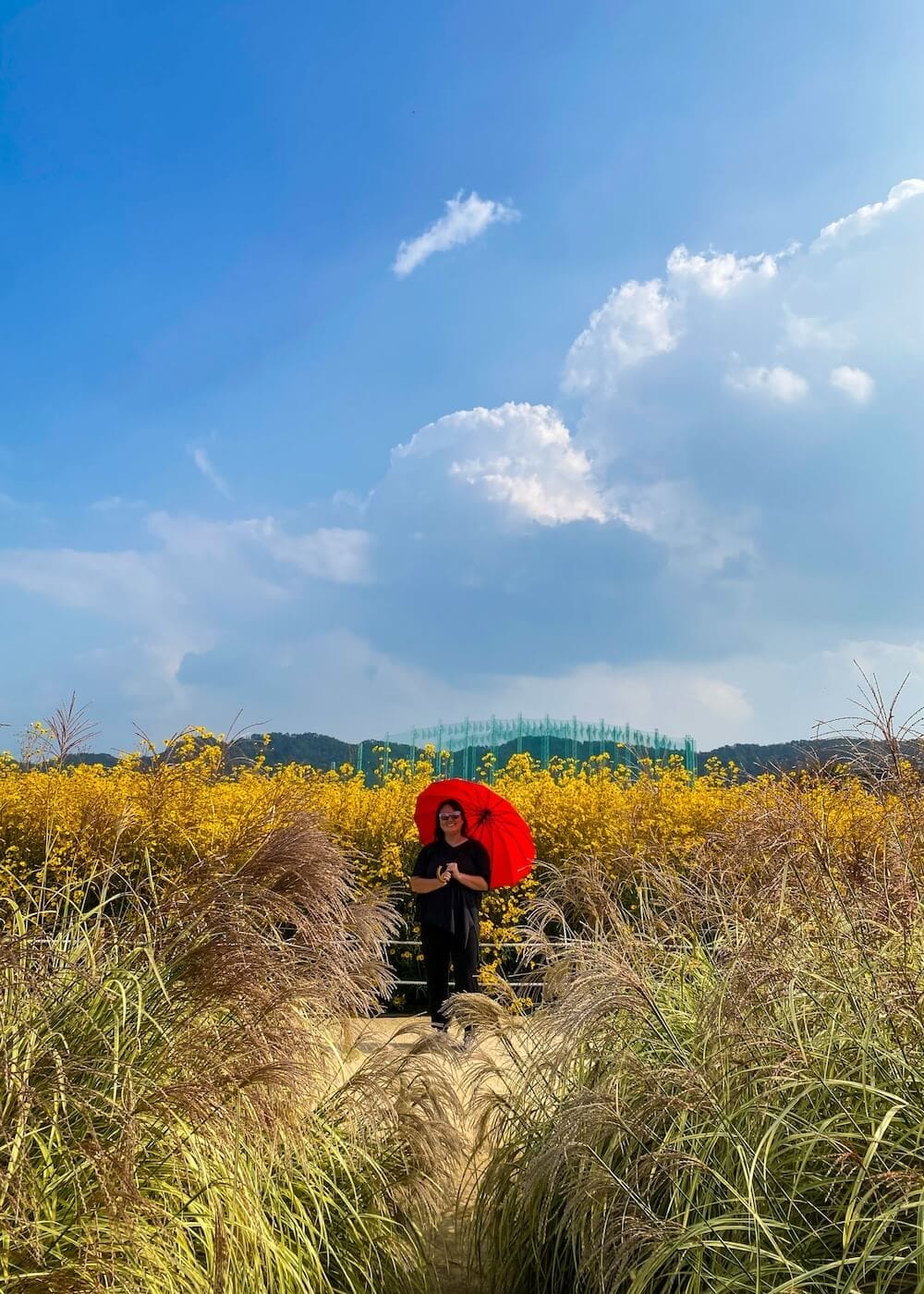
There are so many wonderful places to take pictures, you could literally spend hours doing just that.
You can create your own spots like the one above, or wander around and find the props they’ve set up in pretty areas around Yangju Nari Park.
It takes a little bit of extra planning to make the trip out to Yangju Nari Park, but if you love autumn landscapes and want to see some of the most vibrant flower fields in Korea, it’s absolutely worth the effort. Just make sure to double-check the seasonal opening dates and hop on the correct bus route, so you can spend your day enjoying the flowers instead of wandering around the neighbourhood lost.
I loved my time there, and I’m sure you will too!
Yangju Nari Park: FAQs
LABEL: 💬 PEOPLE ALSO ASK FAQ_START Q: Is Nari Farm (Nari Park) open all year? A: No. Nari Farm isn’t open year-round. Yangju Nari Park in Korea only has limited opening dates in autumn each year. This season, it’s open daily from September 18th to October 25th, 2026. FAQ_END FAQ_START Q: What flowers are in bloom at Nari Farm? A: There are at least 28 different types of autumn flowers and grasses at Nari Park, including globe amaranth, pink muhly, kochia scoparia, pampas grass, striped zebra grass, red clover, sunflowers, and cosmos. FAQ_END FAQ_START Q: Is there pink muhly grass at Yangju Nari Park in Korea? A: Yes! Nari Farm in Yangju is one of the best places to see pink muhly grass near Seoul. The fields are incredibly fluffy and vibrant from late September through most of October. FAQ_END FAQ_START Q: Is there an entrance fee for Yangju Nari Park? A: Yes, there is a small entrance fee during the autumn festival season. Admission has updated to 7,000 won for adults and 5,000 won for children during regular opening days, and includes a 5,000 won local marketplace coupon. On Cheonilhong Festival weekends, the price drops to 5,000 won for adults, and 3,000 won for children, and still includes the coupon. It’s basically free! FAQ_END FAQ_START Q: Which bus goes to Yangju Nari Park from Yangju Station? A: You should take local Bus 80 or Bus 77-1 from the transit stop opposite Yangju Station Exit 2. Avoid older guides directing you to the defunct Bus 2-4 route, as local transit maps have changed. FAQ_END FAQ_START Q: What is the best time of day to take pictures at Nari Park? A: Mornings are by far the quietest times to visit if you want photos without crowds. However, coming in the late afternoon a few hours before the gates close at 20:00 gives you the absolute best sunset lighting across the pink grass. FAQ_END FAQ_START Q: Can I fly a drone at Yangju Nari Park? A: No, drones are strictly prohibited at Yangju Nari Park. The farm sits directly inside a restricted military airspace zone on the outskirts of Seoul, and flying a drone here can result in steep fines. Stick to regular phone or camera photography from the designated walking paths instead. FAQ_END FAQ_START Q: Are pets allowed inside Yangju Nari Park? A: No, pets are prohibited inside the main flower fields and agricultural plots to prevent damage to the sensitive autumn blooms and root systems. It is best to leave your furry friends at home for this trip. FAQ_END FAQ_START Q: Can I bring outside food and have a picnic at the farm? A: Large picnic spreads, mats, and tents are not permitted inside the garden paths to keep the walkways clear. However, personal water bottles and light snacks are fine, and there’s an excellent local food market stall area at the back of Yangju Nari Park. FAQ_END HEADING: 🍁 CHASING MORE GORGEOUS AUTUMN LEAVES NEAR SEOUL? TEASER_START If you’ve checked out Yangju Nari Park and still want more fall landscapes, you’ve got to put Hwadamsup on your radar next. It’s famous for its thousands of bright orange maples and that viral monorail, but booking a ticket can be a bit of a nightmare if you don’t know how. I’ve put together a full guide to help you navigate it without the stress. TEASER_END BTN_TEXT: SEE HOW TO BOOK YOUR HWADAM MONORAIL TICKET HERE→ BTN_URL: https://travel-stained.com/hwadam-botanic-garden-gwangju/I originally researched, wrote & published this guide on July 24, 2025. I review & update my content for accuracy regularly. Watch out for copycats.This post was last updated on October 4, 2026. Copyright © 2025–2026 Travel-Stained. All rights reserved.


