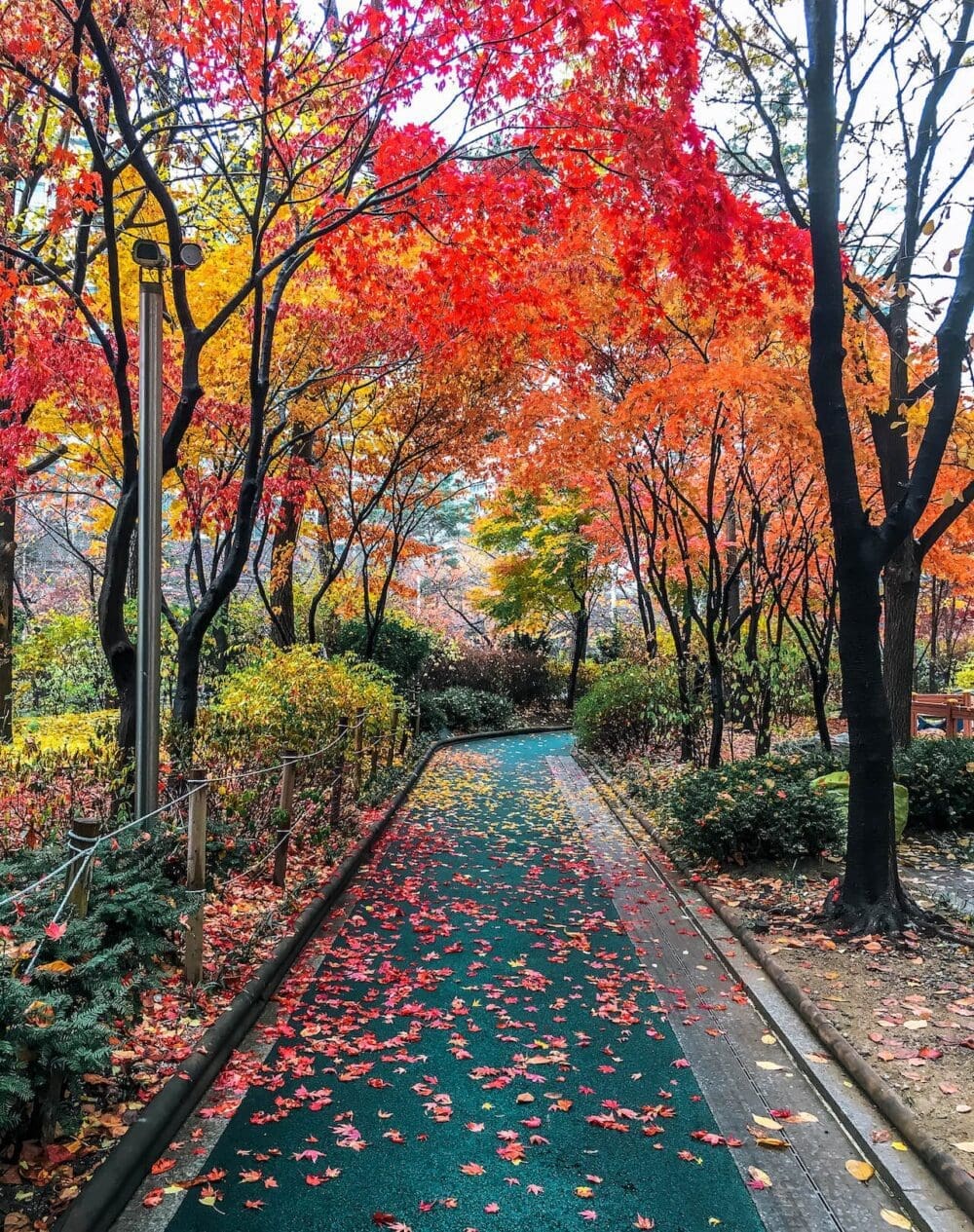
Spanning the months of September, October, and November, autumn in Korea is the most magnificent of the country’s seasons. This is the time of year when you can count on brilliant blue skies, incredibly comfortable weather, and a country bursting with every spectacular shade of orange, yellow, red, (and pink!) imaginable.
*Any purchases made through affiliate links here help run this site.
TITLE: 🍁 Autumn Foliage in Korea 2026 Travel Snapshot INTRO_START Official government foliage forecasts won’t drop until late September, but after 15 years of tracking fall foliage here, I can tell you that Mother Nature follows a reasonably strict pattern. Head to Korea anytime after mid-October and you’re sure to find some gorgeous autumn leaves somewhere in the country. INTRO_END INFO1_ICON: 🏔️ INFO1_LABEL: North and East INFO1_TEXT: Mid to Late October (Seoraksan & northern mountains) INFO2_ICON: 🍂 INFO2_LABEL: Central Korea INFO2_TEXT: Late October to Early November (Seoul & Asan) INFO3_ICON: 🍁 INFO3_LABEL: Southern Regions INFO3_TEXT: Early to Mid-November (Naejangsan & Jangtaesan) INFO4_ICON: 🧳 INFO4_LABEL: Best Window: INFO4_TEXT: October 20th to November 15th for max colour BTN_TEXT: GRAB MY OCTOBER PACKING & FESTIVAL GUIDE HERE → BTN_URL: https://travel-stained.com/korea-in-october-weather-festivals/When is Autumn in Korea?
The autumn season in Korea lasts for approximately 3 months, from September to November. Autumn leaves gradually change colour starting in mid-October, and ending around mid-November.
By the end of November, autumn in South Korea is well and truly over. All of the autumn leaves have fallen from their limbs and it’s time to prepare for a frosty winter and snowfall on the peninsula.

The good news though, is that this gorgeous metamorphosis of leaves is a gradual process that happens over a few months. There’s a big window of time to catch this colourful show during autumn in Korea.
However, if you’re looking for the absolute peak of autumn foliage, I recommend planning a trip to South Korea for sometime between mid-October and mid-November.
When to See Autumn Leaves in Korea
Unlike cherry blossom season in Korea, the window of time to catch the beauty of Korean autumn is a lot bigger. Spanning around a month around the country, there’s a lot more room for error. If you visit in the latter half of October, you’re pretty much guaranteed a colourful spectacle somewhere around Korea.

Fall Foliage Forecast 2026 | Korean National Parks
The official 2026 fall foliage forecast for Korea was just announced, with autumn leaf changing dates about 3 – 7 days later than in previous years. If you’re trying to lock down flights or book hotels in Seoul – get on it as soon as possible. Autumn is peak travel season in Korea, and our tourist numbers have already doubled this year.
Autumn foliage changes first in the cooler, coastal and northern areas of Korea. From there, a wave of colour spreads inwards, and down south through the rest of the country.
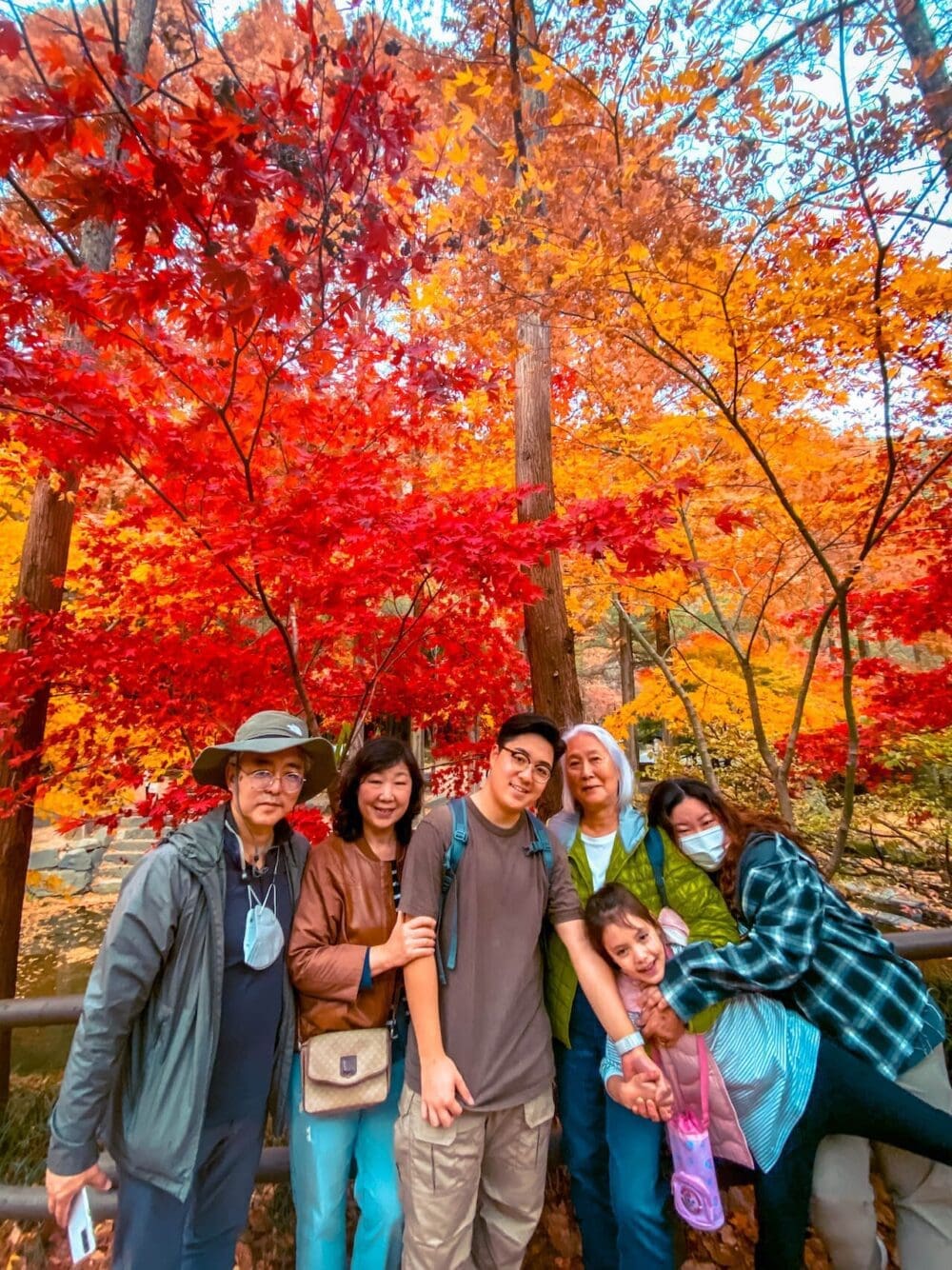
In 2026, autumn leaves in Korea will begin changing colour from around October 3rd in Seoraksan National Park, wash across the country at the end of October and through the first week of November, and finally peak in Naejangsan Mountain and Palgongsan Provincial Park in mid-November.
First Foliage to Peak Foliage
About 20% of autumn leaves have turned by the first fall foliage date. By peak foliage, you can expect that 80% of the trees have changed colour. Peak fall foliage in Korea typically happens about two weeks after the autumn leaves begin to transform, meaning you’ve got a great window of time to catch the most spectacular colours.
You can use my complete 14-park baseline timeline below to start mapping out your autumn in Korea itinerary. This is fully updated based on weatheri’s forecast for the 2026 autumn season in Korea.
HEADERS: Where | First Foliage | Peak Foliage | Province ROW: Seoraksan National Park | October 3rd | October 25th | Gangwon-do ROW: Odaesan National Park | October 7th | October 16th | Gangwon-do ROW: Chiaksan National Park | October 10th | October 31st | Gangwon-do ROW: Gayasan National Park | October 22nd | November 5th | Gyeongsangnam-do ROW: Bukhansan National Park | October 23rd | November 4th | Seoul ROW: Gyeryongsan National Park | October 24th | November 4th | Chungcheongnam-do ROW: Woraksan National Park | October 25th | November 5th | Chungcheongbuk-do ROW: Palgongsan Provincial Park | October 26th | November 12th | Gyeongsangbuk-do ROW: Mudeungsan National Park | October 27th | November 6th | Jeollanam-do ROW: Songnisan National Park | October 27th | November 4th | Chungcheongbuk-do ROW: Jirisan National Park | October 28th | November 5th | Gyeongsangnam-do ROW: Duryunsan Provincial Park | October 29th | November 11th | Jeollanam-do ROW: Hallasan National Park | October 31st | November 13th | Jeju Island ROW: Naejangsan National Park | November 5th | November 11th | Jeollabuk-doLocal Insights on Korea’s Autumn Foliage Forecast
While it’s been one of the hottest summer’s on record temperature-wise, the worst of summer seems to already be practically over. It’s mid-September now, and cooler temperatures arrived with a vengeance a few days ago. One day, I had my air conditioning blasting 24/7, and the next – it was hoodie weather.
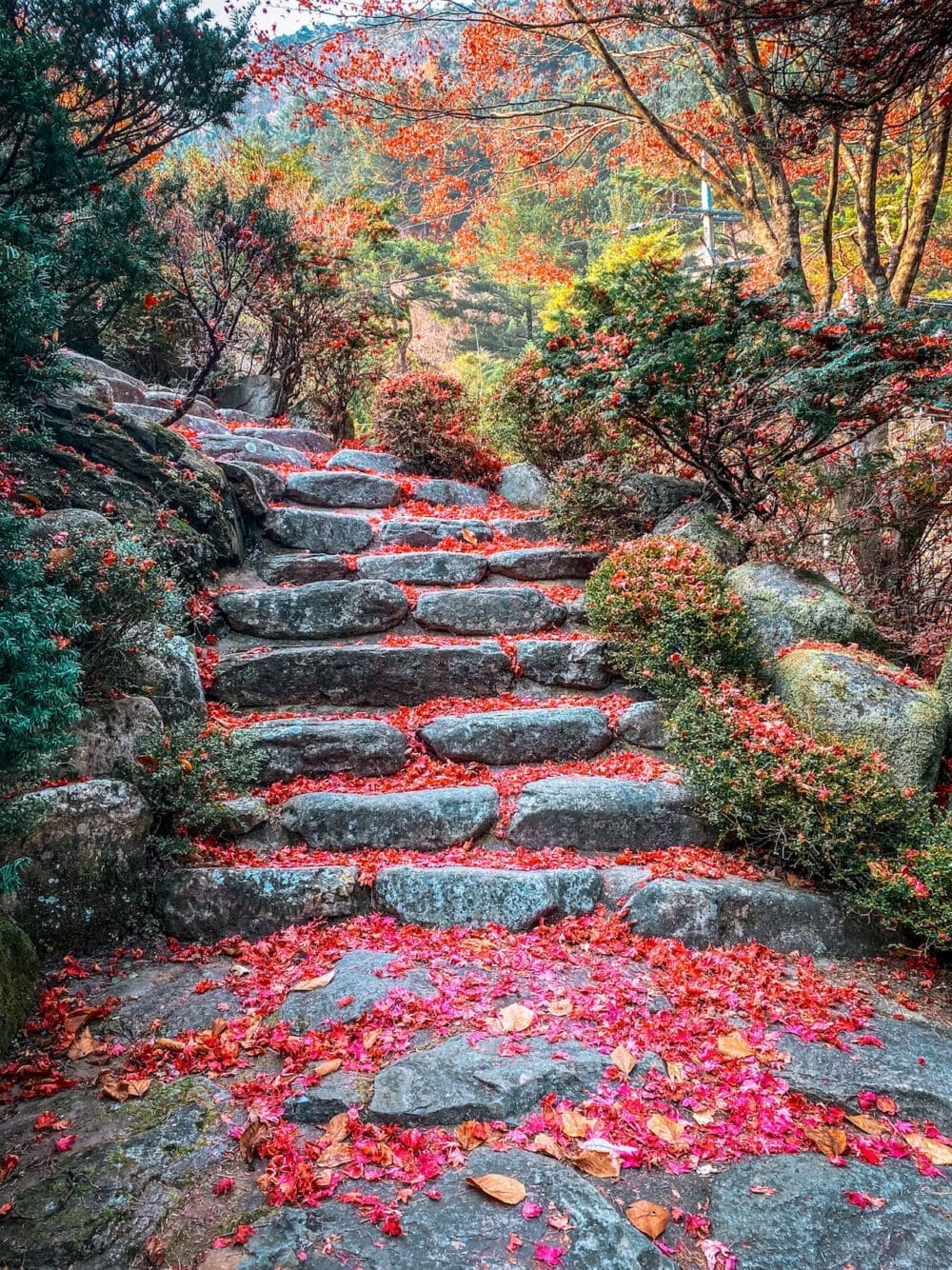
Gangwon-do, the province east of Seoul is always the first place in Korea to start its autumn metamorphosis, and this year is no different. This area is full of soaring mountains and the country’s best ski resorts, so you can count on spectacular fall foliage in early to mid-October.
Korea’s peak foliage forecast dates typically fall between mid-October and mid-November in different parts of the country. This DOESN’T mean that you’ve missed the whole thing. It just means that 80% of autumn leaves will have changed colour by then.
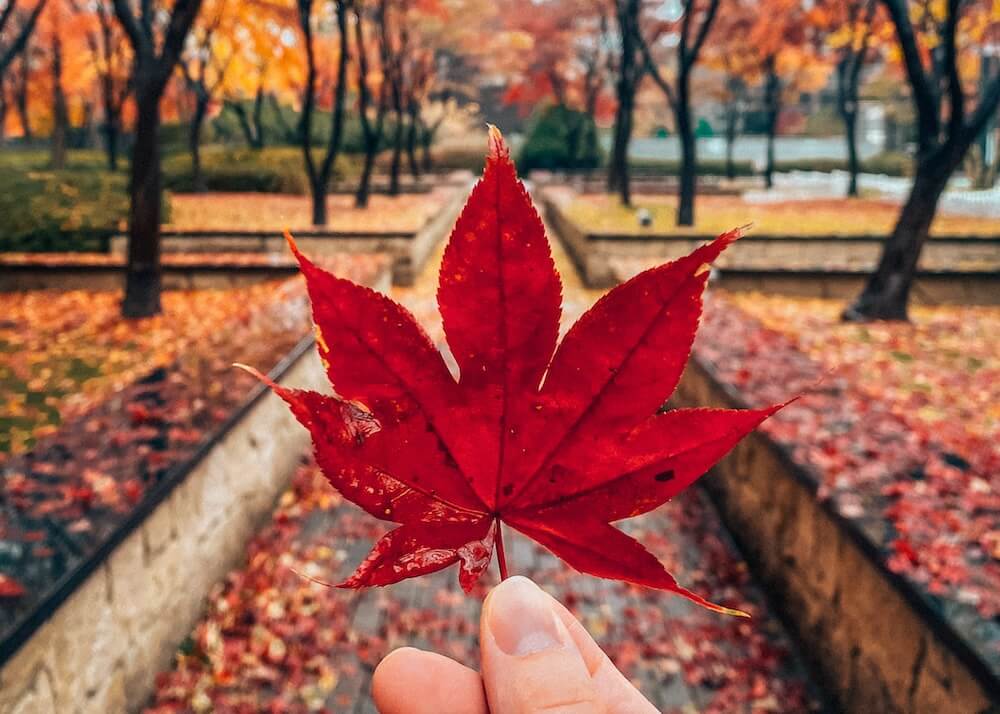
Don’t worry! There’s still plenty of time to enjoy fall foliage in Korea after the forecasted dates. If anything, in my experience, autumn leaves are richer and deeper in colour AFTER the peak foliage dates. It’s even possible to see autumn leaves in Seoul, as late as the third week of November (and there have even been years with autumn leaves still around in early December!)
TITLE: 🍁 BEYOND THE FALL FOLIAGE FORECAST BODY_START While tracking down the crimson maples and golden ginkgo rows is an absolute must, the changing trees are really only half the story. Don’t miss out on the incredible autumn gardens that peak at the exact same time. If you want to balance your foliage routes with fields of pink cosmos and vibrant kochia, check out my expat guide to autumn flowers in South Korea to plan your daily trips. BODY_ENDAutumn in Korea | Weather Month by Month
After the exhausting heat and humidity of summer, the weather seems to change overnight in September. There’s a collective sigh of relief, because the autumn season in Korea is the one we all look forward to most.
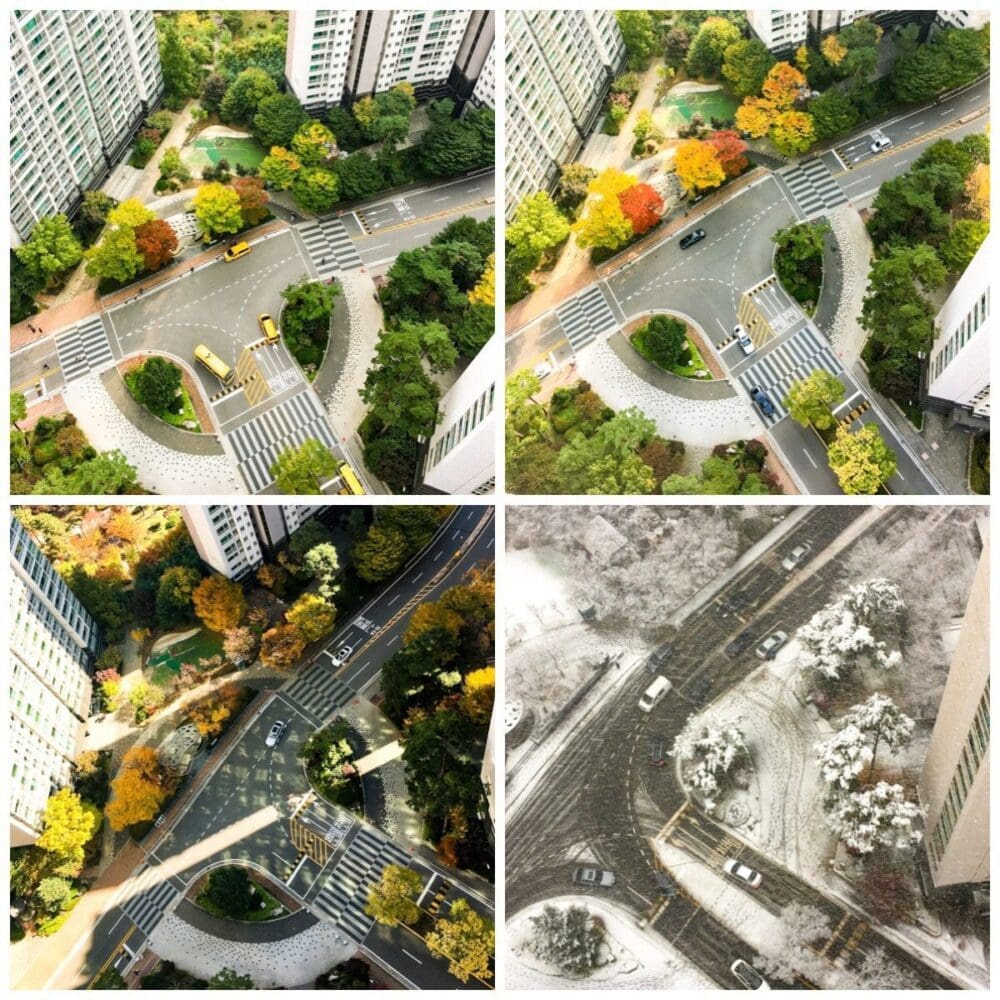
The stunning transformation of autumn leaves in Korea doesn’t truly start until mid-October though, and it’s not until the end of November that trees are totally barren. There’s plenty of time to see fall foliage in Korea at every stage of its colourful transition.
September Weather
After the oppressive humidity and stifling temperatures of summer in Korea, September is wonderfully refreshing, with ideal temperatures, minimal mugginess, and stunning sun-filled days. Average temperatures across the country range from 17°C | 63°F to 27°C | 81°F, and it’s a very, very comfortable time to be outside.
C1_NAME: Seoul C1_LOW: 17°C (63°F) C1_HIGH: 26°C (79°F) C1_RAIN: 138 mm (5.4 in) C2_NAME: Busan C2_LOW: 19°C (66°F) C2_HIGH: 26°C (79°F) C2_RAIN: 157 mm (6.2 in) C3_NAME: Jeju Island C3_LOW: 20°C (68°F) C3_HIGH: 26°C (79°F) C3_RAIN: 222 mm (8.7 in) C4_NAME: Gyeongju C4_LOW: 15°C (59°F) C4_HIGH: 25°C (77°F) C4_RAIN: 142 mm (5.6 in)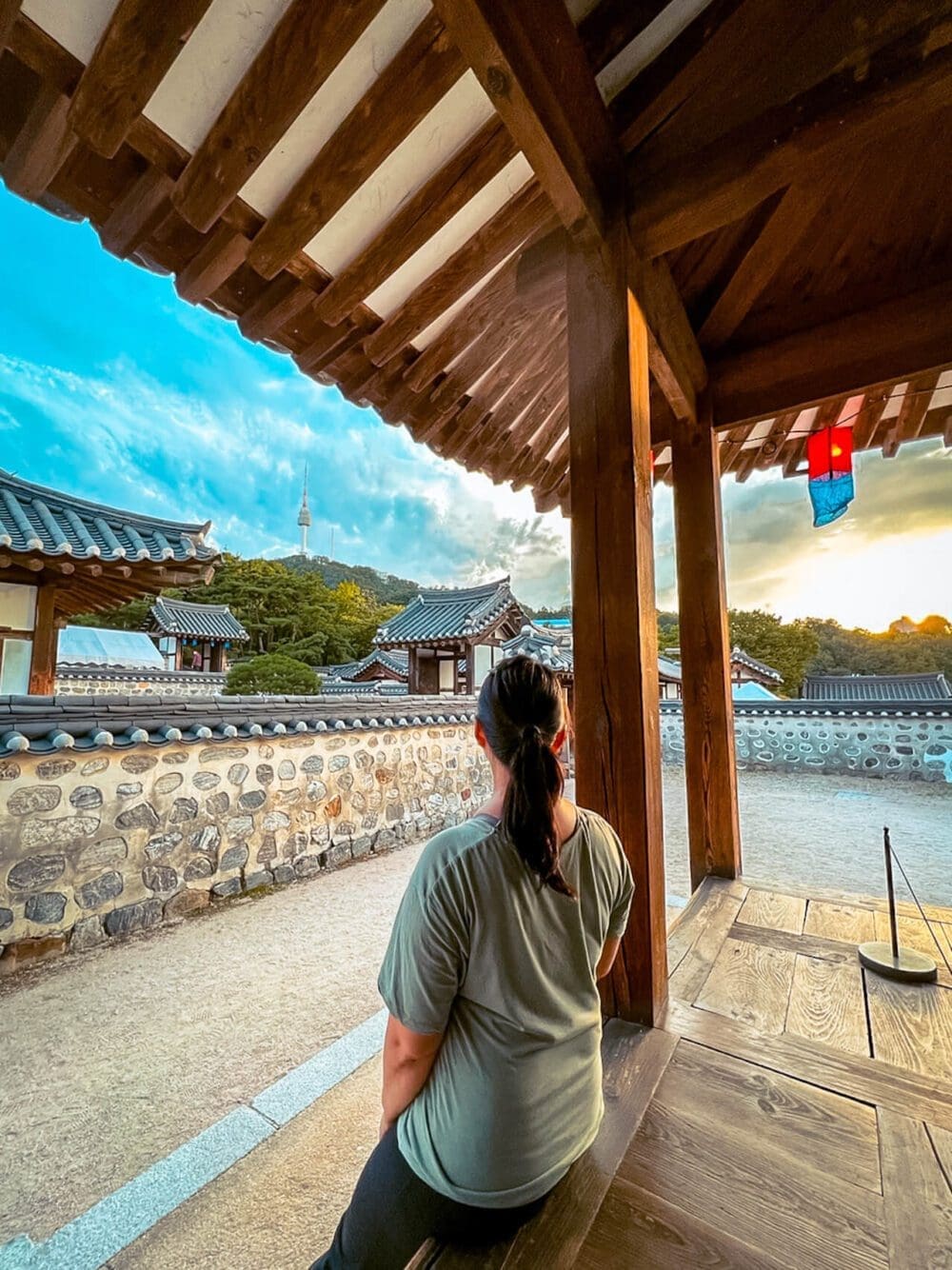
It’s raining more and more in Korea during September, but it’s not really anything to worry about (unless there’s a typhoon in the works). Overall, this is a a great month during autumn in Korea to spend as much time as possible in outdoor pursuits like hiking or biking.
October Weather
With its bright sky, cooler temperatures, and beautiful colours, October is my favourite month of autumn in Korea by far. This is the only time of the year, when you can see both pink muhly grass AND a kaleidoscope of spectacular autumn leaves at the same time.

Average temperatures range from 10°C | 50°F to 20°C | 68°F across the country, with the nights definitely a bit cooler. If you plan to be out exploring for an entire day and night, it’s wise to wear multiple layers of clothing to prepare for the October weather in Korea.
C1_NAME: Seoul C1_LOW: 10°C (50°F) C1_HIGH: 20°C (68°F) C1_RAIN: 49 mm (1.9 in) C2_NAME: Busan C2_LOW: 14°C (57°F) C2_HIGH: 22°C (72°F) C2_RAIN: 58 mm (2.3 in) C3_NAME: Jeju Island C3_LOW: 15°C (59°F) C3_HIGH: 21°C (70°F) C3_RAIN: 80 mm (3.1 in) C4_NAME: Gyeongju C4_LOW: 9°C (48°F) C4_HIGH: 20°C (68°F) C4_RAIN: 44 mm (1.7 in)November Weather
It gets a lot colder in Korea in November, with average temperatures ranging between 3 to 11°C | 38 to 53°F across the country. This is definitely the month to pull out thicker sweaters, coats and warmer shoes.
C1_NAME: Seoul C1_LOW: 3°C (37°F) C1_HIGH: 11°C (52°F) C1_RAIN: 53 mm (2.1 in) C2_NAME: Busan C2_LOW: 8°C (46°F) C2_HIGH: 15°C (59°F) C2_RAIN: 49 mm (1.9 in) C3_NAME: Jeju Island C3_LOW: 9°C (48°F) C3_HIGH: 16°C (61°F) C3_RAIN: 72 mm (2.8 in) C4_NAME: Gyeongju C4_LOW: 3°C (37°F) C4_HIGH: 12°C (54°F) C4_RAIN: 40 mm (1.6 in)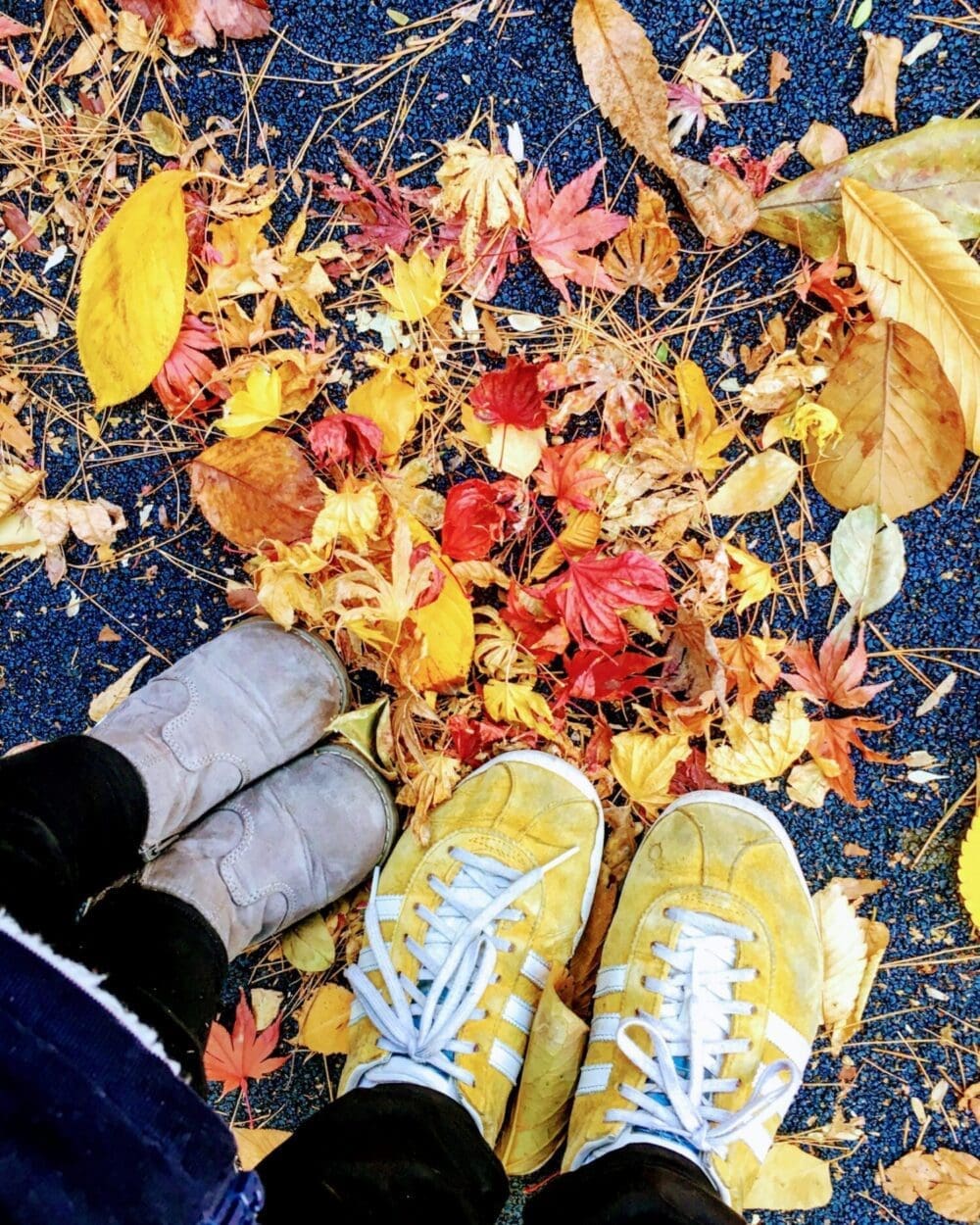
Autumn in Korea is at full peak at the beginning of November, with rocky slopes and grey streets painted in vivid crimsons, burnt oranges and mellow yellows. By the third week of November though, there’s only a bit of hardy colour hanging on, so be sure to get out as early in the month as possible.
Korea Travel Essentials
Don’t board that plane to Seoul until you’ve sorted out accommodation, transport from the airport, and your data on the ground.
What to Wear & Pack for Korea in Autumn
Packing for autumn in South Korea is all about mastering the art of layering. While September starts out beautifully balmy, the weather shifts rapidly by mid-October, bringing schizophrenic temperature swings. You will often experience warm, sun-drenched afternoons hovering around 20°C (68°F) that quickly give way to crisp, single-digit chills as soon as the sun dips.

By November, northern regions and mountainous national parks like Seoraksan plunge straight toward freezing, requiring a much heavier approach to staying warm. To stay comfortable from day to night, your golden rule is to avoid heavy, single-layer items and instead pack flexible layers, like mid-weight sweaters, cozy hoodies, and wind-resistant outer shells – that you can strip off or pile on as you navigate the changing microclimates.
TITLE: 🛍️ UNDER-PACKED? SEOUL HAS YOU COVERED! BODY_START If you get caught off guard by a sudden autumn cold snap, don’t panic! Neighbourhoods like Myeong-dong, Hongdae, and Dongdaemun are packed with budget-friendly local boutiques, underground shopping terminals, and global staples like Uniqlo and Spao. You can easily pick up ultra-trendy, high-quality trench coats, thick knit sweaters, or affordable thermal base layers on the fly, often for much cheaper than buying them back home. BODY_END
Because an incredible autumn itinerary in Korea involves extensive walking through tree-lined urban city streets and uneven park trails, broken-in sneakers, sturdy walking shoes, or comfortable hiking boots are an absolute necessity rather than a suggestion. Here’s what I recommend packing for your fall foliage trip to Korea.
TITLE: 🎒 PACKING & TRAVEL BLUEPRINT FOR AUTUMN COL1_TITLE: What to Pack COL2_TITLE: Buy In Korea PACK_ITEM: Travel Documents: Passport, printed hotel confirmations, credit cards, travel insurance details PACK_ITEM: Type C & F plug adapters (Korea uses the round 2-pin style) PACK_ITEM: Long-sleeve shirts, cozy hoodies, and light knit sweaters for layering PACK_ITEM: Mid-weight trousers, comfortable jeans, and durable hiking pants PACK_ITEM: Thermal base layers (like Uniqlo Heattech) if visiting from late October onward PACK_ITEM: A versatile trench coat, fleece jacket, or light packable puffer coat PACK_ITEM: Lightweight scarf and a beanie hat to shield against chilly mountain winds PACK_ITEM: Sturdy, broken-in sneakers or water-resistant walking shoes for trail leaf-peeping PACK_ITEM: Small travel umbrella or a compact packable windbreaker PACK_ITEM: Essential prescription medicines and a high-capacity portable power bank BUY_ITEM: Disposable heat packs (Hot-packs / 핫팩) at local convenience stores BUY_ITEM: High-moisture Korean skincare & lip balms to handle the dry autumn air BUY_ITEM: Trendsetting autumn fashion pieces (coat trends change fast in Seoul!) BTN_TEXT: CHOOSE CONVENIENT & AFFORDABLE AUTUMN FOLIAGE DAY TOURS HERE → BTN_URL: https://www.klook.com/search/result/?aid=api%7C13694%7C7b506b9c6cfe4c638b3ef74a0-540280%7Cpid%7C540280&query=autumn%20korea&search_scope=main_search&aff_pid=540280&aff_sid=&aff_adid=918647&utm_medium=affiliate-alwayson&utm_source=network&utm_campaign=13694&utm_term=540280&utm_content=&aff_klick_id=138216037846-api%7C13694%7C7b506b9c6cfe4c638b3ef74a0-540280%7Cpid%7C540280-918647-622d32bMy 6 Favourite Fall Foliage Spots in Korea
While there are a gazillion and one stunning places to visit during autumn in Korea, these are the 6 spots that left me gawking at the undeniable beauty of nature.
Hwadam Botanic Garden | 화담숲
I FINALLY got to check this gorgeous autumn in Korea hotspot off my list last year… and it was as stunning as I expected it to be (check out my complete guide here). Watching that monorail peek through Korea’s fall foliage was like the best game of hide and seek ever.

It’s notoriously difficult to reserve tickets for Hwadam Botanic Garden, but as a foreign passport holder, you don’t have to worry about it. Simply show up at the entrance with your passport, buy a ticket, and enter. Tickets are limited to 1 ticket per passport.
If you happen to have a local number, you can reserve advance tickets here, and avoid the line-ups by entering with a QR Code instead.
NAME: Hwadam Botanic Garden | 화담숲 DESCRIPTION_START An eco-friendly, beautifully manicured forest sanctuary just outside Seoul, offering peaceful monorail rides through rolling hills blanketed in brilliant maples. DESCRIPTION_END TRANSIT_LABEL: Getting There: TRANSIT_TEXT: Take the Gyeonggang Line to Gwangju-Gyeonggi Station, then hop in a quick local taxi to Konjiam Resort. ENG_LABEL: Address: ENG_TEXT: 278 Docheogwit-ro, Docheok-myeon, Gwangju-si, Gyeonggi-do KOR_TEXT: 경기도 광주시 도척면 도척윗로 278Nami Island | 남이섬
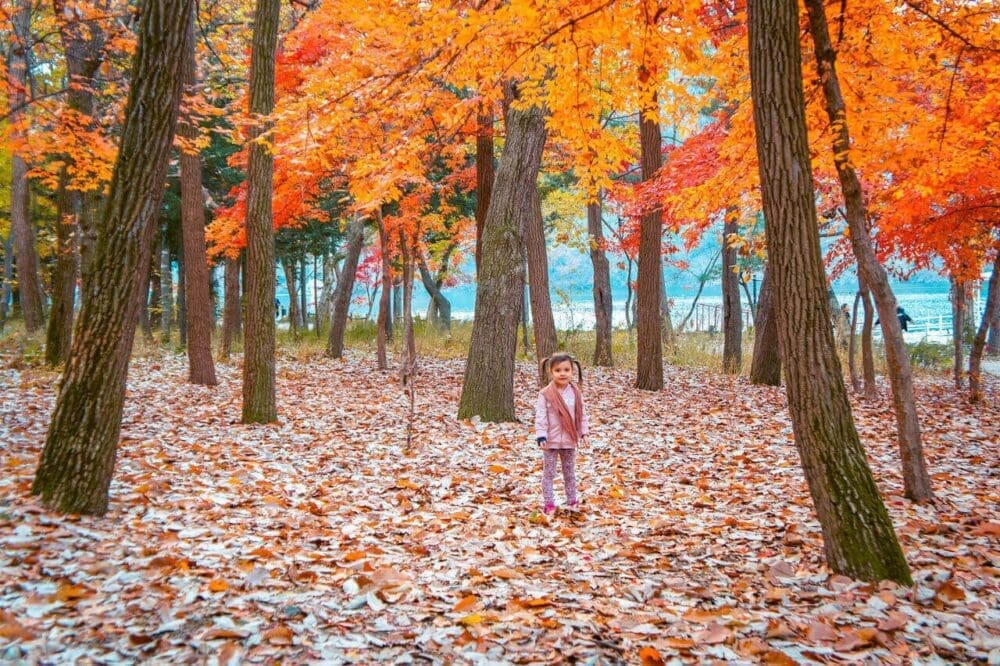
It took me nearly 10 years to visit Nami Island in autumn, but it was worth the wait. Between the lights strung up on its Metasequoia pathway, and the stunning forest full of fallen red leaves, I felt like I’d stepped into some fairytale wonderland too pretty to be real.
Jangtaesan Recreational Forest | 장태산자연휴양림
Wow! Wow! Wow! Jangtaesan Recreational Forest in Daejeon is literally one of the most unique and beautiful places I’ve seen during autumn in Korea.
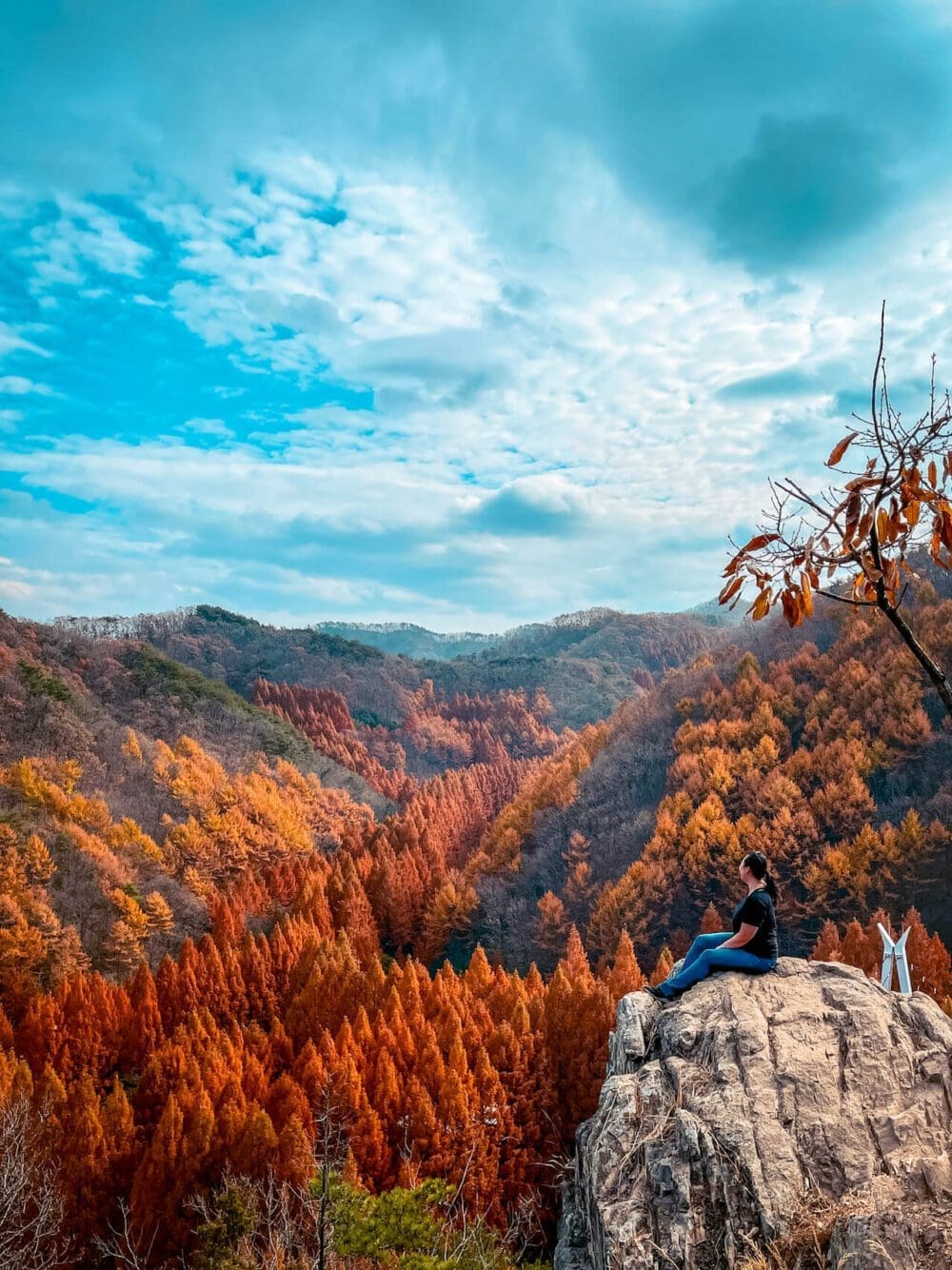
Jangtaesan isn’t just home to the largest metasequoia forest in Korea, there’s also a bridge, tower, and children’s playground. To see the fall foliage in this unbelieveable shade of burnt orange, head to Daejeon in early to mid-November. Don’t hesitate – just GO!
NAME: Jangtaesan Recreational Forest | 장태산자연휴양림 DESCRIPTION_START A stunning mountain retreat packed with over six thousand massive metasequoia trees that turn a rich rusty orange late in the autumn season. DESCRIPTION_END TRANSIT_LABEL: Getting There: TRANSIT_TEXT: Head to Daejeon Station or Daejeon Bus Terminal, then take local Bus 20 straight to the mountain entrance area. ENG_LABEL: Address: ENG_TEXT: 461 Jangan-ro, Seo-gu, Daejeon KOR_TEXT: 대전광역시 서구 장안로 461Asan Ginkgo Tree Road | 아산은행나무길
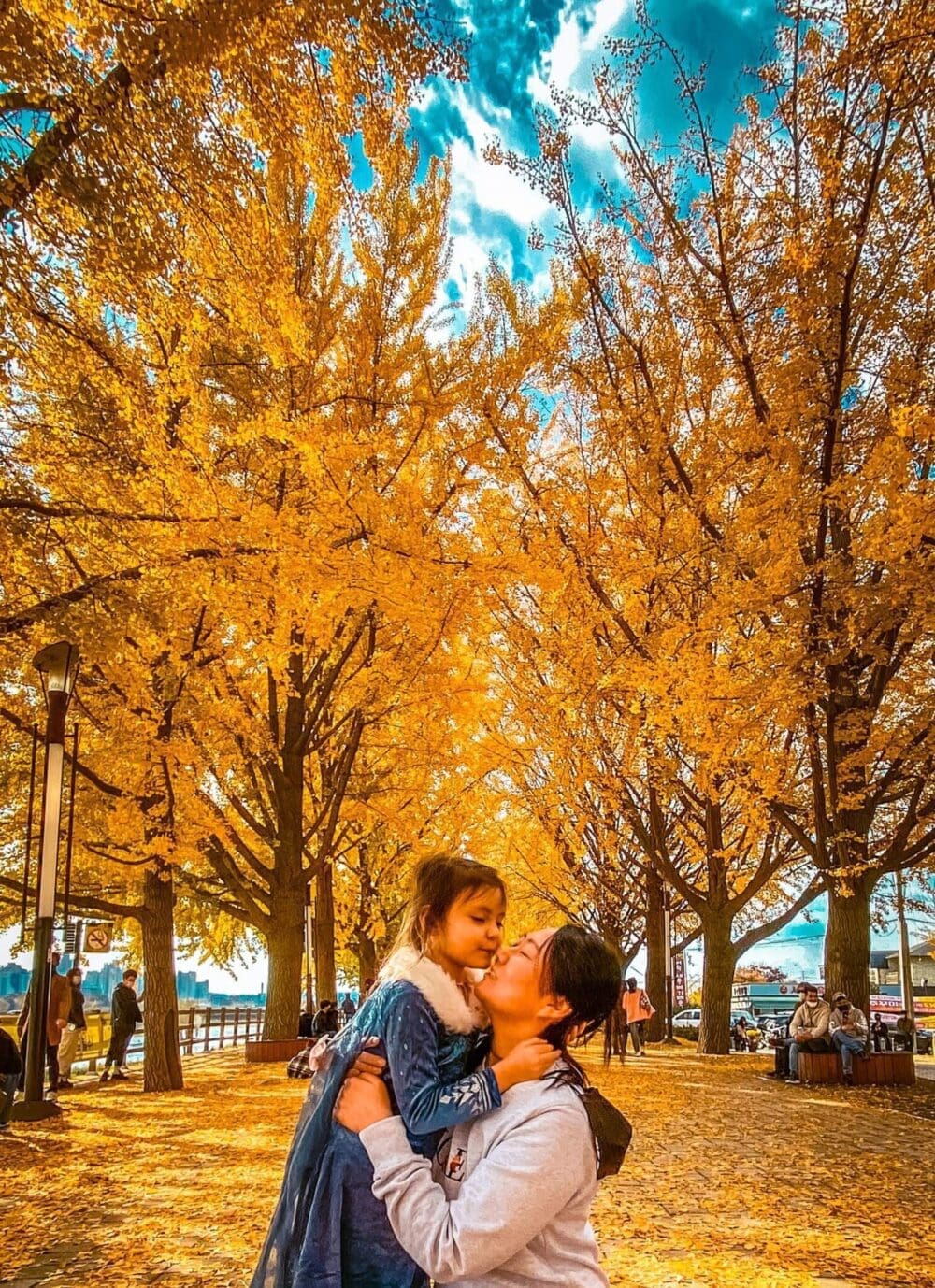
Ginkgo leaves turn a glorious shade of golden yellow as they fall, and the Asan Ginkgo Tree Road in Chungcheongnam-do is one of the most revered places to see them in Korea in autumn. This street took my breath away. Literally.
Hyangiram Hermitage | 향일암
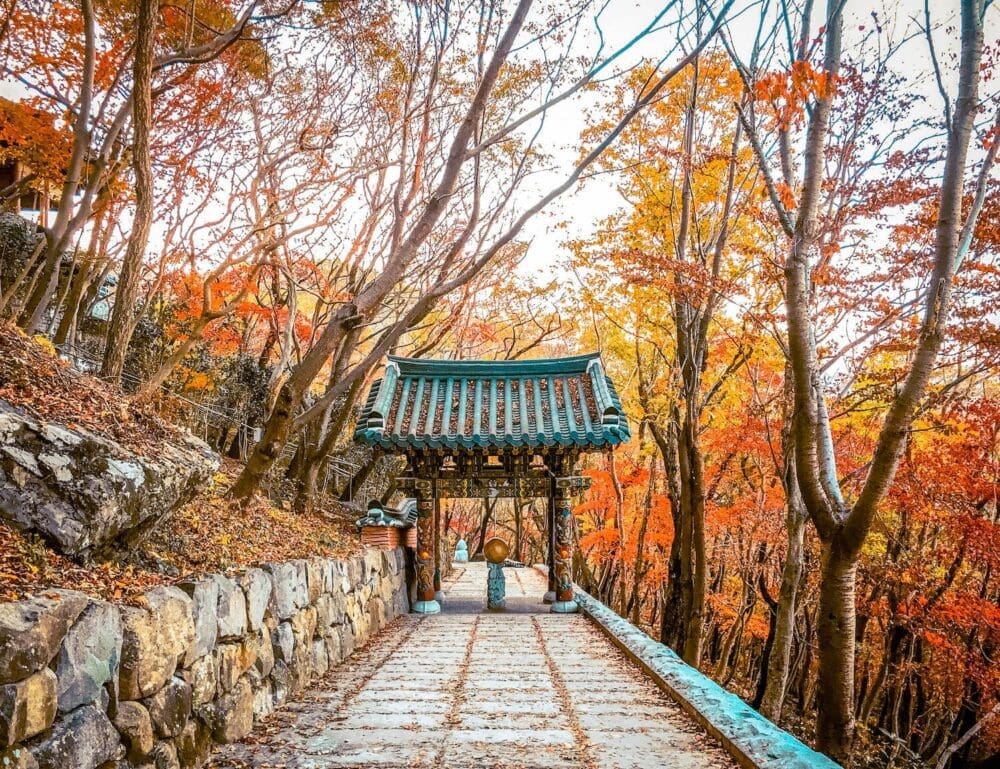
Getting to Hyangiram Hermitage in Yeosu requires a short hike up Geumosan Mountain. During autumn in Korea, the towering trees and gorgeous fall foliage render the landscape simply extraordinary. Being enveloped by nature this incredible will stay in your memory, long after you’ve left.
It’s easiest and most convenient to get to Yeosu via KTX high speed train. It travels at 300-km per hour, so you’ll be there before you know it.
NAME: Hyangiram Hermitage | 향일암 DESCRIPTION_START A coastal cliffside temple tucked away on the edge of Dolsan Island, giving you views of ocean horizons paired with vibrant mountain autumn colors. DESCRIPTION_END TRANSIT_LABEL: Getting There: TRANSIT_TEXT: Travel to Yeosu Expo KTX Station, then head outside to the bus stop and catch local Bus 111 or 116 for the scenic ride down to Impo village. ENG_LABEL: Address: ENG_TEXT: 60 Hyangiram-ro, Dolsan-eup, Yeosu-si, Jeollanam-do KOR_TEXT: 전라남도 여수시 돌산읍 향일암로 60Olympic Park | 올림픽공원
There’s gorgeousness to be found in Olympic Park in every season, but autumn in Korea might just be the best. This huge park in Jamsil has thousands of trees shedding their autumn leaves in spectacular fashion, and a garden full of orange cosmos.
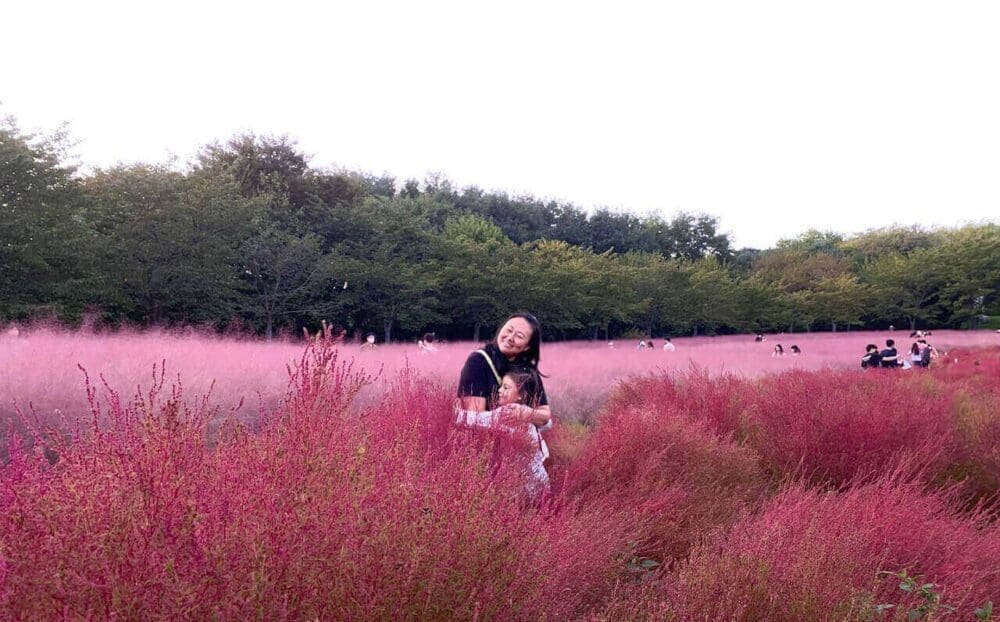
The huge field of pink muhly grass was pulled out a few years ago (details here), but Olympic Park is still worth a visit. Don’t miss it.
NAME: Olympic Park | 올림픽공원 DESCRIPTION_START A vast urban park in eastern Seoul packed with rolling green lawns, autumn wildflowers, and pathways covered in deep crimson leaves. DESCRIPTION_END TRANSIT_LABEL: Getting There: TRANSIT_TEXT: Take Subway Line 9 to Olympic Park Station, Exit 3, or use Line 8 to get off at Mongchontoseong Station, Exit 1. ENG_LABEL: Address: ENG_TEXT: 424 Olympic-ro, Songpa-gu, Seoul KOR_TEXT: 서울특별시 송파구 올림픽로 424Best Autumn Tours in Korea

Many of the best fall foliage spots in Korea are located in rural areas, or nestled deep inside provincial and national parks. Trying to do it independently using public transport is often time-consuming and more expensive, so joining a day tour is the easiest and most affordable way to see them.
H1: Tour H2: Dates H3: Where H4: Book ROW_START NAME: Seoraksan + Nami Island DATE: Ongoing LOC: Gangwon-do URL: https://klook.tpk.ro/ABqTAv4Z ROW_END ROW_START NAME: Seoraksan National Park + Sinheungsa Temple DATE: September 4th – November 13th LOC: Gangwon-do URL: https://klook.tpk.ro/EXGCUtJ4 ROW_END ROW_START NAME: Daegu Palgongsan Autumn Day Tour DATE: September 4th – October 31st LOC: Daegu URL: https://klook.tpk.ro/mTJTAaos ROW_END ROW_START NAME: Jangtaesan & Jeonju Hanok Village Day Tour DATE: September 17th – November 30th LOC: Jeonju & Daejeon URL: https://klook.tpk.ro/DJGAAQW3 ROW_END ROW_START NAME: Pocheon Autumn Highlights: Pink Muhly, Sanjeong Lake & Apple Picking DATE: September 17th – November 30th LOC: Pocheon URL: https://klook.tpk.ro/Anu9KlOx ROW_END ROW_START NAME: Jeju Fall Foliage, Tangerine Picking, Pink Muhly & Silver Grass Tour DATE: September 20th – November 30th LOC: Jeju Island URL: https://klook.tpk.ro/yHP9me27 ROW_END ROW_START NAME: Seoraksan (Osaek Autumn Foliage) + Nami, Alpaca World, Morning Calm DATE: October 1st – November 30th LOC: Gangwon-do URL: https://klook.tpk.ro/WgLV3OcY ROW_END ROW_START NAME: Seoul City Autumn Tour (Gamaksan, Eunpyeong Hanok Village, Haneul Park & Jingwansa) DATE: October 1st – November 30th LOC: Seoul URL: https://klook.tpk.ro/NeE3Xrv2 ROW_END ROW_START NAME: Seoraksan Day Tour with Cable Car DATE: October 12th – November 13th LOC: Gangwon-do URL: https://klook.tpk.ro/7RQCxI6y ROW_END ROW_START NAME: Hwadam Botanic Garden + Namhansanseong Fortress (UNESCO) & Korean Folk Village DATE: October 23rd – November 15th LOC: Gyeonggi-do URL: https://klook.tpk.ro/EftsSkfQ ROW_END ROW_START NAME: Naejangsan from Seoul and Busan + Optional Transfer Day Tour DATE: November 2nd – 20th LOC: Jeonbuk URL: https://klook.tpk.ro/yF9s1Hfu ROW_END ROW_START NAME: Naejangsan National Park Autumn Foliage Tour DATE: November 2nd – 20th LOC: Jeonbuk URL: https://klook.tpk.ro/7RQCxI6y ROW_END ROW_START NAME: Seoraksan National Park Hiking Tour (Private or Join-in) DATE: Last 2 weeks of October recommended LOC: Gangwon-do URL: https://www.trazy.com/experience/detail/seoraksan-national-park-hiking-tour?ref=TS0924&ad_id=7873 ROW_ENDBest Places to Visit in Korea during Autumn
Korea is a small country that’s nearly 80% mountainous. That means that national and provincial parks are some of the best places to see autumn foliage in the country.
There are national parks to discover near every major city, with hiking trails of varying difficulty, hidden temples, and some of the most stunning landscapes to be found during autumn in Korea. Research all the national parks in Korea here.

However, I bet you’d be surprised by just how many gorgeous autumn spots there are in cities too. And of course, you must include a stop at one of the many cafes in Korea – some of which take such advantage of their natural surroundings, they look like a painting.
I’ve organized this section by province, to make it easier to plan your autumn itinerary around Korea. If you don’t have a car, it’s best to map out your route on Naver or Kakao Maps before finalizing your stops. Some places might be close geographically on a map, but take a lot longer to get between using trains and buses.
Autumn in Korea | Seoul
The reality is that you do not actually have to travel deep into the countryside to see some of the best autumn scenery in Korea. Seoul might be one of the biggest cities on earth, but it’s still full of tree-lined streets, city parks, and a ton of spectacular fall foliage to gawk at during autumn in Korea.
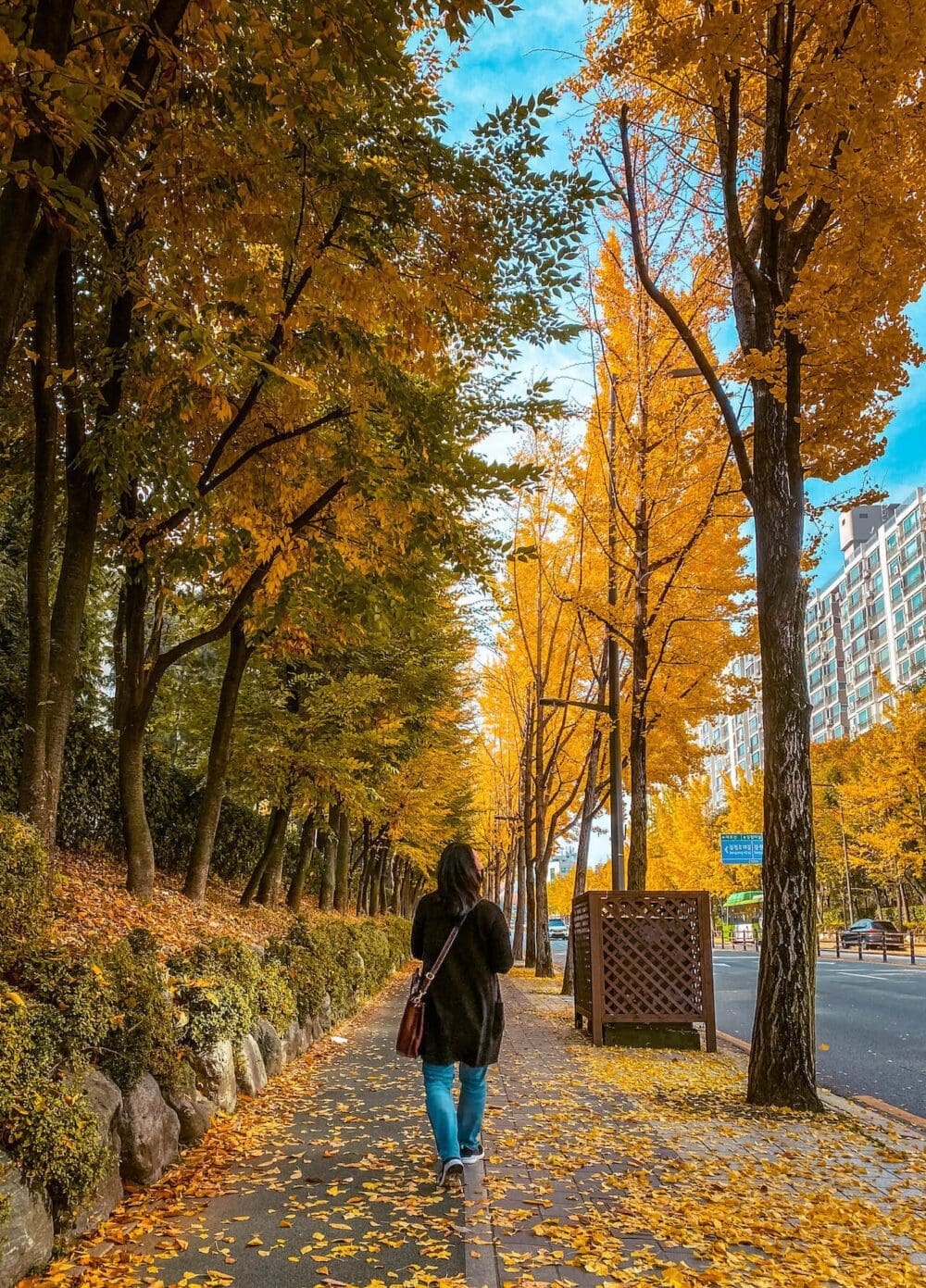
While you can easily catch sweeping mountain views from the granite peaks of Bukhansan National Park or wander through the shimmering fields of silver pampas grass at Haneul Sky Park, the historic heart of the city has plenty of magic of its own.
Iconic city landmarks like Gyeongbokgung Palace, the Secret Garden at Changdeokgung, Deoksugung Doldam-gil, Namsan Mountain, Seoul Forest, and Seokchon Lake all put on an incredible show as the autumn leaves change colour.
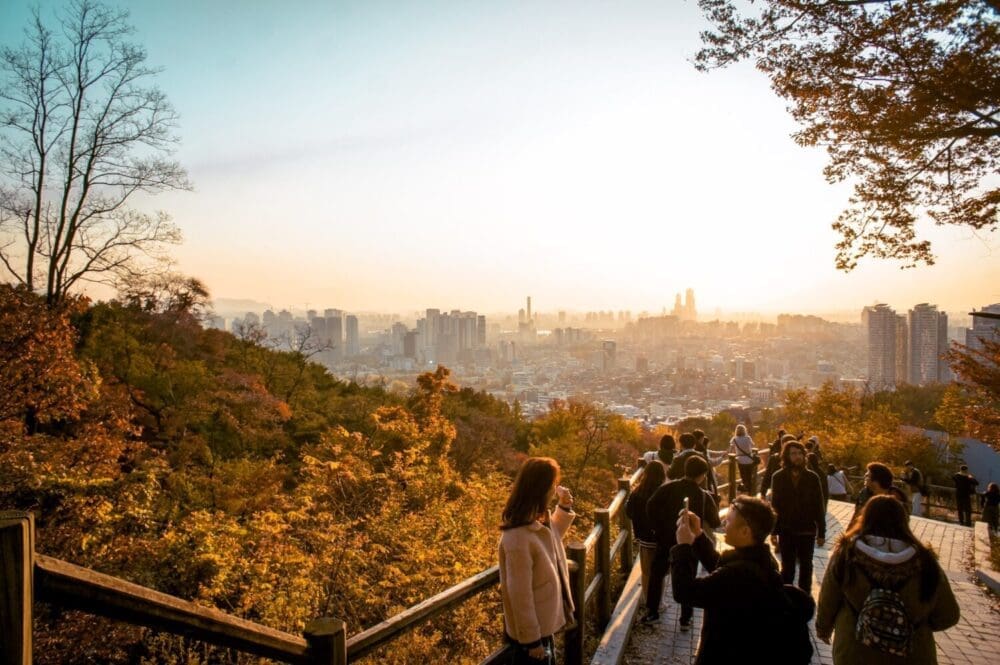
If you’re spending the majority of your vacation exploring fall foliage within the city limits, head over to my dedicated Seoul city guide for full details.
HEADLINE: 🍁 STAYING IN SEOUL FOR FALL FOLIAGE THIS TIME? DESC_START I’ve put together a separate guide to fall foliage in Seoul that breaks down 19 different locations in detail. Click through to discover my favourite hidden neighbourhood ginkgo tree roads, secret leaf spots, and the absolute best places to see the leaves from above. DESC_END BTN_TEXT: SEE 19 SPECTACULAR PLACES TO VISIT IN SEOUL DURING AUTUMN HERE → BTN_URL: https://travel-stained.com/autumn-in-seoul-fall-foliage/Autumn in Korea | Gyeonggi-do
Gyeonggi-do is the region surrounding Seoul. It actually has a bigger population than the capital and includes cities like Suwon, Yongin, and Pyeongtaek. It’s also awash in incredible natural landscapes and perfect fall foliage. Here’s some spots to check out during autumn in South Korea.
Namhansangseong Provincial Park | 남한산성도립공원
UNESCO listed Namhansanseong Fortress is worth a visit at any time of the year, but it might be more so when the leaves start to turn, during autumn in Korea. Namhansanseong Provincial Park is a fall foliage hotspot for hiking and exploring, due to its beauty and easy access from Seoul.

There are restaurants, cafes, and more on-site, as well as an annual cultural festival held every autumn in South Korea. It’s recommended to get there using public transit, since parking is limited and quite difficult in the park. Get more details here.
NAME: Namhansangseong Provincial Park | 남한산성도립공원 DESCRIPTION_START An ancient mountain fortress city sitting just southeast of Seoul, offering easy walking trails along historic stone walls wrapped in rich autumn forest colors. DESCRIPTION_END TRANSIT_LABEL: Getting There: TRANSIT_TEXT: Take Subway Line 8 to Sanseong Station, Exit 2. From there, jump on local Bus 9 or 9-1, which takes you up the winding mountain road straight into the fortress village. ENG_LABEL: Address: ENG_TEXT: 731 Namhansansung-ro, Namhansansung-myeon, Gwangju-si, Gyeonggi-do KOR_TEXT: 경기도 광주시 남한산성면 남한산성로 731Garden of Morning Calm | 아침고요수목원
The Garden of Morning Calm is worth a visit in every season (even winter), but autumn is something special. Full of wild chrysanthemum, pink muhly, golden ginkgo, and flaming maple, it’s truly something to behold.
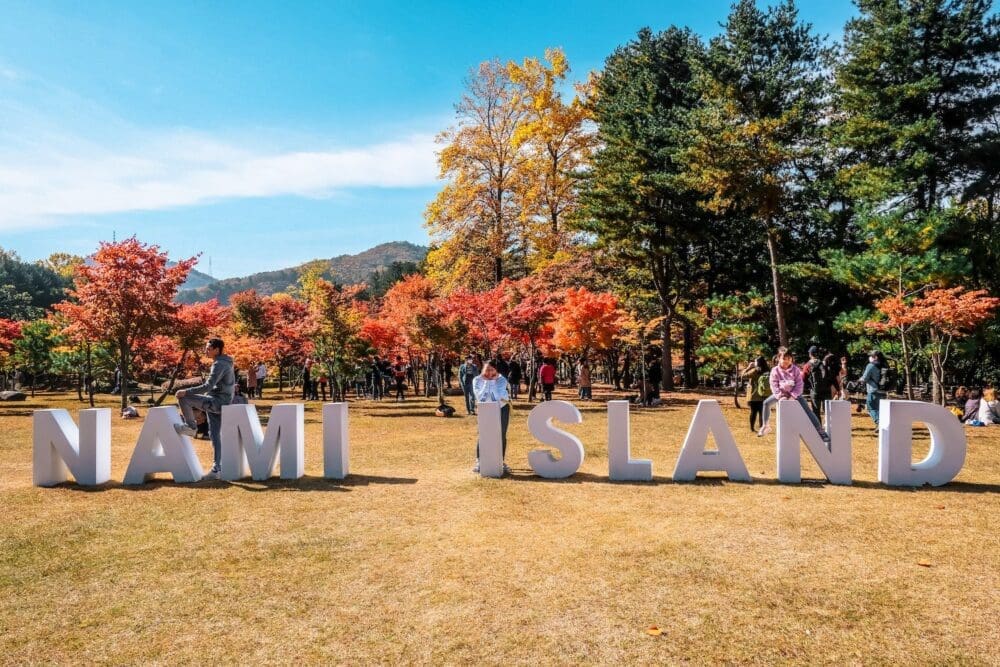
Along with Nami Island, the Gangchon Rail Bike, Alpaca World, and Petite France, the Garden of Morning Calm is one of the most popular day trips from Seoul. Check out all the different day trip options here.
NAME: Garden of Morning Calm | 아침고요수목원 DESCRIPTION_START One of Korea’s oldest and most iconic private botanical gardens, featuring beautifully sculpted themed garden beds against a backdrop of crisp mountain foliage. DESCRIPTION_END TRANSIT_LABEL: Getting There: TRANSIT_TEXT: Ride the Gyeongchun Line train or the ITX-Cheongchun to Cheongpyeong Station. Head out to the bus terminal right outside the station and catch the Gapyeong City Tour Bus or a local shuttle bus straight to the garden gates. ENG_LABEL: Address: ENG_TEXT: 432 Sumogwon-ro, Sang-myeon, Gapyeong-gun, Gyeonggi-do KOR_TEXT: 경기도 가평군 상면 수목원로 432Yongmunsa | 용문사
There’s one big reason to make the journey out to Yongmunsa Temple in Yangpyeong during autumn in Korea. It’s the home of Asia’s tallest ginkgo tree. This gorgeous tree is 1,100 years old, towers 60-metres high, and has a circumference of 14-metres. The tree is protected as one of Korea’s Natural Monuments.

See the biggest gingko tree imaginable at Yongmunsa, relax at a super quirky cafe, then cap off the day with an cruise atop the Han River in Seoul/ Check full details here.
NAME: Yongmunsa Temple | 용문사 DESCRIPTION_START A peaceful mountain temple home to a legendary, ancient ginkgo tree that is over eleven hundred years old and stands as a giant tower of solid gold every autumn. DESCRIPTION_END TRANSIT_LABEL: Getting There: TRANSIT_TEXT: Take the Gyeongui-Jungang Line subway all the way to the final stop at Yongmun Station, Exit 1. From the station bus stop, hop on local Bus 7-4 or 7-8 to the Yongmunsa intercity bus terminal. ENG_LABEL: Address: ENG_TEXT: 26 Yongmunsan-ro, Yongmun-myeon, Yangpyeong-gun, Gyeonggi-do KOR_TEXT: 경기도 양평군 용문면 용문산로 26Yangju Nari Park | 양주나리공원
Head to Nari Park in Yangju, not for orange, yellow, and red, but for pink, pink, pink. By the way – I hold Yangju Nari Park partially responsible for the whole pink muhly craze in Korea.
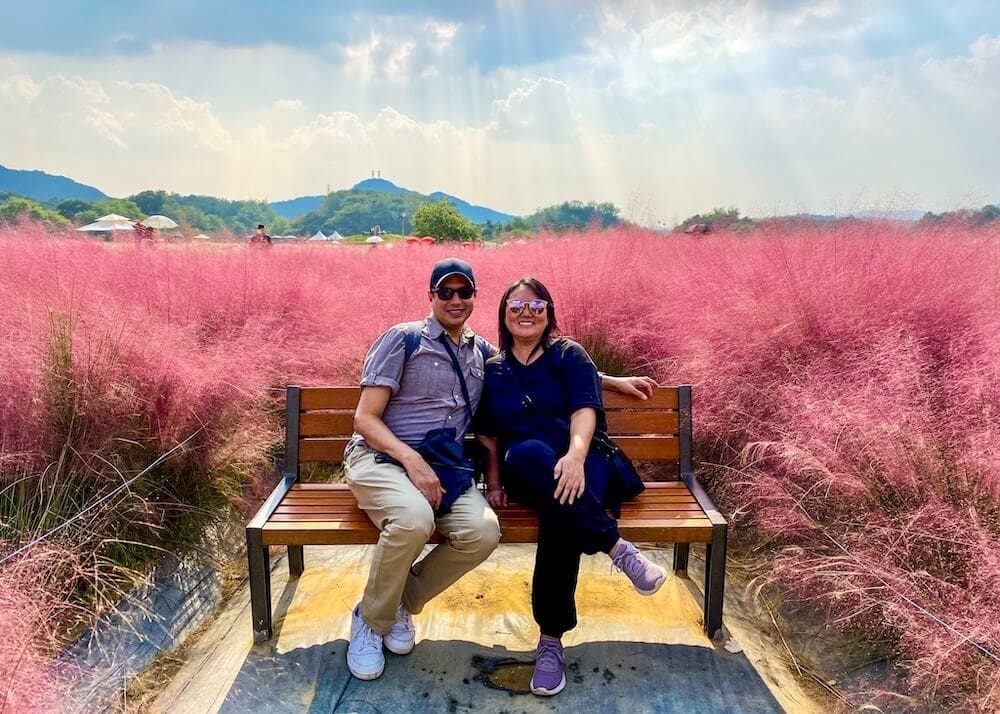
There are limited opening hours for Yangju Nari Park during autumn in South Korea, so be sure to confirm before making the trip. Check out my full guide to visiting here.
NAME: Yangju Nari Park | 양주나리공원 DESCRIPTION_START A massive seasonal flower park just north of Seoul that fills with incredible pastel fields of pink muly grass, globe amaranth, and bright orange cosmos all through October. DESCRIPTION_END TRANSIT_LABEL: Getting There: TRANSIT_TEXT: Take Subway Line 1 to Yangju Station, Exit 2. Cross the street to the bus stop and take local Bus 80 or 77-1 straight to the park entrance. ENG_LABEL: Address: ENG_TEXT: 814-1 Gwangsa-dong, Yangju-si, Gyeonggi-do KOR_TEXT: 경기도 양주시 광사동 814-1Peaceland Korea | 평강랜드
Peaceland is a botanical garden in Pocheon, best known for the whimsical giants that hide among its trees. The Thomas Dambo designed “Forgotten Giants,” art installation was the big draw for me, but there’s also a park full of autumn leaves changing colour, and a huge field of pink muhly grass just waiting to be photographed.
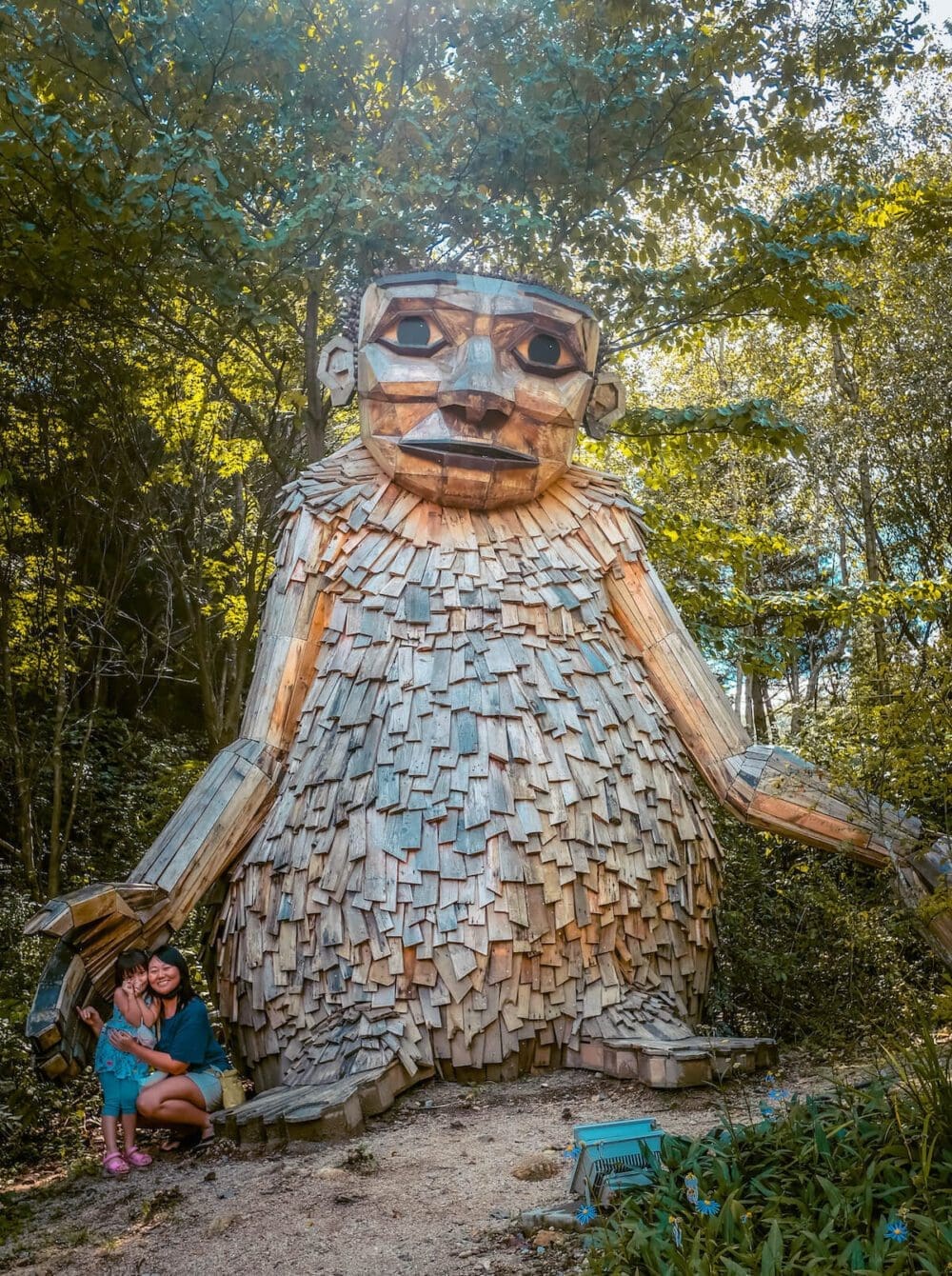
This is a great place for the whole family to spend a Korean autumn day. There are multiple forest playgrounds, trampolines, picnic areas, and more. I recommend bringing in your own food though. I didn’t find the options inside Peaceland to be that great.
NAME: Peaceland Korea | 평강랜드 DESCRIPTION_START A sprawling ecological garden in Pocheon featuring expansive pink muhly fields, serene woodland walking trails, and massive, whimsical recycled wood giant sculptures hidden in the trees. DESCRIPTION_END TRANSIT_LABEL: Getting There: TRANSIT_TEXT: Public transit out here is a bit tricky, but you can take Subway Line 1 to Soyosan Station, then catch local Bus 57 or 57-4 toward Sanjeong Lake, getting off near the park. Taking a local taxi from the station or booking a regional day tour is much simpler. ENG_LABEL: Address: ENG_TEXT: 171 Umulmok-gil, Yeongbuk-myeon, Pocheon-si, Gyeonggi-do KOR_TEXT: 경기도 포천시 영북면 우물목길 171Anseong Farmland | 안성팜랜드
Anseong Farmland has rotating fields of flowers year-round, but in Korea in autumn, pink muhly and cosmos are the stars of the show. Prepare to be wowed by rolling hills of pinky muhly grass under vivid blue skies. There are also amusement park rides, farm animals, and a ton of other fun activities for kids to enjoy.
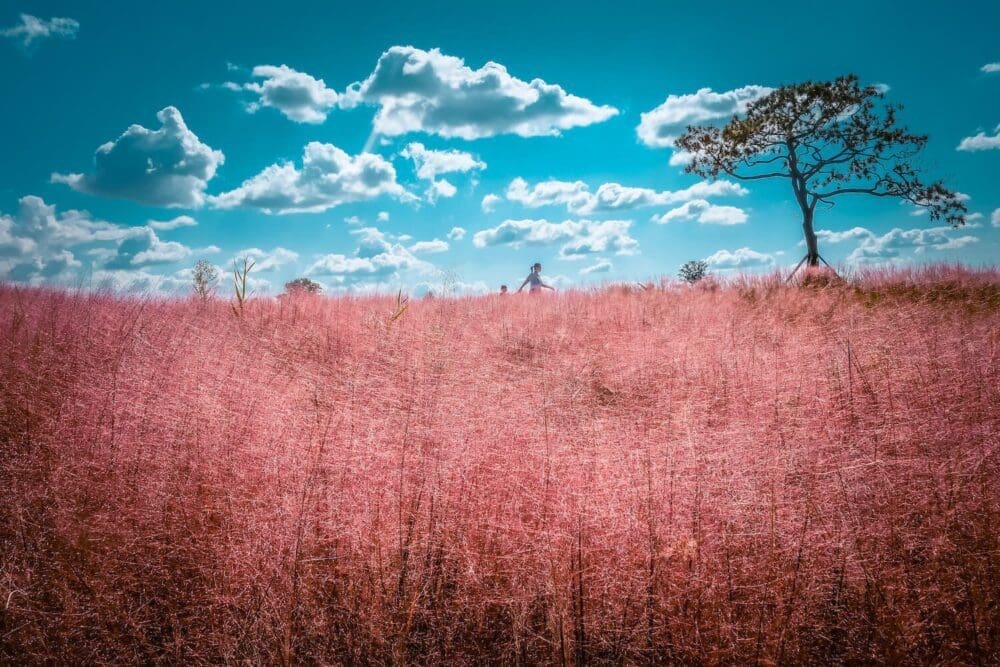
Autumn in Korea | Gangwon-do
If you’re visiting at the beginning of Korea’s autumn season, Gangwon-do Province to the east of Seoul is the place you’ll want to concentrate your energy. This is the first region of Korea to start showing autumn colour.

Fortunately, this isn’t at all difficult. Gangwon-do is chock-full of majestic mountain ranges, dramatic landscapes, and staggering sights, just waiting to be discovered.
Seoraksan National Park | 설악산 국립공원
Located in the northeastern region of Korea, Seoraksan National Park in Gangwon-do is one of the first places to change colour in Korea in autumn.

Stop by the Seoraksan National Park Visitor Center to get the scoop on the best hikes for seeing fall foliage, or take the Seorak cable car up to the peak. Major attractions (besides the gorgeous autumn leaves) are Gwongeumseong Fortress, Ulsanbawi Rock, and Sinheungsa Temple – the oldest Zen Buddhist temple in the world.
This gorgeous national park is just a few hours away from Seoul. Fortunately, there’s a huge variety of day and overnight tours to Seoraksan and area, designed just for autumn in Korea. Time your visit for the last 2 weeks of October if you can. Check out options here.
NAME: Seoraksan National Park | 설악산 국립공원 DESCRIPTION_START Korea’s most iconic autumn mountain range, famous for its dramatic jagged peaks, rushing rocky streams, and breathtaking deep red maple forests. DESCRIPTION_END TRANSIT_LABEL: Getting There: TRANSIT_TEXT: Take an express bus from Seoul Express Bus Terminal or Dong Seoul Terminal to Sokcho. From the Sokcho Intercity Bus Terminal, walk out to the main street and jump on local Bus 7 or 7-1 straight to the final stop at the park entrance. ENG_LABEL: Address: ENG_TEXT: 833 Seoraksan-ro, Sokcho-si, Gangwon-do KOR_TEXT: 강원특별자치도 속초시 설악산로 833Wondae-ri Birch Forest | 원대리 자작나무 숲
Wondae-ri Birch Forest, along with Hwadam Forest, is pretty much at the top of my to do list for this autumn in Korea. The contrast of the white birch trunks with the flaming colours just has to be seen.

Wondae-ri Birch Forest is closed on Mondays and Tuesdays, and not open much past 3:00pm, so be sure to check hours before heading out.
NAME: Wondae-ri Birch Forest | 원대리 자작나무 숲 DESCRIPTION_START A striking forest of over half a million slender white birch trees that creates an incredible, glowing contrast against the golden autumn forest floor. DESCRIPTION_END TRANSIT_LABEL: Getting There: TRANSIT_TEXT: Take an intercity bus from Dong Seoul Terminal to Inje Terminal. From there, take a local rural bus heading toward Wondae-ri, or take a 15-minute local taxi straight to the forest walking path entrance. ENG_LABEL: Address: ENG_TEXT: 760 자작나무숲길, Inje-eup, Inje-gun, Gangwon-do KOR_TEXT: 강원특별자치도 인제군 인제읍 자작나무숲길 760Naksansa | 낙산사
Naksansa Temple is not too far from Sokcho and Seoraksan National Park, so it’s an easy stop along the way. This ancient temple has a gorgeous landscape with wonderful views overlooking the East Sea, a 16-metre tall statue of the Avalokitesvara Bodhisattva, and a 7-story stone pagoda.
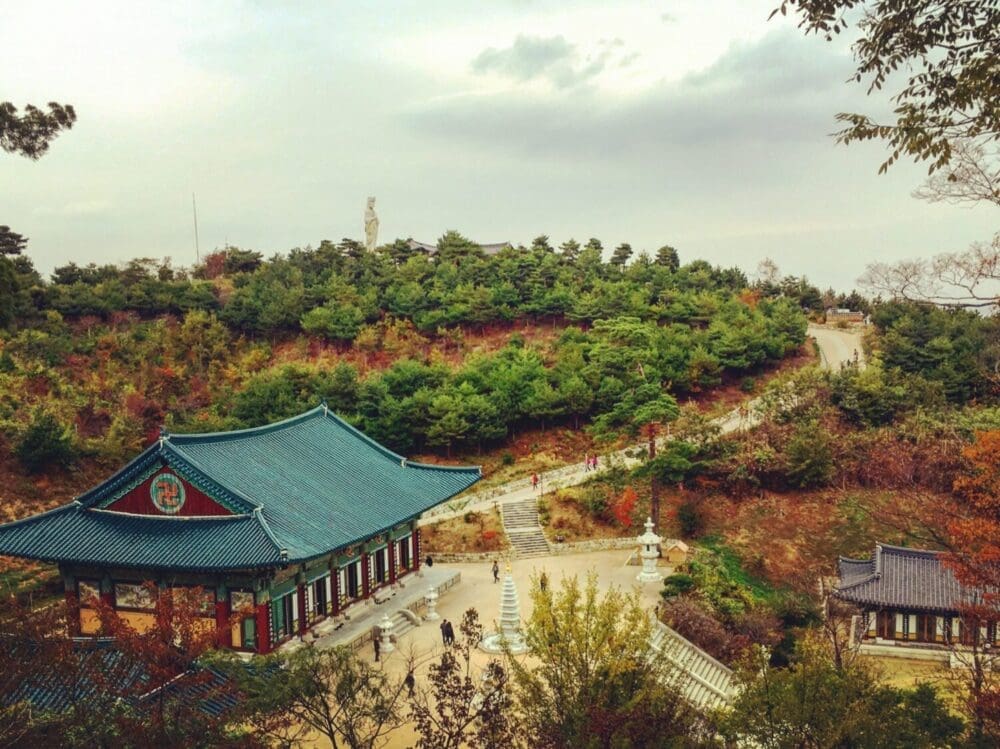
Seoraksan National Park is one of the first places to change colour in Korea. See its gorgeous fall foliage and visit Naksansa, a gorgeous seaside temple too. Check out options here.
NAME: Naksansa Temple | 낙산사 DESCRIPTION_START A magnificent 1,300-year-old Buddhist temple perched on a cliff edge overlooking the East Sea, framed by beautiful, weathered pine trees and warm autumn colors. DESCRIPTION_END TRANSIT_LABEL: Getting There: TRANSIT_TEXT: Catch an intercity bus from Seoul to Yanggang (Yangpyeong/Yangyang) or Sokcho. From either bus terminal, hop on local Bus 9 or 9-1 and get off at the Naksan Beach stop, then walk up the hill path. ENG_LABEL: Address: ENG_TEXT: 100 Naksansa-ro, Ganghyeon-myeon, Yangyang-gun, Gangwon-do KOR_TEXT: 강원특별자치도 양양군 강현면 낙산사로 100Odaesan National Park | 오대산국립공원
You’ll find the largest natural woods in South Korea at Odaesan National Park, along with multiple temples, camping sites, streams, and all the gorgeous autumn colour you could possibly want.

If you’re a fan of the K-drama, Goblin, find the Woljeongsa Fir Tree Forest Path and relive the moment when the immortal Kim Shin realizes he’s in love with Eun Tak.
NAME: Odaesan National Park | 오대산국립공원 DESCRIPTION_START A serene national park famous for its peaceful, towering fir tree walking paths and vibrant, early-turning autumn foliage surrounding ancient shrines. DESCRIPTION_END TRANSIT_LABEL: Getting There: TRANSIT_TEXT: Take a KTX train from Seoul to Jinbu Station. From the station, catch a local bus or rural shuttle bound for Woljeongsa Temple, which drops you right at the main park entrance path. ENG_LABEL: Address: ENG_TEXT: 2 Dongsan-ri, Jinbu-myeon, Pyeongchang-gun, Gangwon-do KOR_TEXT: 강원특별자치도 평창군 진부면 동산리 2Ginkgo Tree of Bangye-ri, Wonju | 원주 반계리 은행나무
If you make the trip out to Wonju for autumn in Korea, don’t miss the ancient ginkgo tree located in Bangye-ri. Thought to be at least 800 years old, with majestic branches snaking out in all directions, the tree is revered as Natural Monument No. 167.

This spectacular ginkgo tree in Wonju is nearly 35-m high, 15-m in circumference, spans 38-m from east to west and 31-m from north to south. Prepare to be totally awed.
I checked it out last autumn, and it’s as spectacular as you’d imagine it to be.
NAME: Ginkgo Tree of Bangye-ri, Wonju | 원주 반계리 은행나무 DESCRIPTION_START An awe-inspiring, 800-year-old monumental ginkgo tree that grows into a massive, self-contained stadium of blinding gold leaves every November. DESCRIPTION_END TRANSIT_LABEL: Getting There: TRANSIT_TEXT: Take the KTX to Wonju Station, then take a local taxi out to Bangye-ri village. Public buses out to this rural spot are rare and take a long time, so a taxi or rental car is highly recommended. ENG_LABEL: Address: ENG_TEXT: 1495-1 Bangye-ri, Munmak-eup, Wonju-si, Gangwon-do KOR_TEXT: 강원특별자치도 원주시 문막읍 반계리 1495-1Sogeumsan Suspension Bridge | 소금산출렁다리
If you’re a thrillseeker in search of spectacular Korea in autumn views, Sogeumsan Suspension Bridge in Wonju is the perfect place for you. It’s Korea’s longest and largest pedestrian bridge with a total length of 200-metres – and it’s suspended high, high above a mountain valley.

Try standing on the skywalk next to the bridge to truly drink in these magnificent views. The Sogeumsan Suspension Bridge is near Museum SAN, so it’s easy to combine the two places in a single visit.
NAME: Sogeumsan Suspension Bridge | 소금산출렁다리 DESCRIPTION_START A thrilling, narrow footbridge suspended high above a deep rocky canyon, offering dizzying, panoramic birds-eye views of the autumn valley canopy below. DESCRIPTION_END TRANSIT_LABEL: Getting There: TRANSIT_TEXT: Ride the KTX from Seoul to Wonju Station. Head outside to the bus stop and take local Bus 52 or 57 straight to the Ganhyeon Rock Bicycle / Suspension Bridge tourist area. ENG_LABEL: Address: ENG_TEXT: 12 Ganhyeonbuwon-ro, Jijeong-myeon, Wonju-si, Gangwon-do KOR_TEXT: 강원특별자치도 원주시 지정면 간현부원로 12Museum SAN | 뮤지엄 산
A meandering stroll through Museum SAN (Space Art Nature) is sure to fulfill all your autumn in Korea longings. Designed by minimalist master architect, Tadao Ando, the museum is nestled within a stunning mountain landscape, and harmonized with all the nature around it.
I warn you though – Museum SAN is not cheap to visit, with integrated admission tickets including all exhibitions, running around 40,000 won per person. Their mountain-side cafe might just be worth it though.
NAME: Museum SAN | 뮤지엄 산 DESCRIPTION_START An architectural masterpiece designed by Tadao Ando, hidden away in the mountains where minimalist stone structures blend flawlessly with the changing autumn forest. DESCRIPTION_END TRANSIT_LABEL: Getting There: TRANSIT_TEXT: Take the KTX or an express bus to Wonju. From either the Wonju KTX Station or the Intercity Bus Terminal, hop onto the local Wonju City Tour Bus, which stops directly at the museum gates. ENG_LABEL: Address: ENG_TEXT: 260 Oakvalley 2-gil, Jijeong-myeon, Wonju-si, Gangwon-do KOR_TEXT: 강원특별자치도 원주시 지정면 오크밸리2길 260Hongcheon Ginkgo Forest | 홍천 은행나무숲
Walking through the deep golden crunch of a carpet of fallen ginkgo leaves is just as captivating as seeing them adorning towering trees during autumn in Korea… and the Hongcheon Ginkgo Forest might just be one of the best places to see them.

This is actually a private forest that’s been planted and maintained by a single man for over 30 years. He graciously opens his land to the public for free, for the month of October ONLY, so plan your visit accordingly. It is a bit challenging to get to the Hongcheon however, so joining a tour or renting a car might be a better option.
NAME: Hongcheon Ginkgo Forest | 홍천 은행나무숲 DESCRIPTION_START A private, hidden farm that opens to the public exclusively in October, featuring thousands of ginkgo trees planted in perfect geometric rows of bright yellow. DESCRIPTION_END TRANSIT_LABEL: Getting There: TRANSIT_TEXT: Public transit to this deep mountain farm is incredibly difficult. It is best to rent a car for the day from Seoul or book a dedicated regional autumn day tour that includes Hongcheon on the itinerary. ENG_LABEL: Address: ENG_TEXT: 686-4 Gwangwon-ri, Nae-myeon, Hongcheon-gun, Gangwon-do KOR_TEXT: 강원특별자치도 홍천군 내면 광원리 686-4Daegwallyeong Sheep Farm | 대관령 양떼 목장
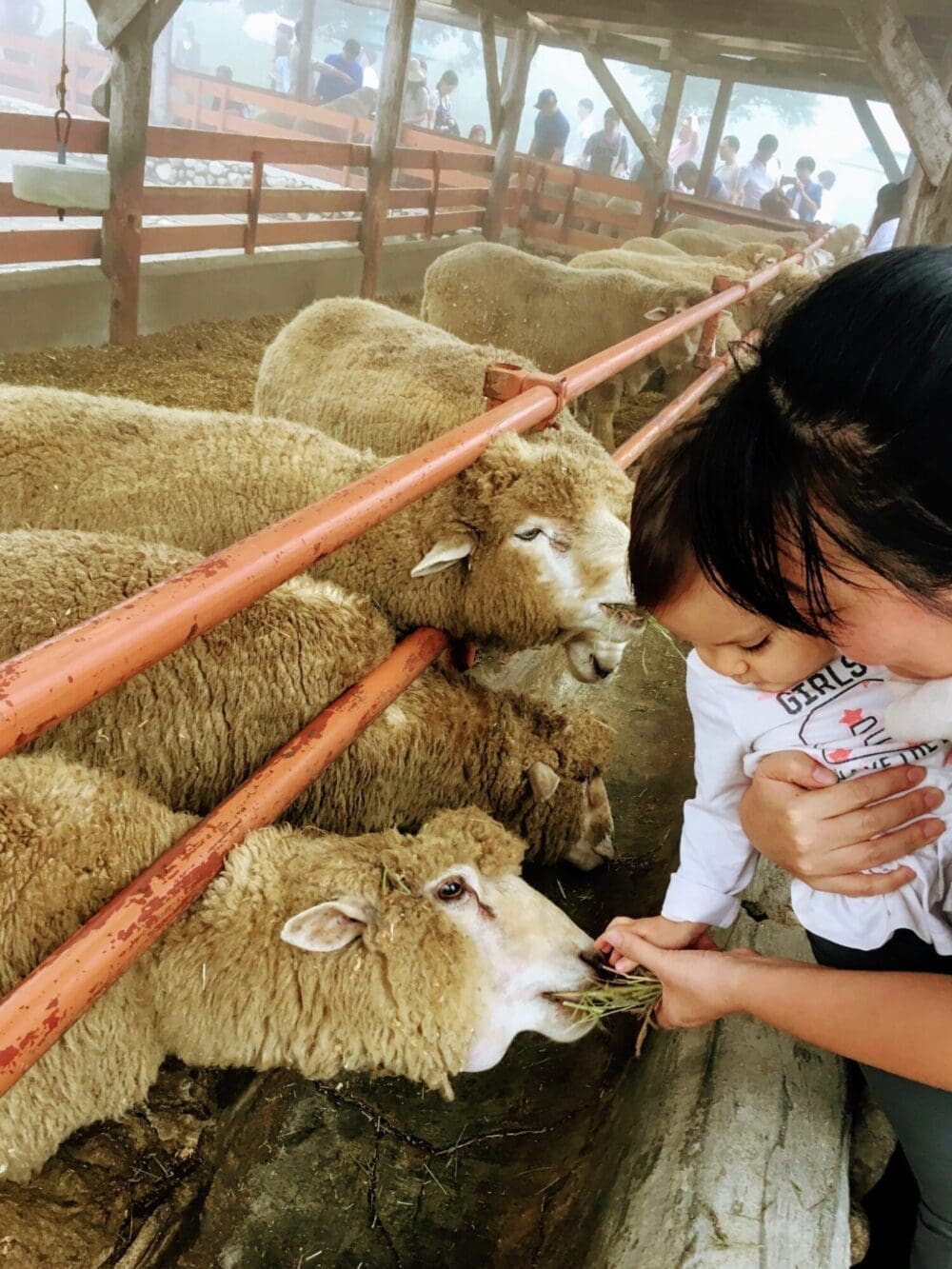
With fluffy balls of sheep grazing on rolling hills, backed by a spectacular landscape of majestic trees, Daegwallyeong Sheep Farm is a perfect autumn in Korea stop in Pyeongchang for families.
Autumn in Korea | Gyeongsang-do
North and South Gyeongsang Province are where travelers usually beeline to from Seoul. With good reason. Busan, Gyeongju, Andong, and the wealth of natural beauty between these cities, is a siren call, few visitors can ignore.

Gyeongju UNESCO World Heritage Areas | 경주역사유적지구
Gyeongju is worth a visit any time of the year, but its particularly stunning during autumn in South Korea. It’s popular to visit Gyeongju on a day trip from Busan, but with over 50 UNESCO World Heritage cultural assets, incredible temples, delicious food, and an easy vibe, you’ll never want to leave.

There are so many gorgeous autumn spots in Gyeongju, it probably deserves it’s own guide, but here are a few to get you started.
Gyeongju is one of the most beautiful places to visit during autumn in Korea, and Busan is the perfect jumping off point to get there.
Bulguksa Temple | 경주 불국사
Along with Seokguram Grotto, Bulguksa Temple was designated a UNESCO World Cultural Heritage site in 1995. It has within its temple walls, 7 national treasures, and is considered representative of Buddhist culture from the Silla Kingdom.

Wander around the tranquil grounds of Bulguksa, or try a templestay for an unforgettable autumn in Korea experience. Learn more here.
NAME: Bulguksa Temple | 경주 불국사 DESCRIPTION_START An ancient Silla-era architectural masterpiece tucked into the slopes of Tohamsan Mountain, famous for its iconic stone bridges framed by deep red autumn maple leaves. DESCRIPTION_END TRANSIT_LABEL: Getting There: TRANSIT_TEXT: Take the KTX to Singyeongju Station, then hop on local Bus 700. Alternatively, if you’re staying near the historic downtown tomb parks, catch Bus 10 or 11 straight to the temple gates. ENG_LABEL: Address: ENG_TEXT: 385 Bulguk-ro, Gyeongju-si, Gyeongsangbuk-do KOR_TEXT: 경상북도 경주시 불국로 385Bomun Tourist Complex | 경주 보문관광단지
The Bomun Tourist Complex is exactly what you’d expect. Hotels, a golf range, and condos with a Bomunho Lake in the middle. In Korea in autumn, you can also enjoy fall foliage and pink muhly at the same time.

Jirisan National Park | 지리산국립공원
Stretching over 3 provinces, Jirisan is the first and largest national park in the country. As the weather cools in Korea in autumn, Jirisan is awash in yellow, orange, and fiery red maple trees.

It’s actually easiest to access Jirisan from Hwaeomsa Temple in Jeollanam-do, but you’ll be treated to more potential fall foliage solitude if you enter from the Gyeongsang-do side instead.
Enjoy autumn magic at Jirisan, Korea’s largest national park. Pick up from various points in Busan. Get more info here.
NAME: Jirisan National Park | 지리산국립공원 DESCRIPTION_START Korea’s largest mountain national park, offering deep, sweeping forest valleys that turn into endless seas of rich gold and vibrant crimson foliage. DESCRIPTION_END TRANSIT_LABEL: Getting There: TRANSIT_TEXT: It depends on which trail you take, but for the popular Baemsagol Valley, catch an intercity bus from Seoul to Namwon Terminal, then jump on a local rural bus directly to the valley trailhead. ENG_LABEL: Address: ENG_TEXT: 215-233 Jirisan-daero, Sicheon-myeon, Sancheong-gun, Gyeongsangnam-do KOR_TEXT: 경상남도 산청군 시천면 지리산대로 215-233Palgongsan Natural Park | 팔공산자연공원
While I haven’t been to Daegu in autumn yet, I loved visiting during cherry blossom season in Korea. If you happen to find yourself there during autumn in Korea, Palgongsan Natural Park is the place to go.
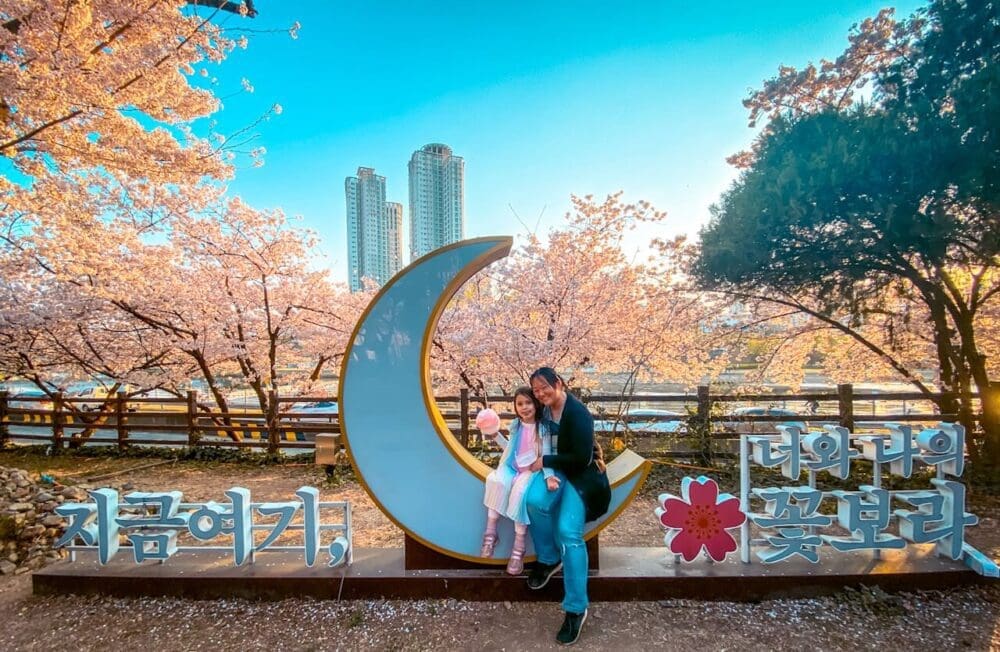
Located 20-km from downtown Daegu, you’ll find an intersection of 2 rivers, as well as 3 colourful fall foliage covered mountain peaks in a row.
Admire a 16.3-km long avenue lined with gorgeous autumn foliage on this wonderful day tour to Daegu. Get full details here.
NAME: Palgongsan Natural Park | 팔공산자연공원 DESCRIPTION_START A scenic mountain sanctuary right on the edge of Daegu, featuring a fantastic local cable car ride that glides you right over the changing autumn tree canopy. DESCRIPTION_END TRANSIT_LABEL: Getting There: TRANSIT_TEXT: Head to Daegu Station or Ayanggyo Subway Station (Line 1). Look for the local bus stop and jump on Express Bus 1 (급행1) straight to the final stop at the mountain village. ENG_LABEL: Address: ENG_TEXT: 35 Palgongsan-ro 185-gil, Dong-gu, Daegu KOR_TEXT: 대구광역시 동구 팔공산로185길 35Autumn in Korea | Jeolla-do
The Jeolla-do region peaks for fall foliage later than other parts of the country. Early to mid-November is actually the perfect time to make a trip to this area to see the best of South Korea in autumn.
Naejangsan National Park | 내장산국립공원
With its gorgeous temples and striking landscapes, Naejangsan is considered one of, if not THE best national park to visit during autumn in Korea.

If your travel dates are in November, you’re in luck! Fall foliage is forecast to peak in Naejangsan National Park on November 11th in 2025. At this time, there will be long lines for the cable car to the summit, and it’ll be crazy crowded, but it is WORTH IT!
There are a number of different day tours to Naejangsan from both Seoul, and Busan available throughout autumn in South Korea. Check out the options here.
NAME: Naejangsan National Park | 내장산국립공원 DESCRIPTION_START Widely considered the ultimate autumn destination in Korea, famous for its breathtaking maple tree tunnels and traditional lakeside pavilions. DESCRIPTION_END TRANSIT_LABEL: Getting There: TRANSIT_TEXT: Take the KTX train down to Jeongup Station. Walk right outside to the main bus stop and hop on local Bus 171, which takes you to the park’s main terminal area. ENG_LABEL: Address: ENG_TEXT: 936 Naejangsan-ro, Jeongup-si, Jeollabuk-do KOR_TEXT: 전북특별자치도 정읍시 내장산로 936Baegyangsa Temple | 백양사
There are 2 stunning temples to see inside Naejangsan National Park, during autumn in Korea. Wander through a spectacular tunnel of crimson maple trees to reach Naejangsa Temple, or marvel at multicoloured reflections at Baegyangsa Temple.

Daedunsan Provincial Park | 대둔산도립공원
Hike up to the stunning Geumgang Cloud Bridge for breathtaking views of towering peaks and scarlet autumn leaves. If you don’t fancy the exercise, take the cable car up to the 878-metre peak instead.

And while the Geumgang Suspension Bridge lets you hover thrillingly above majestic mountain views, Taegosa Temple draws in visitors with its unique “floating” location on Macheondae Terrace.
Admire autumn foliage from the cable car, and have cross the wobbly Cloud Bridge on this fun day tour from Seoul. Check out the options here.
NAME: Daedunsan Provincial Park | 대둔산도립공원 DESCRIPTION_START An adrenaline-pumping mountain park famous for its bright red suspension bridge and steep steel staircase that scale up sheer rock faces wrapped in brilliant autumn foliage. DESCRIPTION_END TRANSIT_LABEL: Getting There: TRANSIT_TEXT: Head to Daejeon Bus Terminal or KTX Station, then make your way to the local intercity bus platform to catch a direct regional bus out to the Daedunsan mountain rest stop. ENG_LABEL: Address: ENG_TEXT: 611 Sanbuk-ri, Unju-myeon, Wanju-gun, Jeollabuk-do KOR_TEXT: 전북특별자치도 완주군 운주면 산북리 611Seonunsa Temple | 선운사
Seonunsa Temple in Gochang is known for its stunning camellia grove in spring, and its spectacular trees during autumn in Korea.

Stroll near picturesque Dosolcheon Stream near Seonunsa, or participate in a temple stay to learn more about Korean Buddhist culture.
NAME: Seonunsa Temple | 선운사 DESCRIPTION_START A quiet, ancient temple sitting in Gochang county, featuring a beautiful valley stream lined with deep crimson trees that cast stunning reflections over the water. DESCRIPTION_END TRANSIT_LABEL: Getting There: TRANSIT_TEXT: Take an intercity express bus from Seoul straight down to Gochang Bus Terminal. From there, hop on a frequent local rural bus heading toward Seonunsa. ENG_LABEL: Address: ENG_TEXT: 250 Seonunsa-ro, Asan-myeon, Gochang-gun, Jeollabuk-do KOR_TEXT: 전북특별자치도 고창군 아산면 선운사로 250Damyang Metasequoia Road | 담양 메타세쿼이아길
My visit to Damyang and Juknokwon, its gorgeous bamboo forest in spring was a real highlight, but this metasequoia road looks equally as impressive for autumn in Korea.

There are over 400 trees lining the 8.5 km-long boulevard, of which 2-km are designated as a walking path. You can also walk over to the nearby Meta Provence Village, and make a stop at the Damyang Gwangbangjerim Forest for more fall foliage in Korea.
NAME: Damyang Metasequoia Road | 담양 메타세쿼이아길 DESCRIPTION_START An iconic, fairytale-like walking avenue flanked by soaring metasequoia trees that turn a rich, deep brick-orange color late in the autumn season. DESCRIPTION_END TRANSIT_LABEL: Getting There: TRANSIT_TEXT: Catch an express bus down to Gwangju U-Square Terminal. From the terminal bus platforms, transfer to local Bus 311 which takes you directly out to the heart of Damyang avenue. ENG_LABEL: Address: ENG_TEXT: 12 Hakdong-ri, Damyang-eup, Damyang-gun, Jeollanam-do KOR_TEXT: 전라남도 담양군 담양읍 학동리 12Autumn in Korea | Chungcheon-do
Chungcheon-do is one of the least touristed regions of the country, but totally worth a trip. Crazy crowds descend upon Daechon Beach for the epically popular annual summer mud festival, but In the autumn months, picturesque temples and national parks are where you want to be.

Get off the beaten path in Danyang. This is a lovely hidden gem town in Korea, with incredible autumn sights. Check details here.
Guinsa Temple | 구인사
Danyang has become a popular spot in recent years, for tandem paragliding, but top of MY list is a hike up to Guinsa Temple for glorious autumn in Korea colour. That’s about as high as my fear of heights will let me go.
Songnisan National Park | 속리산국립공원
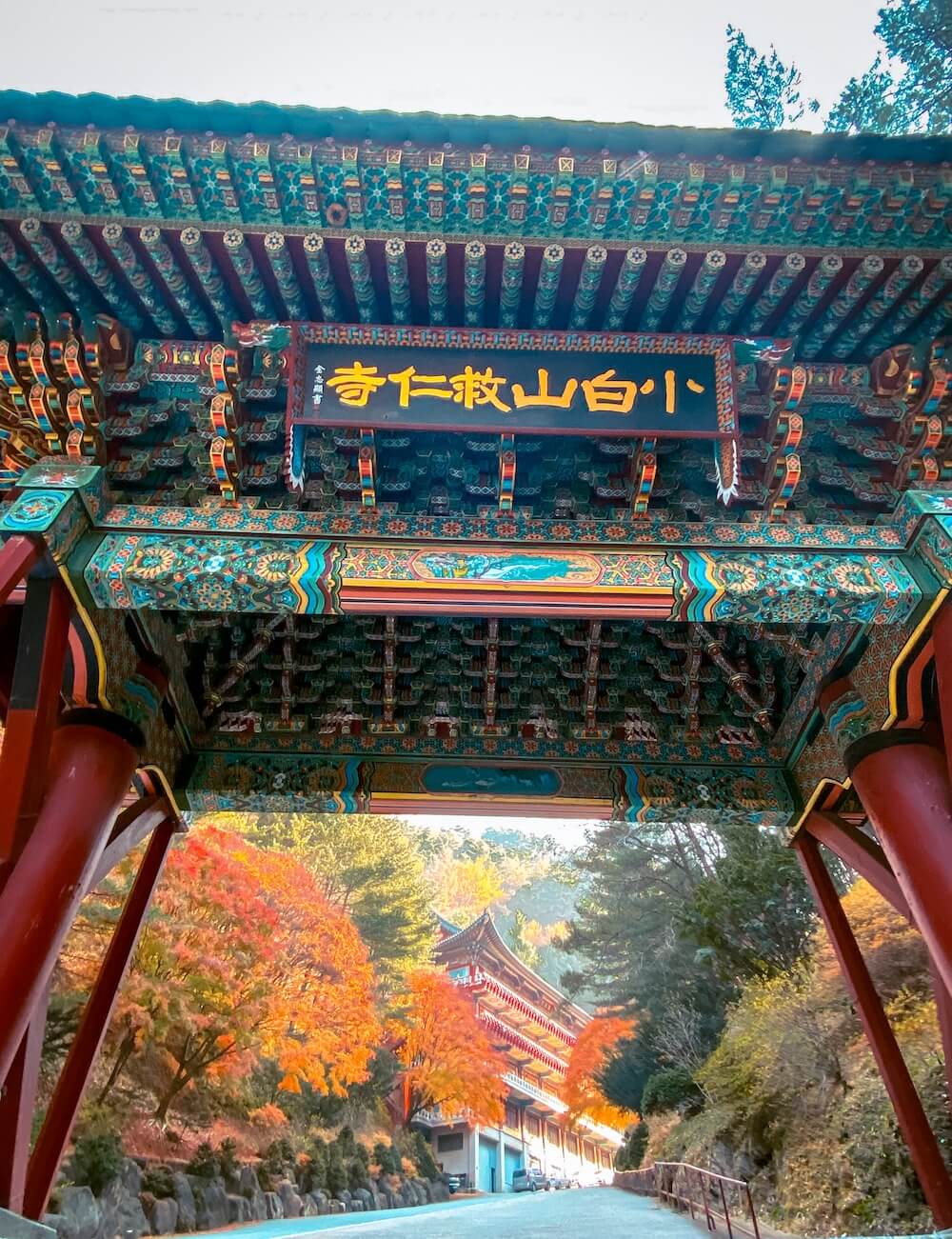
There are 3 national parks in this province, but Songnisan Mountain is the one to visit. You’ll love peering over its unique cliffs and hiking along the majestic mountain ranges covered in vibrant shades of yellow and red during autumn in Korea.
Look out for a 33-metre tall Buddhist statue and definitely do not miss UNESCO-designated Beopjusa Temple.
NAME: Songnisan National Park | 속리산국립공원 DESCRIPTION_START A striking national park known for its sharp granite peaks, historic pine tree avenues, and deep forest valleys that light up with beautiful autumn tones. DESCRIPTION_END TRANSIT_LABEL: Getting There: TRANSIT_TEXT: Take an intercity express bus from Dong Seoul Terminal straight to the Songnisan Bus Terminal. The main trail entrance and temple paths are a short 10-minute walk from the station exit. ENG_LABEL: Address: ENG_TEXT: 84-1 Beopjusa-ro, Songnisan-myeon, Boeun-gun, Chungcheongbuk-do KOR_TEXT: 충청북도 보은군 속리산면 법주사로 84-1Beopjupsa Temple | 보은 법주사
Fortunately, the best hiking route in Songnisan for autumn foliage starts from Beopjusa Temple and ends at Birobong Peak. This is where you can see a completely enchanting panoramic view of Beopjusa Temple surrounded by all the best that autumn in South Korea has to offer.

Autumn in Korea | Best Cafes for Fall Foliage
Need some gorgeous autumn scenes for your feed, but can’t get out of the city? Don’t stress – because most of these cafes are just a convenient subway ride away, in Seoul or Gyeonggi-do.
The Piano | 더 피아노
The Piano has such a striking location, with stunning views hewn from Bukhansan rock, its appeared in multiple dramas, movies, and variety shows in Korea. (Don’t confuse it with the Piano Cafe in Hongdae).

The Piano is a “no-kids zone,” and coffee here isn’t cheap, but that’s not really what you’re paying for, is it?
NAME: The Piano | 더 피아노 DESCRIPTION_START An incredible hillside cafe built directly into the rocky slopes of Bukhansan, offering sweeping, open-air terrace views of the mountain’s autumn canopy. DESCRIPTION_END TRANSIT_LABEL: Getting There: TRANSIT_TEXT: Take Subway Line 3 to Gupabal Station, Exit 1, or Line 4 to Gireum Station, Exit 3. From either station, it is best to take a local taxi straight up to this quiet residential mountain neighborhood. ENG_LABEL: Address: ENG_TEXT: 71 Pyeongchang 6-gil, Jongno-gu, Seoul KOR_TEXT: 서울특별시 종로구 평창6길 71Smeltz | 스멜츠
I was completely blown away the first time I saw pictures of Smeltz come across my feed. This cafe is literal scenery goals, with 2 absolutely massive windows perfectly placed to showcase the stunning wonder of autumn in Korea. Just go… and thank me later. 😉
NAME: Smeltz | 스멜츠 DESCRIPTION_START A beautiful, minimalist cafe in Gwangju famous for its massive floor-to-ceiling glass windows that frame a stunning, unobstructed wall of autumn forest leaves. DESCRIPTION_END TRANSIT_LABEL: Getting There: TRANSIT_TEXT: Catch the Gyeonggang Line subway to Gwangju-Gyeonggi Station, then take a local taxi or hop on local Bus 32 or 320 heading toward Opo-eup. ENG_LABEL: Address: ENG_TEXT: 103 Opo-ro 288beon-gil, Opo-eup, Gwangju-si, Gyeonggi-do KOR_TEXT: 경기도 광주시 오포읍 오포로288beon길 1031in1jan | 1인1잔
The graceful curving rooftops of Eunpyeong Hanok Village. Bukhansan Mountain painted in all the glorious shades of autumn in Korea. Need I say more?

By the way, 1In means 1 person, and 1Jan means 1 cup in Korean. The name of the cafe refers to a common cafe regulation that asks each customer to buy one drink, instead of sharing (yes, this actually happens).
NAME: 1in1jan | 1인1잔 DESCRIPTION_START A popular multi-storey cafe located right on the edge of the Eunpyeong Hanok Village, giving you postcard views of traditional tiled roofs against the autumn backdrop of Bukhansan. DESCRIPTION_END TRANSIT_LABEL: Getting There: TRANSIT_TEXT: Take Subway Line 3 to Yeonshinnae Station, Exit 3. Head to the bus stop and jump on local Bus 7211 or 701 straight to the Hanok Village entrance. ENG_LABEL: Address: ENG_TEXT: 534 Yeonseo-ro, Eunpyeong-gu, Seoul KOR_TEXT: 서울특별시 은평구 연서로 534Inwangsan Choso Chaekbang | 인왕산초소책방
Choso Chaekbang is a minimalist glass and steel cafe / bookstore that used to be the location of a guard post for the Presidential Blue House. Head there for a bit of reading as well as incredible views of Seoul and Bukhansan from the slopes of Inwangsan Mountain.

Best Foods to Eat during Korean Autumn
After a long day of hiking through mountain trails or walking across city parks, the absolute best way to reward yourself is by diving into Korea’s seasonal harvest. Autumn is a huge deal for local food culture on the peninsula, as the crisp weather brings in an incredible variety of fresh mountain produce and coastal seafood that you can only catch at its peak during the months of September, October, and November..
Autumn Fruits | Pear, Persimmon, Apples, Shine Muscat Grapes
You cannot leave Korea without hitting up a local market or convenience store to try the seasonal fruit. Korean pears are a world away from what you find back home – they’re massive, incredibly crisp, and so juicy that they practically drip while you eat them.

You’ll also spot bright orange persimmons everywhere, hanging from trees in traditional villages and stacked high at street stalls. If you like a crisp texture, grab the firm dan-gam, or look for the soft, jelly-like hong-si if you want something deeply sweet. This window is also the peak harvest for local apples and those famous, seedless Shine Muscat grapes that are unbelievably sweet and pop like candy.
Blue Crab
Blue crab is in season during autumn in Korea, and one of the best preparations is marinated in soy sauce as ganjang gejang. You can eat this delicacy all over the country, but it’s exceptional in Yeosu. Try it at local favourite, Neulpereun Sikdang.

Jumbo Shrimp
Plump and delicious, jumbo prawns are also incredibly fresh in Korea during autumn. You’ll find the freshest versions in port cities like Incheon and Busan. We had these grilled on a salt bed in Ulsan, where my cousin bought a huge box direct from a fisherman by the seaside.

Final Thoughts
No matter where you choose to explore on the peninsula, experiencing autumn here is something you’ll never forget. Just keep an eye on the changing weather patterns, throw a few flexible layers into your daypack, and time your trips to the national parks on weekdays to miss the worst of the transit gridlock. Do that, and you’ll have a truly incredible fall foliage trip in Korea.

Autumn in Korea FAQs
LABEL: 💬 People Also Ask FAQ_START Q: When is the best time to see the fall foliage in South Korea? A: The peak foliage usually hits the cooler northeast coastal areas, like Seoraksan, around mid-to-late October. From there, a wave of colour spreads inwards and down south, meaning you’ll find the absolute richest autumn colours across the country between late October and mid-November. FAQ_END FAQ_START Q: Is autumn a good time to visit South Korea? A: It’s easily the best season on the peninsula. After the exhausting heat and humidity of summer, the weather seems to change overnight in September, bringing exceptionally clear skies, bright sunshine, and pleasant temperatures for exploring outside. FAQ_END FAQ_START Q: What should I pack for an autumn trip to Korea? A: Since the weather can be a bit schizophrenic, packing multiple weights of clothing is your best bet so you can layer up. Mornings and evenings get quite chilly, but afternoons are warm, so you’ll want hoodies or light jackets, comfy sweaters, and sturdy sneakers for all the walking you’ll do. FAQ_END FAQ_START Q: How can I check the real-time fall foliage status in Korea? A: The best way to track the leaves is by checking the weekly updates on the Korea National Park Service website or looking up recent geo-tagged photos on social media right before you head out. Mother Nature changes her plans every year, so tracking live reports helps you hit the absolute peak brightness. FAQ_END FAQ_START Q: What is the best day of the week to visit Korean national parks in the fall? A: Try your absolute best to plan your mountain hikes for weekdays. Leaf-peeping is a huge local pastime, and the crowds on Saturdays and Sundays can make the most popular trails, cable cars, and parking lots incredibly packed. FAQ_END FAQ_START Q: Where can I see the famous yellow ginkgo tree roads in Korea? A: If you want to see those iconic tunnels of bright gold, your best bets are the Asan Ginkgo Tree Road, the ancient 800-year-old tree in Bangye-ri, or the quiet paths inside Seoul Forest right in the heart of the city. FAQ_END FAQ_START Q: Does it rain a lot during autumn in Korea? A: Historically, autumn has been the driest season of the year on the peninsula, but climate patterns have been shifting lately with more frequent rain and gray days popping up through the season. You’ll still get plenty of those classic crisp, blue-sky days, but it’s much more common now to face sudden rainy stretches in October and November, so throwing a compact umbrella into your daypack is a smart move. FAQ_END FAQ_START Q: When do the autumn colours reach Seoul? A: Since the city is a bit more sheltered and warm than the mountain ranges, the leaves here lag behind by a week or two. You’ll usually see the historic palaces, Namsan Mountain, and local city parks hit their peak gold and deep crimson around early November. FAQ_END HEADING: 💛 READY TO SEE THE GOLDEN GINKGO TREES ROADS IN KOREA? TEASER_START There’s nothing quite like walking through a bright yellow tunnel of falling ginkgo leaves during peak autumn weeks in Korea. If you want to find the most iconic golden canopy walks across the country—including that famous 800-year-old tree in the countryside—hop over to my curated list of locations. TEASER_END BTN_TEXT: 14 AWE-INSPIRING PLACES TO SEE GOLDEN GINKGO LEAVES DURING FALL IN KOREA → BTN_URL: https://travel-stained.com/ginkgo-tree-roads-in-korea/I originally researched, wrote & published this guide on October 16, 2022. I review & update my content for accuracy regularly. Watch out for copycats.This post was last updated on September 12, 2026. Copyright © 2022–2026 Travel-Stained. All rights reserved.