With its unique location in the heart of wealthy, modern Gangnam, Bongeunsa Temple is absolutely one of the best places in Seoul to experience the stark contrast of old and new in Korea.

Originally founded in 794 during the Silla Dynasty under the name Gyeongseongsa, this sacred site has survived centuries of transformations, structural fires, and conflicts. It was renamed Bongeunsa in 1498, relocated to its current Gangnam hillside in 1562, and famously served as the center of the Korean Zen Buddhist revival during the Joseon Era. Today, it stands as a captivating 1,200-year-old sanctuary where ancient wooden libraries like Panjeon Hall directly face futuristic city skyscrapers.
It’s a little out of the main tourist areas near Gyeongbokgung Palace, but it’s well worth the extra bit of travel. Surrounded by forests, flowers, and the sound of chanting monks, Bongeunsa has a fascinating history you’ll absolutely adore discovering.
*Any purchases made through affiliate links here help run this site.
ATTR_NAME: Bongeunsa Temple ATTR_DESC: A serene 1,200-year-old oasis right in the heart of Gangnam, Seoul. ATTR_STREET: 531, Bongeunsa-ro, Gangnam-gu ATTR_LOCALITY: Gangnam-gu ATTR_REGION: Seoul ATTR_HOURS_SCHEMA: Mo-Su 05:00-22:00 ATTR_FREE: true MAIN_TITLE: 🇰🇷 Bongeunsa Temple: Quick Guide & Essential Info INTRO_START Founded in 794, Bongeunsa Temple is a serene, 1,200-year-old Korean Buddhist temple right in the heart of Gangnam, Seoul. I always suggest visiting the temple with a stroll through the nearby Starfield COEX Mall. Just make sure you don’t miss the iconic 23-metre-tall stone statue of the Maitreya Buddha sitting on the hillside grounds. INTRO_END LABEL_ENG: English Address: TEXT_ENG: 531, Bongeunsa-ro, Gangnam-gu, Seoul LABEL_KOR: Korean Address: TEXT_KOR: 서울특별시 강남구 봉은사로 531 LABEL_HOURS: Hours: TEXT_HOURS: Main Gates open everyday from 05:00 to 22:00 LABEL_FEE: Admission: TEXT_FEE: Free (No entry tickets required) LABEL_TRANS: Best Subway Route: TEXT_TRANS: Take Line 9 to Bongeunsa Station and use Exit 1 (3-minute walk straight ahead) BTN_TEXT: Skip to Templestay Booking Info ↓ BTN_URL: #is-there-a-templestay-program-at-bongeunsaWhat to see and do at Bongeunsa Temple?
Aside from the temple complex which has stood for millenia, the most famous landmark is the striking stone statue of Maitreya, known locally as Mireuk Daebul. which stands at a height of 23-metres.
This majestic granite figure is the tallest stone statue of its kind in South Korea. It took nearly a decade to carve, and was completed in 1996. You are more than welcome to grab a mat and meditate on the stone platform right in front of it, but remember to remove your shoes before you step up.

You should also keep an eye out for the ceremonial monastic drumming performance at the Jongru, or Bell Pavilion.
It’s an incredible ritual where the monks use the Four Dharma Instruments to ring out over the grounds right against the backdrop of Gangnam’s modern high-rises. It’s one of the most memorable things to experience at Bongeunsa, but since it only happens at very specific intervals, I’ve broken down the exact details and travel tips further down in the daily hours and drumming schedule section

Aside from the giant statue, make sure to wander past Daewoongjeon, the Main Buddha Hall. The exterior is covered in intricate, colorful Dancheong paintings, and the wooden door lattices are beautifully carved.
Another hidden gem to seek out is the Beopwangru, or Dharma King Pavilion. If you step inside, you will find a breathtaking interior wall lined with over 3,300 miniature, glowing golden Buddha statues.
TITLE: Recommended Activity: DMZ Tour BODY_START While Bongeunsa showcases Korea’s ancient roots, visiting the Demilitarized Zone (DMZ) is the best way to understand its modern history. Because it is a high-security border, the most fascinating areas can only be accessed via an official group tour. On a day trip from Seoul, you can walk through the Third Infiltration Tunnel dug beneath the border, look directly into North Korea from the Dora Observatory, and learn the history of the Korean War. It’s an absolute must-visit on any South Korea itinerary. Check DMZ tours here → BODY_ENDHow to Get There
LABEL: Address: ENG_TEXT: 531, Bongeunsa-ro, Gangnam-gu, Seoul KOR_TEXT: 서울특별시 강남구 봉은사로 531 (삼성동)Bongeunsa Temple is one of the most accessible Buddhist temples in South Korea. Because the complex is situated on a gently sloping hillside rather than a rugged mountain peak, it requires no intense hiking, making it an ideal cultural attraction if you’re traveling with small children, carrying heavy camera gear, or have mobility issues.

While there is on-site parking available, I recommend using public transit to visit this busy area of Seoul to save time and stress. Traffic in Gangnam isn’t something to be trifled with.
TITLE: 💄 Good to Know: Premium K-Beauty & Skincare in Gangnam DESC_START Modern Gangnam is universally recognized as the epicenter of Seoul’s world-class clinical skincare culture. Consider pairing your temple itinerary with an expert facial or cosmetic upgrade. DESC_END C1_LABEL: AI Skin Analysis at TheiA Clinic → C1_URL: https://creatrip.com/en/spot/15253?utm_source=AFF-recWirk&aff_id=AFF-recWirk C2_LABEL: Nail Art at Nail Box → C2_URL: https://creatrip.com/en/spot/14157?utm_source=AFF-recWirk C3_LABEL: Personal Colour Analysis → C3_URL: https://creatrip.com/en/search?search=personal+colour+analysis&tab=ALL&utm_source=AFF-recWirkNavigating by Seoul Subway
Via Subway Line 9 (The Fastest Route)
The absolute closest transit point to the temple is Bongeunsa Station. Hop on Line 9, head out through Exit 1, and walk straight ahead for approximately three minutes. You’ll see Bongeunsa Temple’s prominent wooden entrance gates on your right-hand side. It’s impossible to miss.
Via Subway Line 2 (From Starfield COEX Mall & Starfield Library)
If you’re using Line 2 or plan to visit the famous towering bookshelves at Starfield Library or the COEX Aquarium first, disembark at Samseong Station.
Take Exit 5 or 6 and walk directly north. You can navigate your way through the air-conditioned underground hallways of COEX Mall if it’s summertime in Seoul, by following the explicit overhead signs marked for Bongeunsa Temple. Alternatively, just walk straight along street level. If walking outside at street level, turn left once you reach the intersection at Bongeunsa subway Station.
Korea Travel Essentials
Don’t board that plane to Seoul until you’ve sorted out accommodation, transport from the airport, and your data on the ground.
Recommended Transit Passes
A Climate Card, T-money card, WOWPASS or a combo SIM / transit card makes public transit around Seoul super easy, so make sure to get that sorted out before you start traveling around Korea.
SIDE NOTE: There used to be a Seoul City Tour bus with a Gangnam route that passed by Bongeunsa, but it seems to be defunct. The last updated info I could find about it was from 8 years ago!
Discovering Remote Mountain Temples in Korea
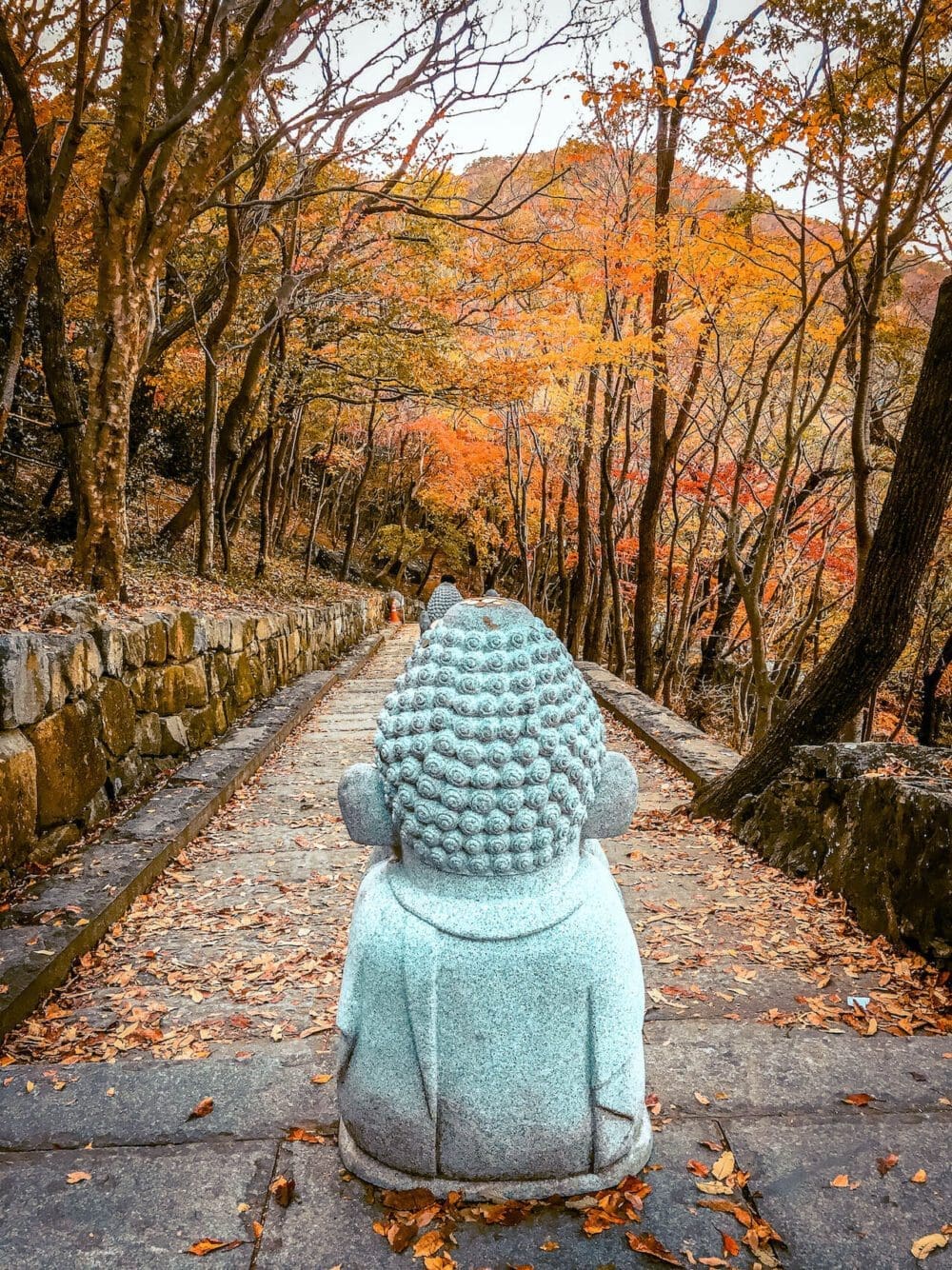
While urban oases like Bongeunsa offer great accessibility, many Buddhist temples in Korea require a little hiking to get to, because they’re hidden away at the top of mountains. Don’t let the extra effort discourage you from visiting one.
Whether gorgeous Hyangiram Hermitage in Yeosu or Jingwansan near Eunpyeong Hanok Village, I have never been disappointed by the extra energy expended to get to a Korean Temple, and you won’t be either.
Daily Hours & the Monastic Drumming Schedule
The main temple gates open every day from 5:00 to 22:00, which lines up perfectly with the Seoul subway schedule. If you look at some other popular guides online, you’ll see them claiming that the standard, everyday hours start at 3:00 AM. That’s only partially right.
Let me try to clear up the confusion. While the gates do technically open early for dawn chanting, the general facilities are completely dark and shut down. Don’t waste your time or money on a 3:00 AM taxi based on outdated internet info – stick to the official 5:00 AM window backed by both the temple’s official site and the Korea Tourism Organization.
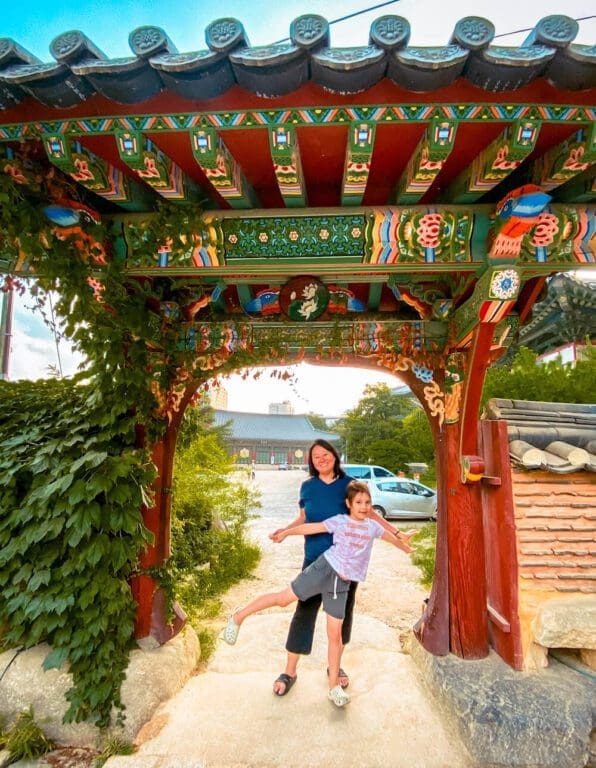
The only real exception to that early morning rule is if you’re a major early riser who’s determined to catch the dawn monastic rituals. In that case, time your visit to Bongeunsa for 4:10, and you’ll be treated to a percussion ceremony that’s performed by the temple monks at the Jongru, or Bell Pavilion. It’s meant to awaken spirits from the earth, water, sky, and underground using the Four Dharma Instruments – a drum, wooden fish, cloud drum, and gong.
Each instrument carries a deep symbolic meaning: the large Dharma Drum awakens land animals, the Wooden Fish awakens creatures in the water, the Cloud-shaped Gong speaks to the birds in the sky, and the massive Bronze Bell rings out to save spirits suffering in the underworld.
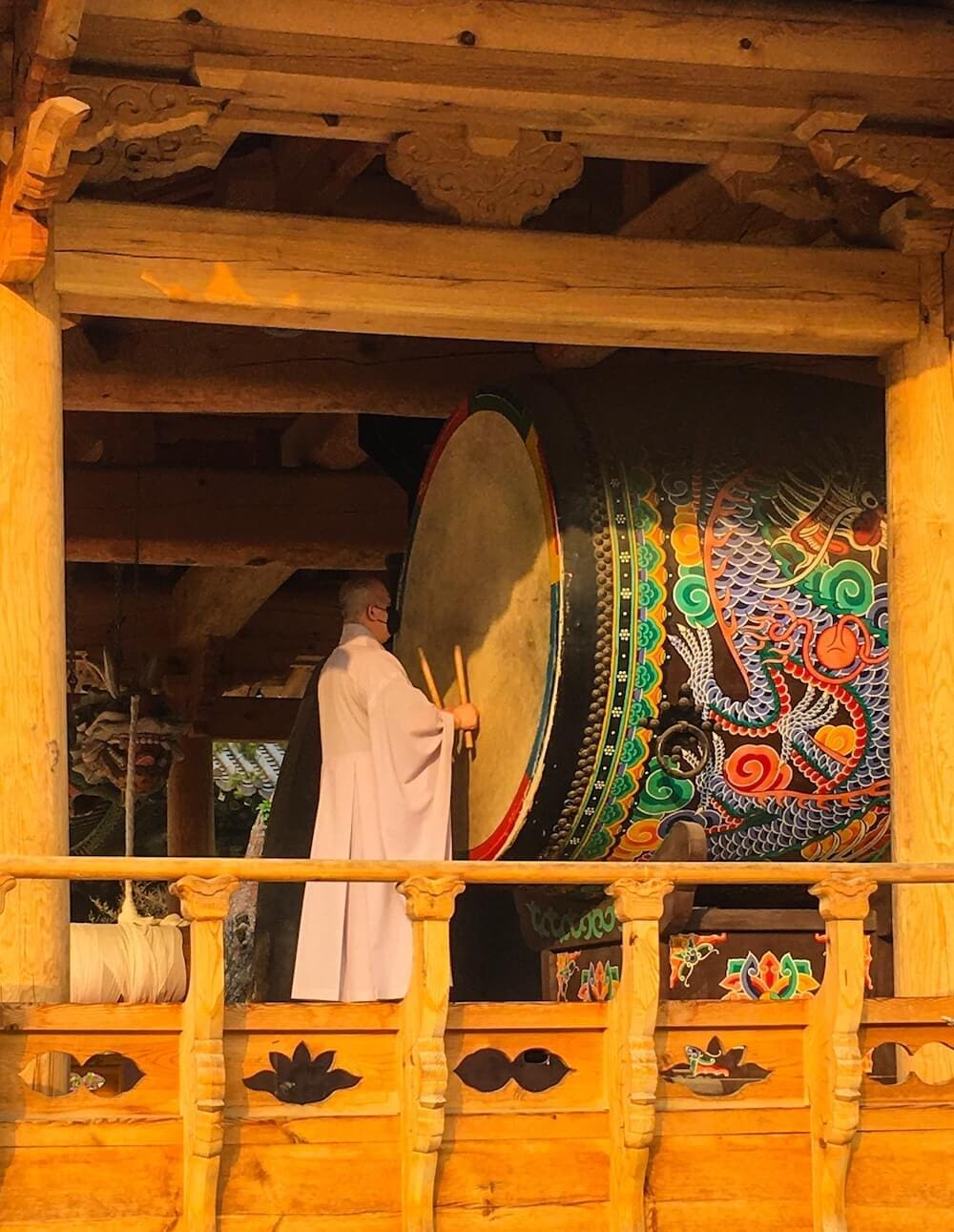
I’m always totally thrilled whenever I stumble upon ANY kind of drumming in Korea, but it somehow feels especially remarkable at Bongeunsa Temple, surrounded by all the Gangnam’s skyscrapers.
If the timing of a 4:10 AM dawn ceremony is a bit much for you, the 18:40 evening session is the one you’ll want to target. It’s incredibly easy to reach by subway, and you get to see the full drumming ritual right as the temple lanterns light up for the night.
TITLE: GANGNAM SUBWAY SURVIVAL TIP BODY_START If you’re targeting that 18:40 evening drumming session, plan to head down a bit earlier. Bongeunsa is right on Lines 2 and 9, and the trains get absolutely packed with workers heading home. Arriving around 5:00 PM lets you beat the brutal rush hour subway crush. If you need to grab an early dinner, head across the street to Starfield COEX Mall before heading onto the quiet temple grounds for the ritual. BODY_ENDExperiencing Bongeunsa Temple at Night
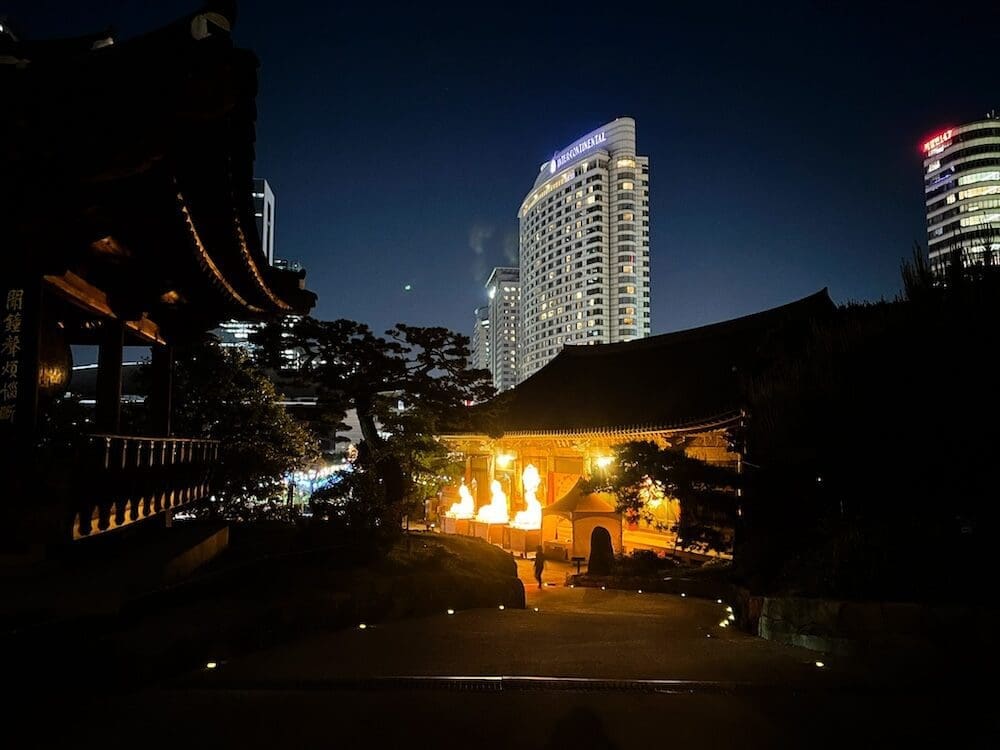
While visiting during the day is amazing for appreciating the colourful paintwork and forested trails, exploring Bongeunsa Temple after sunset is an entirely different, magical experience. The temple stays open until 10:00 PM (22:00) every night, making it one of the absolute best free night activities in Gangnam.

As darkness falls, the city sounds naturally fade, and the historic wooden pavilions light up with a warm, soft glow. The most spectacular sight is from the hillside platform near the 23-metre stone Maitreya Buddha.
From this viewpoint, the ancient, brightly lit statue stands in complete silence, juxtaposed magically against the glittering, futuristic glass skyscrapers of the Starfield COEX Mall across the street.

Seasons at Bongeunsa Temple
Bongeunsa is worth visiting multiple times to experience its changing seasons, events, and activities. From cherry blossoms to lotus flowers, each month brings something new and beautiful to contemplate at the temple.
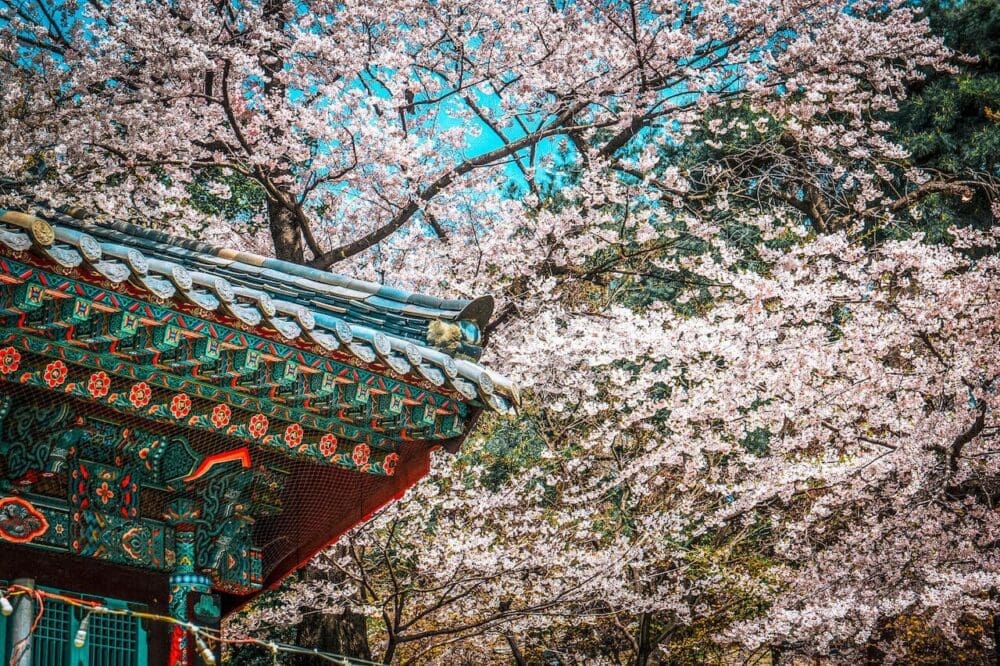
It’s also a good idea to visit during both daylight hours and after sunset. Bongeunsa is open every single day from 5:00 AM to 10:00 PM, and each hour feels just a little bit different. I always find that the hush of darkness at the temple allows for a beautiful contemplative space that is hard to find in Seoul sometimes.
There’s also a few incredibly special events and cultural festivals that take place at Bongeunsa Temple every year.
Entrance into the temple grounds is always completely free, so if your travel timing is right, catching one of these celebrations is a great way to experience Korean Buddhist traditions on a much deeper level.
Spring (March – May) & The Lotus Lantern Festival
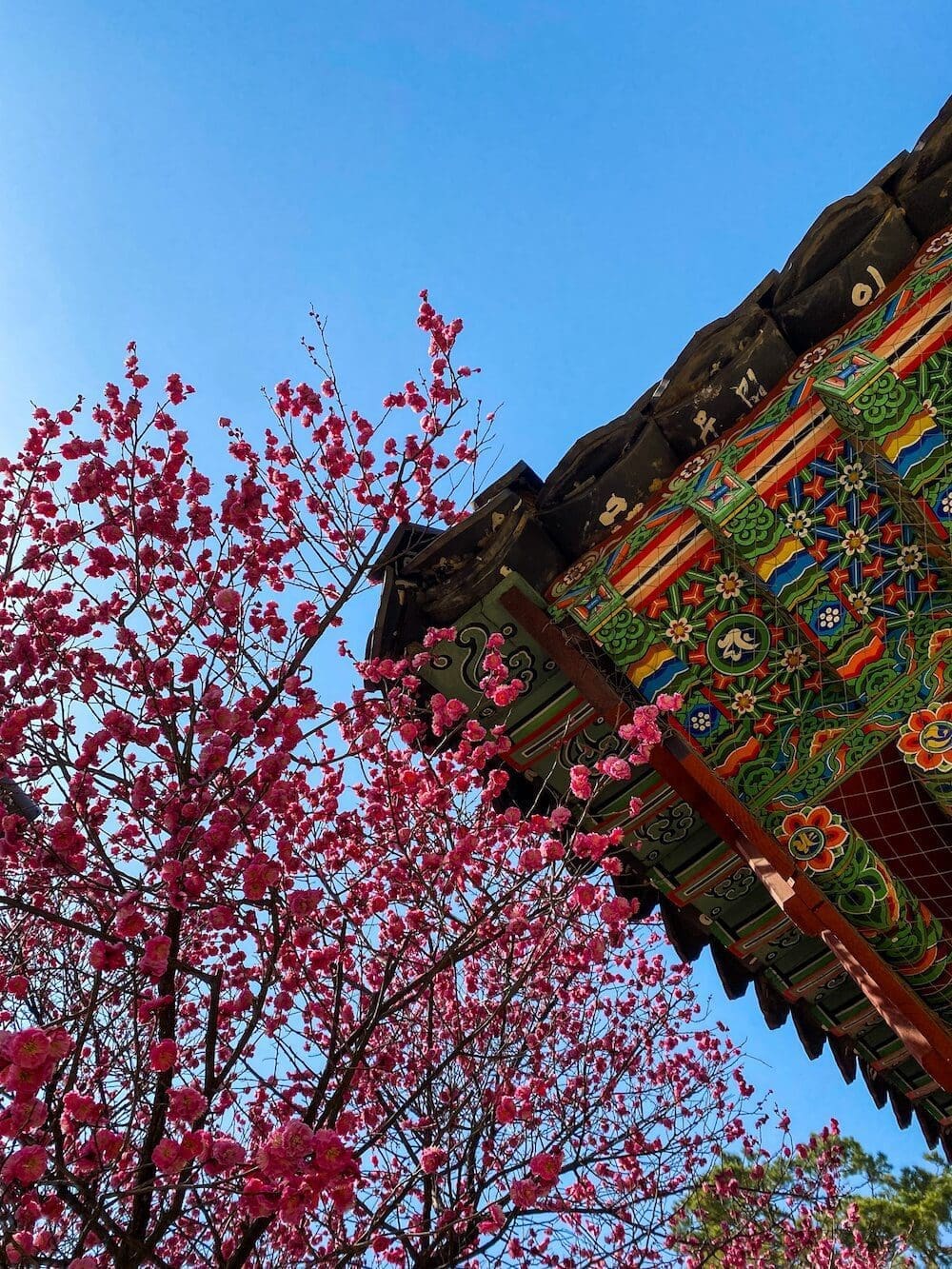
While I don’t want to influence your perceptions too much, I think it’s safe to say that the months of March, April, and May at Bongeunsa Temple are some of the best. There’s a very good reason for this, that goes beyond the pretty plum blossoms, fragile cherry blossoms, and other flowers that bloom at the temple in spring.

No, the main reason is that Buddha’s birthday is celebrated during spring in Korea. Buddhist temples all across the country mark this important day with a month of gorgeous lanterns and plenty of exciting events.
If your timing is right, don’t miss the spectacular Lotus Lantern Festival and Parade (Yeondeunghoe), that shuts down major streets in downtown Seoul for the occasion. The sight of thousands upon thousands of glowing hanji paper lanterns glowing against the night sky is truly unforgettable.

Because the festival dates are dictated by the Lunar Calendar, you will have to check for updated information each year. Fortunately, this is one of the few festivals in Seoul that announces their dates early!
TITLE: 🗓️ 2027 Lotus Lantern Festival Dates BODY_START The main Lotus Lantern Festival and Parade take place on May 8th and 9th, 2027. However, the lotus lanterns at Bongeunsa Temple stay up for a full month, so you can still see them even if you aren’t in Seoul for the exact festival weekend itself. Entrance to the temple grounds to view the light displays is always completely free. BODY_ENDSummer (June – August) & The Lotus Flower Festival
Traveling in Korea during the summer months of July and August can be a challenge due to the extreme heat and humidity, but there is one particularly special flower to look forward to. If you love seeing these magnificent blooms, check out Semiwon Garden near Seoul, which is probably my favourite place to see lotus flowers during the peak summer season.
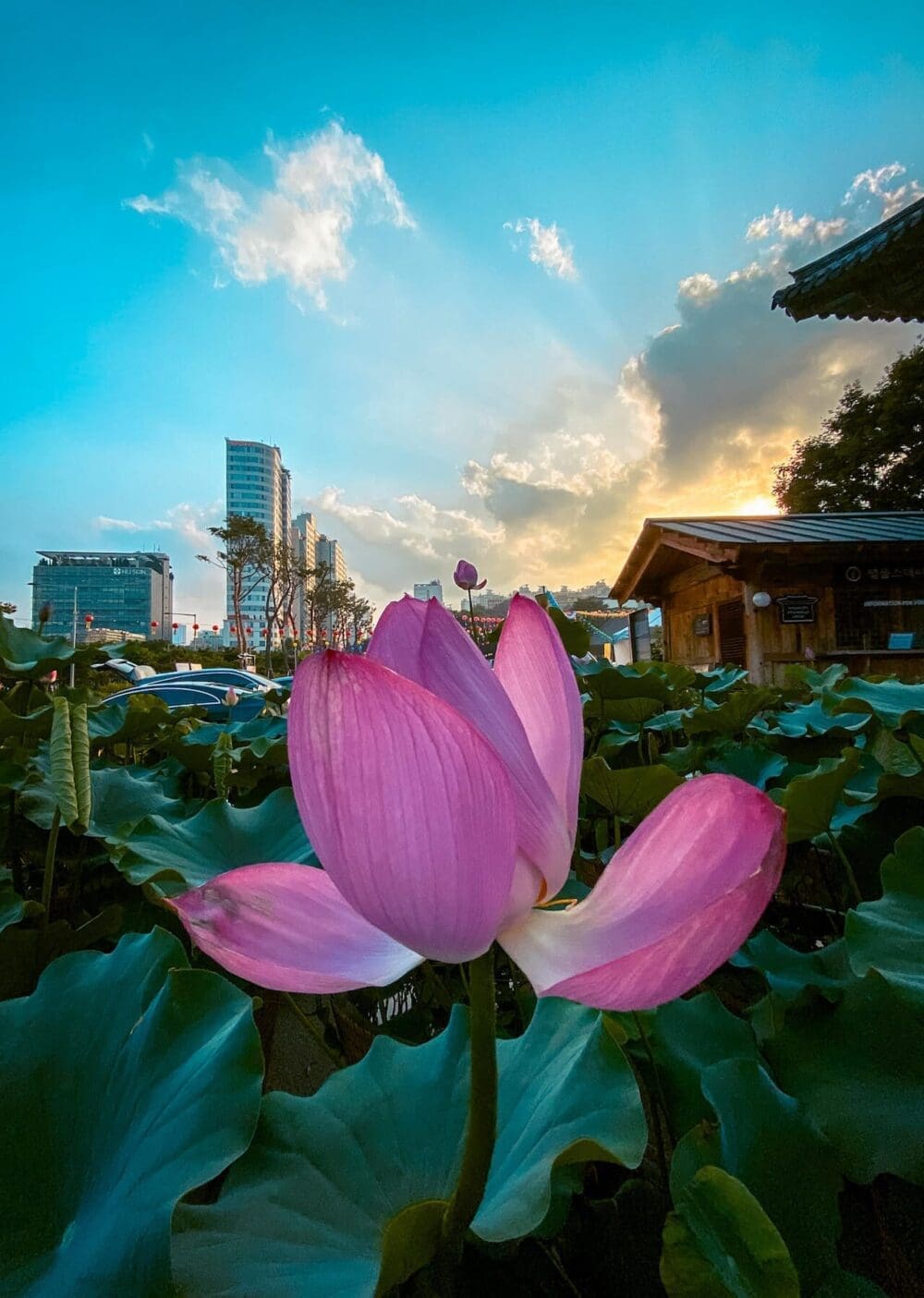
Right in the heart of the city, Bongeunsa hosts its own annual Lotus Flower Festival, and it’s an absolute delight to behold.
The main temple courtyard fills up with large earthen planters showcasing a beautiful display of both pink and white blooming lotus flowers. Admission is entirely free, and there are several places to capture photos with these enchanting flowers as your background.
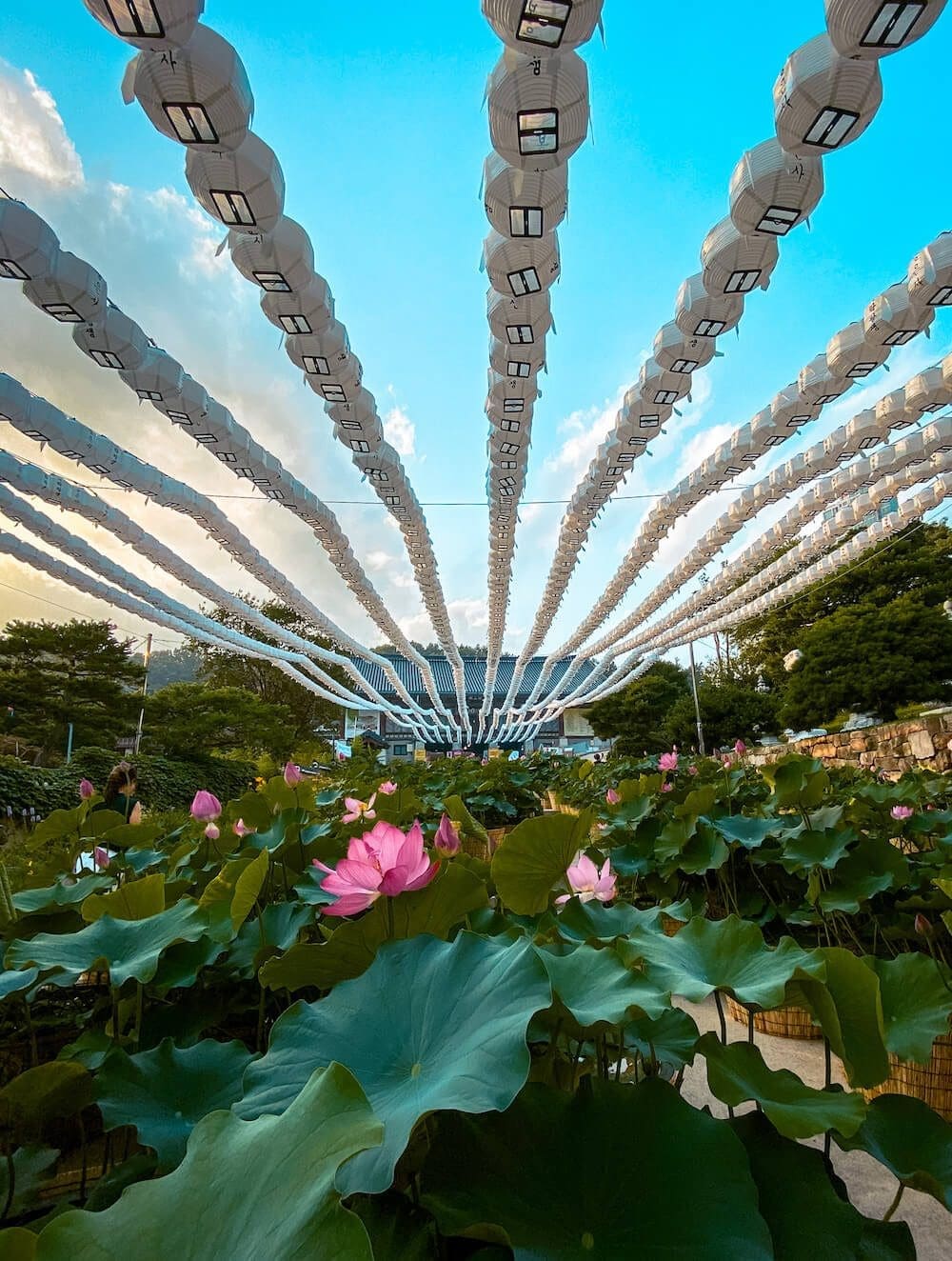
I mean – lotus flowers and a temple together – is there really anything more perfect? It’s almost enough to make you forget the torrid Seoul summer temperatures.
TITLE: 🪷 2026 Lotus Flower Festival Dates BODY_START The Bongeunsa Lotus Flower Festival typically runs from early July to early September. The peak blooming window for the best photography happens between late July and mid-August. There’s no entrance fee, and you are welcome to wander through the courtyard displays at your own pace during standard temple opening hours. BODY_ENDAutumn (September – November) & The Jeongdaebulsa Ceremony
The fall months are among Korea’s best, with cobalt skies, brilliant autumn leaves, and a packed festival calendar. It’s the absolute peak season to take a day trip from Seoul and wander along the famous golden tree-lined pathways of Nami Island or marvel at the fiery red maple trees covering the dramatic granite peaks of Seoraksan National Park.
Plan a visit to Bongeunsa Temple for mid-October to mid-November, and you’ll be rewarded with a gorgeous palette of fall colours, punctuated by traditional Buddhist architecture.

And while it is possible to see gorgeous fall foliage everywhere in Seoul, the forested hills surrounding the temple are an oasis of serenity that’s hard to come by in the middle of the hectic city,
TITLE: 🍂 2026 Jeongdaebulsa Ceremony Dates BODY_START The sacred Jeongdaebulsa Ceremony occurs on the 9th day of the 9th month of the Lunar Calendar. In 2026, that’s on October 18th. During this unique autumn ritual, monks recite the Beopseongge (Buddhist rites) while carrying 3,479 ancient woodblock scriptures on their heads in a slow, meditative procession. Admission is free for all visitors. BODY_ENDWinter (December – February) & Snowy Tranquility
If you’re lucky enough to catch snowfall in Seoul, head straight to Bongeunsa Temple for gloriously tranquil scenes. You’ll hear nothing but the crunch of snow beneath your feet, and the sounds of the city muted by a soft blanket of snow,

Make sure to bundle up and wear warm footwear if you plan to spend an extended period of time outside during the winter months in Korea.
You’ll need all that gear to check out fun winter events like the Sanjeong Lake Sledding Festival, or Garden of Morning Calm Lighting Festival anyway!
TITLE: ❄️ Winter Festival Note BODY_START While Bongeunsa does not host its own winter festivals, the temple remains a beautifully quiet spot to escape the cold city streets. If you are looking for spectacular seasonal light displays, you can check out my complete guide to the Seoul Lantern Festival at Cheonggyecheon Stream, where hundreds of illuminated sculptures light up the winter nights. For even more seasonal ideas, don’t miss my curated list of the best places to visit during winter in Korea to help you map out your perfect cold-weather itinerary! BODY_END
Is there a Templestay Program at Bongeunsa?
Participating in an authentic Korean Templestay is one of the most immersive ways to experience the living traditions of Seon (Zen) Buddhism. As the high-profile capital headquarters for the Jogye Order in southern Seoul, Bongeunsa Temple offers specialized cultural immersion designed specifically for international visitors.
Whether you’re looking for an intense weekend retreat or a brief weekday afternoon activity, the temple provides a few different ways to experience monastic life.

1. Overnight Templestay (2 Days / 1 Night)
The flagship overnight templestay program is an authentic deep-dive into traditional Buddhist monastic daily life.
- Schedule: Runs from 2:00 PM Saturday to 10:00 AM Sunday, exclusively on the first weekend of every month.
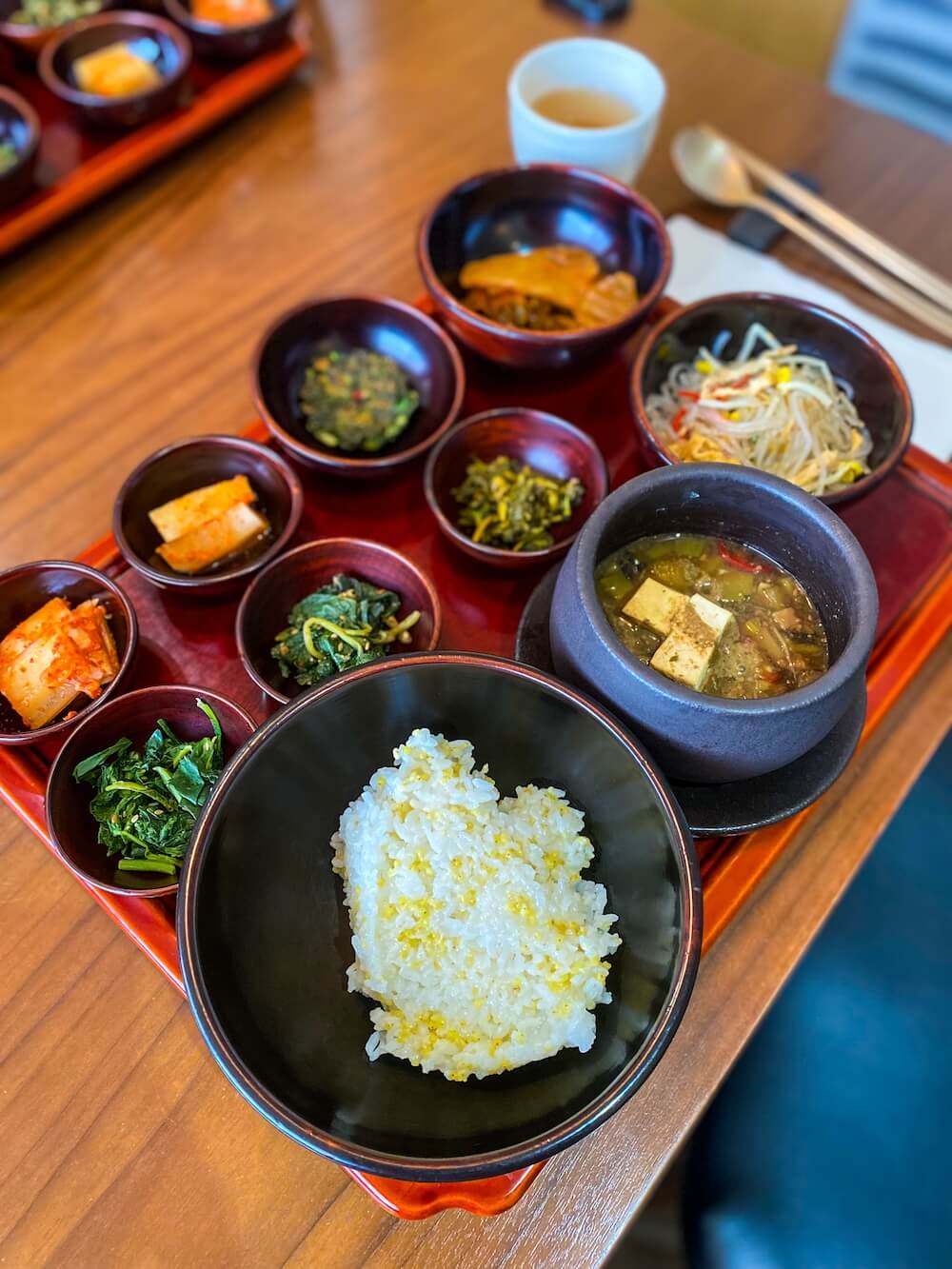
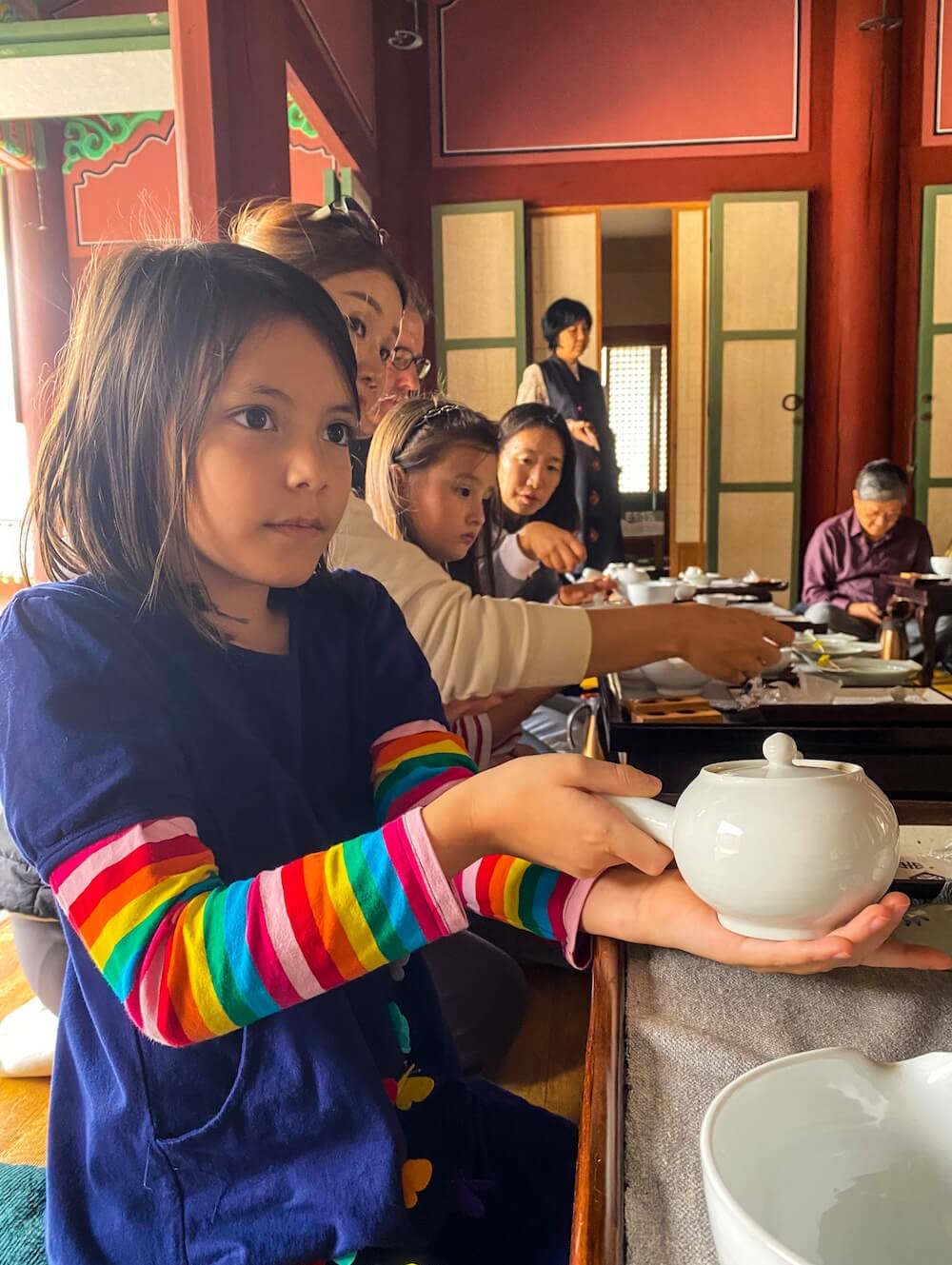
- Core Activities: Includes a guided historical temple tour, formal Zen meditation (Cham-Seon), a meditative tea ceremony (Da-Seon), copying ancient sutras in gold ink, an intimate dialogue session with a resident monk (Sunim), and enjoyingin clean, traditional Buddhist temple cuisine.
- 108 Prostrations: A core component of the stay involves completing 108 physical prostrations—a rhythmic, deeply meditative physical practice that tests your endurance while clearing the mind. I can tell you from experience, that this is NOT easy.
- Age Requirements & Cost: Open to participants aged 14 and older. The registration fee is 120,000 KRW per person.
Booking Advice: the overnight templestay is highly sought after and operates only once a month, so registration slots fill up immediately. Secure your reservation at least one or two months in advance to avoid being disappointed.
2. Weekly “Templelife” Program
If your Seoul itinerary is packed and you can’t commit to an overnight stay, the Templelife program is a great daytime alternative.
- Schedule: Every Thursday afternoon from 2:00 PM to 4:00 PM.
- Core Activities: This two-hour experience includes a curated tour, traditional Da-Seon tea tasting ceremony, and a hands-on introduction to Sagyeong (the beautiful ancient art of brush-copying sacred Buddhist sutras).
- Age Requirements & Cost: There are no age restrictions, making this an exceptionally family-friendly cultural activity to do with kids. The cost is 30,000 KRW per person.
Bongeunsa Temple History: From Silla to Modern Gangnam (봉은사)
Bongeunsa Temple was originally constructed in 794, during the 14th year of King Wonseong’s reign during the Silla Dynasty.
The temple was known as Gyeongseongsa at its founding, and was located near the Royal Tombs of the Joseon Dynasty – a UNESCO World Heritage site you can still see today at Seonjeongneung by Seolleung Station.

Over its 1,200-year history, the temple underwent several major transformations:
- The Renaming (1498): Joseon Queen Jeonghyeon refurbished the original Gyeongseongsa structures and renamed the sanctuary Bongeunsa (which means “offering grace to the king”).
- The Relocation (1562): The temple was moved less than a kilometre to its current hillside location near Starfield Coex Mall in Gangnam during the reign of King Myeongjong.
- The Buddhist Revival (1550s): Under the powerful patronage of Queen Munjeong, Buddhism experienced a temporary revival despite heavy Joseon-era Confucian suppression. Bongeunsa was designated the official head temple of the national Korean Seon (Zen) sect, hosting the national civil service examinations for monks.

Panjeon Hall: The Oldest Surviving Structure
While most of Bongeunsa’s buildings were unfortunately destroyed or damaged by the Korean War and historical fires, Panjeon Hall (built in 1856) miraculously survived.
This ancient wooden library preserves 3,479 sacred Buddhist woodblocks of the Avatamsaka Sutra. On the exterior plaque, you can also see the final calligraphy masterpiece of Kim Jeong-hee (Chusa), one of Korea’s most celebrated historical scholars. It was written just three days before his death.
Most of Bongeunsa’s other buildings were unfortunately damaged by wars or fire at various times in its long history, but work continues even today to restore it to its full glory.

The Contrast of Ancient Tradition and Futuristic Seoul
When you stand in the middle of super posh Gangnam now, it’s hard to believe that just 70 years ago, the area was nothing but farmland and pear orchards. All the trappings of modernity you see today – skyscrapers, highways – were built up around Bongeunsa Temple.
Bongeunsa is an unexpected oasis of calm in the middle of one of Seoul’s busiest, most commerical districts – surrounded by forested hills, easy hiking trails, and a sacred atmosphere.

With most Korean temples located in mountains or rural areas, this contrast of traditional and modern is rare, and should definitely be experienced!
It’s always seemed totally appropriate to me that Bongeunsa’s imposing statue of Maitreya – the Future Buddha – has watched over Seoul’s transformation from farmland into one of the most futuristic parts of the city.
Bongeunsa Temple FAQ
LABEL: 🙏 People Also Ask FAQ_START Q: Is Bongeunsa worth visiting? A: Bongeunsa is a gorgeous temple complex in Seoul that’s worth visiting because of its long history, temple stay programs, and wonderful grounds. It’s also one of the best places to experience the contrast of ancient and modern in Korea. FAQ_END FAQ_START Q: Is there an admission fee for Bongeunsa Temple? A: It’s completely free to enter Bongeunsa temple. FAQ_END FAQ_START Q: What is the dress code for Bongeunsa in Seoul? A: There isn’t a strict dress code, but you should consider the sacred environment and wear modest and respectful clothing. Some buildings may require you to remove your shoes before entering them, so pay attention to any signage near entrances. FAQ_END FAQ_START Q: When is the best time to visit Bongeunsa Temple? A: The best time to visit is during spring for the spectacular Lotus Lantern Festival celebrating Buddha’s birthday, or during summer (July to August) when the main courtyards fill with blooming lotus flowers. For daily visits, arrive just before 18:40 to catch the evening ritual drumming. FAQ_END FAQ_START Q: Can you take photos at Bongeunsa Temple? A: Yes, photography is permitted throughout the outdoor grounds and courtyard areas. However, you should strictly avoid taking photos or videos looking inside the prayer halls while monks or worshippers are actively meditating and chanting. Tripods should be used discreetly so as not to block walkways. FAQ_END FAQ_START Q: Is Bongeunsa Temple open at night? A: Yes, the temple remains open to the public until 22:00 (10:00 PM) every evening. Visiting at night is highly recommended, as the historic wooden shrines and lanterns light up beautifully, creating a stunning visual contrast against the glowing modern skyscrapers of Gangnam. FAQ_END HEADING: 🛍️ Head Across the Street: Explore Seoul’s Ultimate Futuristic Underground Mall TEASER_START Once you finish soaking in the spiritual tranquility and ancient history of Bongeunsa Temple, dive straight back into modern Seoul right across the road. Discover a labyrinth of underground entertainment featuring a viral multi-story library, world-class aquarium, and endless shopping. TEASER_END BTN_TEXT: Read My Essential Guide to Starfield COEX Mall Things to Do → BTN_URL: https://travel-stained.com/starfield-coex-mall-things-to-do/I originally researched, wrote & published this guide on October 15, 2024. I review & update my content for accuracy regularly. Watch out for copycats.This post was last updated on August 13, 2026. Copyright © 2024–2026 Travel-Stained. All rights reserved.