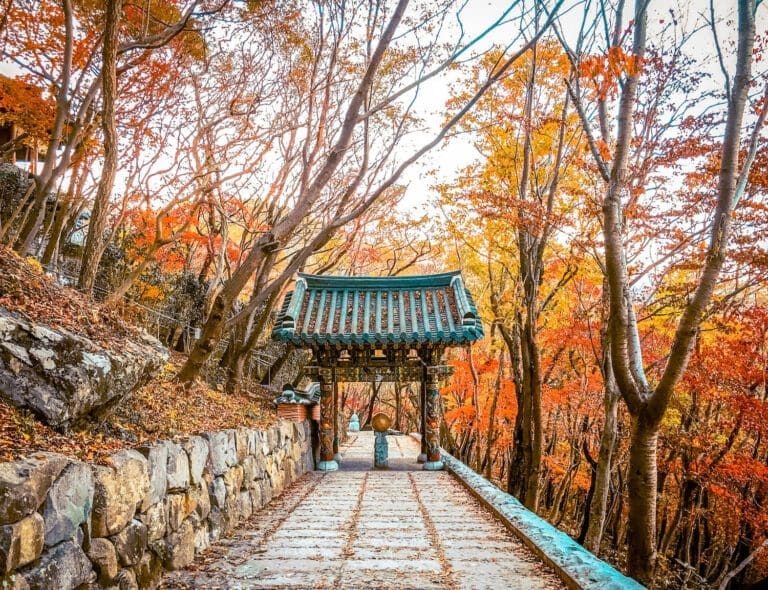
After living in Korea for 15 years, I can safely say that autumn is my favourite season here, and the 1,317 year old Bangye-ri ginkgo tree in Wonju is one of the absolute highlights.
If you’ve spent any time on social media in October or November, you’ve probably seen photos of it. It looks like a giant golden cloud dropped right into the middle of a quiet village, but because it is actually just a single tree in the countryside, timing your visit and figuring out transport from Seoul can be a bit of a puzzle.

Since I’ve actually made the trip to Wonju to see it, I’ve put together everything you need to know to plan your own autumn day trip out there.
In this guide, I’ll share the predicted 2026 peak dates, photo tips, and the local folklore behind one of South Korea’s oldest living ginkgo trees. I’ll also break down the exact public transit routes and driving directions based on my personal experience, so you don’t get stranded on your way there.
*Any purchases made through affiliate links here help run this site.
ATTR_NAME: Bangye-ri Ginkgo Tree ATTR_DESC: A colossal, 1,300-year-old golden cathedral rising out of the Wonju countryside. ATTR_STREET: 1496-1, Bangye-ri, Munmak-eup ATTR_LOCALITY: Wonju-si ATTR_REGION: Gangwon-do ATTR_HOURS_SCHEMA: Mo-Su 00:00-24:00 ATTR_FREE: true MAIN_TITLE: 🇰🇷 Bangye-ri Ginkgo Tree: Quick Guide & Essential Info INTRO_START The Bangye-ri Ginkgo Tree is a breathtaking 1,300-year-old national monument that transforms into a brilliant golden crown every autumn. It makes sense to combine it with a trip to the nearby Sogeumsan Grand Valley for more incredible fall foliage. INTRO_END LABEL_ENG: English Address: TEXT_ENG: 1496-1, Bangye-ri, Munmak-eup, Wonju-si, Gangwon-do LABEL_KOR: Korean Address: TEXT_KOR: 강원특별자치도 원주시 문막읍 반계리 1496-1 LABEL_HOURS: Hours: TEXT_HOURS: Open daily 24 hours (Best viewed during daylight hours) LABEL_FEE: Admission: TEXT_FEE: Free (No admission fee or parking fee required) LABEL_TRANS: Public Transit: TEXT_TRANS: Express bus from Seoul to Munmak Bus Stop, then Local Bus No. 5 to Namdo-dong stop BTN_TEXT: SKIP TO TRANSPORTATION AND DIRECTIONS ↓ BTN_URL: #how-to-get-to-the-bangye-ri-ginkgo-tree-from-seoulBy the Numbers: Age, Height, and Dimensions of the Wonju Bangye-ri Ginkgo Tree
While local records guessed this giant was around 800 years old, recent advanced 3D laser scans and testing from the National Institute of Forest Science confirmed that it’s significantly older. It truly deserves its official protection as South Korean Natural Monument No. 167.

Here are the official dimensions for this living legend:
- Age: Approximately 1,317 years old, crowning the Bangye-ri tree as the oldest ginkgo tree in South Korea.
- Height: Towering at 32 metres tall.
- Trunk Circumference: Measuring 16.27 metres around the base.
- Canopy Spread: Sprawling 37.5 metres from east to west and 31 metres from north to south, creating a natural golden umbrella over the square. To put that into perspective, the shadow of this single crown covers roughly the same footprint as one of the full-sized flower plots you’ll see down at Yangju Nari Park.
- Structure: The tree fans out into seven distinct main trunks rising from a multi-stemmed base, which is what gives it that flawlessly symmetrical dome shape.

When’s the Best Time to See Peak Foliage
Catching the peak autumn colours in South Korea is always a bit of a game against nature. Generally though, the foliage season in Gangwon-do kicks off around mid-October in high-altitude mountains like Seoraksan, before spreading down to the lower valleys and cities like Wonju toward the end of the month.
Most years, the peak window for this region lands squarely between late October in Korea and early November.
Why Timing this is Harder than Regular Fall Foliage
When you travel to see mountain foliage in Korea, you usually have a comfortable two-week buffer where the colours look great. But the Bangye-ri ginkgo tree doesn’t play by those rules.

Because it’s an absolutely colossal individual living organism, it reacts to weather shifts instantly. It stays green longer than the surrounding forest, turns brilliant yellow quickly, and is famous for dropping its leaves overnight if a heavy frost or strong wind hits. You really only have a tiny window of a few days to see it in its prime before it leaves behind a yellow carpet and bare branches.
Don’t let that discourage you from visiting though. I went on November 15th, and while half the leaves had already fallen, it wan’t any less worthwhile.

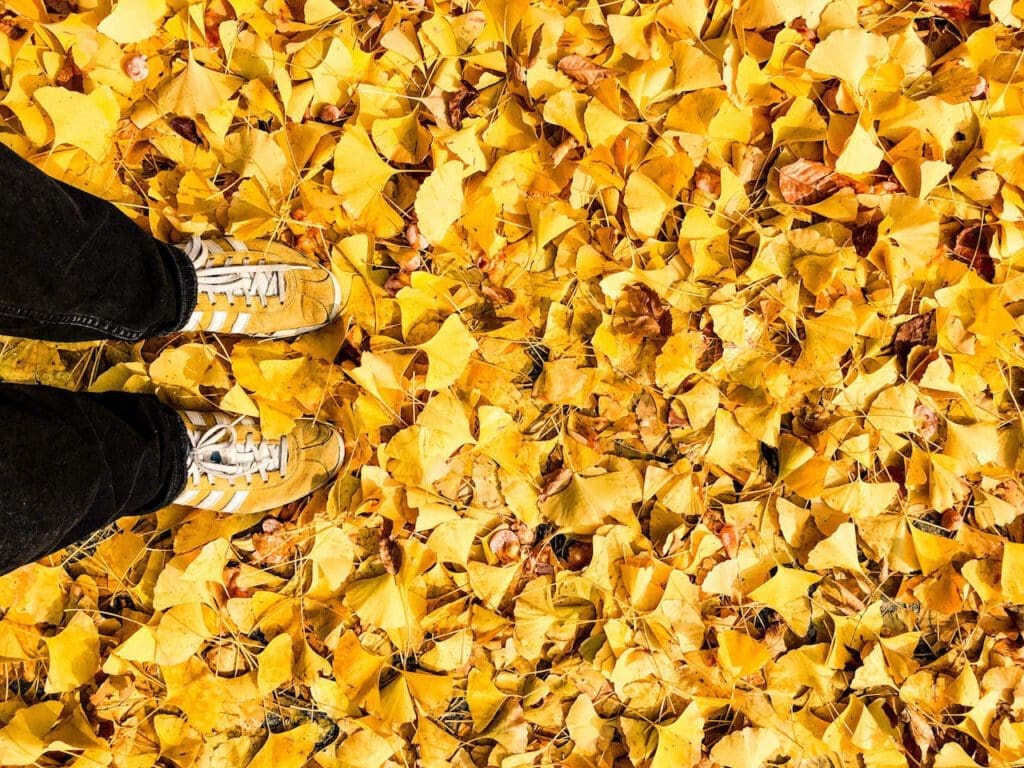
The thick carpet of golden ginkgo leaves was just as amazing as the foliage on the tree. And standing there while golden leaves were still falling around me was a completely different kind of magic. A trip to Wonju to see the Bangye-ri ginkgo tree is well worth it – even on the tail end of the peak.
Predicted 2026 Peak Dates for the Wonju Ginkgo Tree
For the 2026 autumn season, you’ll want to target the window between late October and early November for the best chances of seeing a fully saturated yellow canopy. If the autumn temperatures stay crisp without early frost damage, the Wonju ginkgo tree usually holds onto its leaves nicely into the first full week of November before they start dropping.

Since the timing shifts slightly every year based on weather conditions (and our weather is crazy lately), my best local trick is to check Instagram or Naver blogs during the final week of October. Just search the Korean name, 반계리 은행나무 (Bangye-ri Ginkgo Tree), and look for the most recent posts. That’ll give you a live look at the ginkgo leaf situation in Bangye-ri before you make the trek from Seoul.
It’s the exact same strategy I recommend using to check peak blooming conditions for autumn flowers in South Korea, especially if you’re trying to coordinate a day trip up to the massive floral valleys at Goseokjeong Pavilion Flower Garden on the same holiday route.
How to Get to the Bangye-ri Ginkgo Tree From Seoul
The Bangye-ri ginkgo tree sits roughly 120 kilometres southeast of Seoul in the countryside of Wonju – a major city in Gangwon-do.
Getting out to this part of the province is fairly straightforward, but because the ginkgo tree sits in a small rural village outside the city centre, you need to plan the final leg of your journey carefully. Depending on your travel style, you can either take the fast train and connect with local transit or drive there directly yourself.
NAME: Bangye-ri Ginkgo Tree DESCRIPTION_START A 1,300-year-old ancient ginkgo tree in Wonju famous for its perfectly symmetric, golden autumn canopy. DESCRIPTION_END TRANSIT_LABEL: Getting There: TRANSIT_TEXT: KTX from Seoul Station to Manjong Station, then local bus 51-1 to Donghwagol and transfer to bus 5 to Namodong. ENG_LABEL: Address: ENG_TEXT: 42 Banjeori 2-gil, Munmak-eup, Wonju-si, Gangwon-do KOR_TEXT: 강원특별자치도 원주시 문막읍 반계리 1495-1Option 1: Seoul to Wonju by Public Transit (Train & Local Bus Logistics)
There are 2 main ways to get to Wonju, depending on whether you prefer the train or the express bus.

Step 1: KTX to Seowonju Station or Manjong Station: Hop on the KTX at Seoul Station or Cheongnyangni Station and head east. Manjong Station is usually the most convenient stop for this route, and the train ride takes just over an hour. A standard one-way economy ticket runs between ₩10,000 and ₩14,000 depending on which station you choose to leave from. Book tickets here.
Step 2: Catch Local Buses: Once you walk out of Manjong Station, catch Bus 51-1 to the Donghwagol stop, then switch over to Bus 5. Take it to the Namodong stop, and from there, it’s just a flat five-minute walk to the Bangye-ri ginkgo tree.

If the local bus transfers seem overwhelming, you can also take an express bus from Seoul Express Bus Terminal straight to the Wonju Munmak Bus Terminal. Once you get there, walk over to the main intersection near the Samsung Digital Plaza store. Bus 5 stops right out front, and it’s a direct 12-stop ride to the Bangye-ri ginkgo tree from there.
Another option from Manjong Station is to grab a taxi right outside the station. The taxi ride takes about 25 minutes and usually costs around ₩20,000 to ₩25,000.
I’ve provided 1 button copy-paste addresses in hangul above, so make sure to stick that into Naver or Kakao Maps for the most accurate walking directions. You can also show it to your taxi driver, so there’s no confusion.

Option 2: Driving to Wonju (Car Rental & Taxi Directions)
Driving yourself gives you the flexibility to explore other spots in the area on your own schedule. When I made the trip, I was able to check out other autumn foliage hotspots and national parks that would have been nearly impossible to reach using public transit.
The drive from Seoul to Wonju takes around an hour and a half depending on how bad traffic is when you head out onto the highway. Once you arrive, parking at the Bangye-ri ginkgo tree is a breeze with a free, paved lot located right near the entrance plaza.
TITLE: 🚗 Driving in Korea BODY_START Make sure to get an International Driver’s Permit at home. You won’t be able to rent a car in Korea without one. If you want to sort out your vehicle rental in advance, you can compare local rates and reserve a rental car here → BODY_END
Option 3: Booking an Autumn Day Tour
If the thought of coordinating rural bus transfers in a foreign country, or driving through weekend highway traffic yourself feels intimidating, joining a seasonal tour is the most stress-free option. Since they handle all the logistics for you, and transport from the city is direct – you can concentrate on what really matters – the gorgeous autumn foliage! It’s the perfect way to see fall foliage in rural areas before heading back to explore the best autumn spots in Seoul.
Here are 3 autumn day tours to the Wonju area for you to compare. All include the Bangye-ri Ginkgo tree, but add different locations to the rest of the itinerary.
TITLE: 💛 BANGYE-RI GINKGO TREE DAY TOURS DESC_START Most of these trips bundle the ginkgo tree in Wonju with other incredible regional autumn spots that are difficult to access on your own. It’s the best way to hit all the top fall foliage highlights in the area in a single, relaxed day trip without any of the added planning stress. DESC_END C1_LABEL: Wonju + Sogeumsan Tour (Private Available too!)→ C1_URL: https://klook.tpk.ro/zFUIx76n C2_LABEL: Museum San + Central Market + Ginkgo Tree → C2_URL: https://klook.tpk.ro/EhCce9Cj C3_LABEL: Seokjongsa Temple + Cheongpung Cable Car + Ginkgo Tree → C3_URL: https://klook.tpk.ro/eSFajVSoHistory & Legends Behind South Korea’s Oldest Ginkgo Tree
This isn’t just any old tree. Recent scientific evaluations using 3D scanning confirmed that this living monument is over 1,300 years old, cementing its status as the oldest ginkgo tree in South Korea.

Over those 13 centuries, local village families have passed down a couple of fascinating stories about how the Bangye-ri ginkgo tree got there in the first place, and why it continues to thrive.
The Tale of the Monk’s Rooted Walking Stick
The most famous origin story about the ginkgo tree in Wonju dates back to an ancient Buddhist monk who was passing through the area.
According to local lore, he stopped by a stream to grab a drink of water and rest his legs. When he stood up to leave, he accidentally left his wooden walking stick planted deep in the soft, wet soil. Instead of rotting away, the monk’s walking stick took root, grew branches, and eventually turned into the 32 metre ginkgo tree standing in Bangye-ri today.

The White Snake of Bangye-ri
In another legend, a sacred white snake lives deep inside the hollows of the complex root system, acting as a spiritual guardian, and protecting the tree from pests, diseases, and severe winter storms, thus allowing it to continue thriving.
Because of this serpent, the Wonju ginkgo tree is considered highly sacred, and locals traditionally discourage anyone from touching the bark or messing with the roots.

Photography Tips: Capturing the Perfect Wonju Ginkgo Tree Shot
Taking a great photo here is all about managing the scale of the tree and the people waiting to see it. Here are a few practical tips to keep in mind.
- Arrive by 8:00 AM. Weekdays are better. This location goes viral on local social media every single autumn. If you want a clean shot without dozens of tourists blocking the view, you need to arrive early.
- Switch to a wide-angle lens. The canopy spreads out over 37 metres wide. You’ll need a wide-angle lens or a panoramic smartphone mode to fit the whole golden crown into one frame.
- Shoot during the low morning sun. The soft light just after sunrise makes the yellow leaves glow intensely against the darker bark.
- Don’t forget the ginkgo tree carpet. These gorgeous golden leaves are just as gorgeous as the tree itself.
Wonju Bangye-ri Ginkgo Tree FAQs & Visiting Tips
LABEL: 🍂 People Also Ask FAQ_START Q: When is the best time to see the Bangye-ri ginkgo tree turn yellow? A: The peak foliage window usually lands between October 30 and November 7. It changes a bit every year depending on how cold it is, so it’s smart to check recent photos on Instagram or Naver Maps before you head out. FAQ_END FAQ_START Q: Is there an entrance fee to visit the Wonju ginkgo tree? A: No, visiting the site is completely free. Wonju City recently built a lovely public square around the area and added dedicated parking spaces, so you do not have to pay anything to park or see the tree. FAQ_END FAQ_START Q: How do you get from Seoul to the Bangye-ri ginkgo tree by public transit? A: You can catch an express bus from Seoul Express Bus Terminal to Munmak Bus Stop. From there, cross the street and hop on Wonju local bus number 5, then ride it for about 12 stops until you reach Namdo-dong stop. FAQ_END FAQ_START Q: When does the Wonju ginkgo tree drop all its leaves? A: The tree drops its canopy very quickly, usually within a few days after hitting peak colour. If you arrive around mid-November, you’ll likely miss the heavy branches full of golden leaves, but you will get to see a beautiful yellow carpet on the ground instead. FAQ_END FAQ_START Q: Are there public washrooms or facilities near the Bangye-ri ginkgo tree? A: Yes, Wonju City built clean public washrooms right by the new parking lot plaza. However, there are no commercial convenience stores, shops, or cafes in the immediate village. Make sure to grab coffee or lunch before leaving Seoul or Wonju Station, as you will only find temporary food stalls here during peak autumn weekends. FAQ_END FAQ_START Q: Can you visit the Wonju ginkgo tree at night? A: You can walk up to the square at night since it stays open 24 hours. However, since there’s no special evening illumination or light show on the tree itself, it’s better to visit during daylight hours for the best photos. FAQ_END FAQ_START Q: Is the Bangye-ri ginkgo tree area accessible for wheelchairs and strollers? A: Yes, Wonju City’s recent plaza upgrades added smooth, paved walking paths around the base of the tree, making it accessible for wheelchairs and strollers, though you encounter a slight uphill slope from the parking lot. FAQ_END HEADING: 🍂 CAN’T GET ENOUGH OF KOREA’S GOLDEN AUTUMN SEASON? TEASER_START If you’re absolutely loving the vibe of this giant ginkgo tree in Wonju, you’ll want to map out a few other legendary autumn spots before your trip ends. I’ve tracked down the most beautiful ginkgo tree roads and monumental trees scattered across Korea, so you don’t miss a single leaf. TEASER_END BTN_TEXT: 14 AWE-INSPIRING PLACES TO SEE GOLDEN GINKGO TREES ROADS IN KOREA → BTN_URL: https://travel-stained.com/ginkgo-tree-roads-in-korea/I originally researched, wrote & published this guide on September 2, 2026. I review & update my content for accuracy regularly. Watch out for copycats.This post was last updated on September 2, 2026. Copyright © 2026 Travel-Stained. All rights reserved.