

If you’re planning a trip to South Korea in the fall, you probably already know about the spectacular autumn foliage, but after living here and experiencing 15 autumn seasons myself, I can tell you that chasing autumn flowers in South Korea is equally as wonderful.
From vibrant fields of orange cosmos and fluffy magenta kochia to dreamy pink muhly grass, the seasonal autumn colours in Korea are truly incredible.

Whether you want to walk through acres of brilliant yellow cosmos right off the subway line, or catch the best Korean fall flower festivals on an epic countryside day trip to a 24-acre valley bordering volcanic canyons, I’ve got you covered.
Here’s my practical expat’s guide to finding the best spots, including the exact copy-and-paste Korean addresses you’ll need to navigate like a local.
*Any purchases made through affiliate links here help run this site.
TITLE: 🇰🇷 Autumn Flowers in South Korea: Quick Travel Snapshot INTRO_START Autumn is a spectacular time to chase blooms in South Korea! You’ll experience crisp, sunny weather, brilliant foliage changes, and wonderful seasonal festivals. For the perfect home base near subway lines, look for cozy stays in Hongdae, Jamsil, or Myeongdong to maximize your daily flower-chasing itinerary. INTRO_END INFO1_ICON: ☀️ INFO1_LABEL: Weather: INFO1_TEXT: Crisp, cool, clear sunny skies (14°C – 22°C) INFO2_ICON: 🗓️ INFO2_LABEL: Peak Bloom: INFO2_TEXT: Late Sept to Late-Oct (Vibrant Colours) INFO3_ICON: 🌸 INFO3_LABEL: Top Highlights: INFO3_TEXT: Yellow Cosmos, Pink Muhly & Silver Grass INFO4_ICON: 🧳 INFO4_LABEL: Packing: INFO4_TEXT: Light jacket, walking sneakers, camera gear BTN_TEXT: Book Your Korea Autumn Flower and Foliage Tours Here → BTN_URL: https://klook.tpk.ro/rvNTcCAQMust-See Autumn Grasses and Flowers in South Korea
Before you head out, it helps to know exactly what you’re looking for. Korea’s autumn flower and grass gardens aren’t just a mix of random weeds. Local districts plant specific varieties that peak at different times, which is why Korean autumn flower festivals are so incredibly popular, and last straight through to November.
Here are the autumn flowers you can expect to see in Seoul and beyond.

Pink Muhly Grass
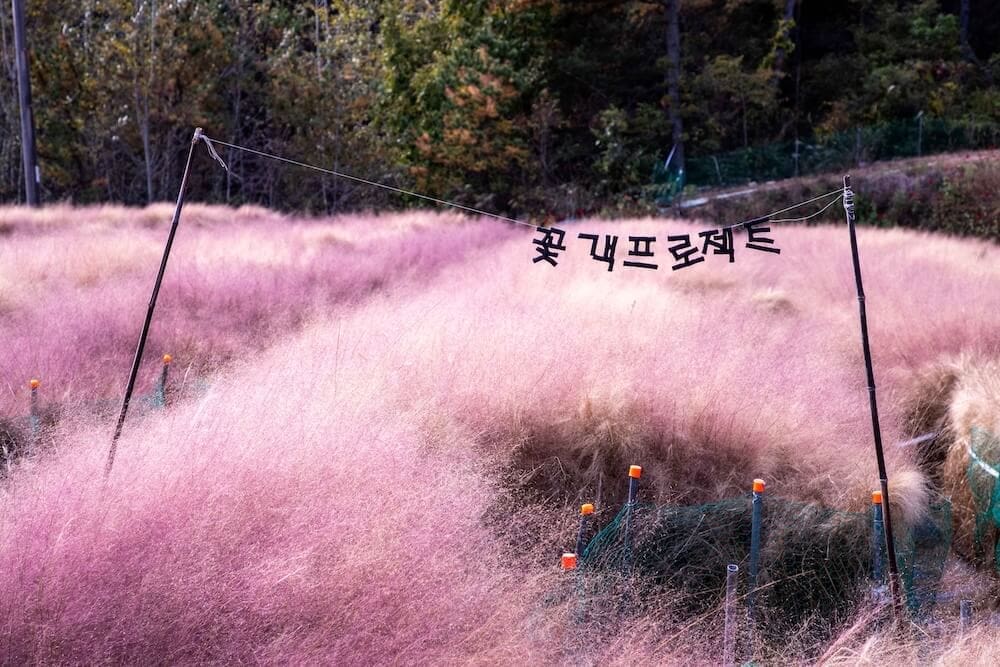
This is that dreamy, cotton-candy pink grass you always see blowing up your social media feeds when people search for pink muhly (핑크뮬리) in South Korea. It looks like a soft pink cloud resting on the ground, and it stays vibrant for weeks during autumn.
EMOJI: 🚨 LABEL: REALITY CHECK | SEOUL’S PINK MUHLY IS GONE BODY_STARTIf you’re reading travel blogs that don’t fact-check, and recommend heading to see fluffy fields of pink muhly inside downtown Seoul — don’t waste your transit time! Because it was officially designated as an invasive ecosystem hazard by the Korean Ministry of Environment, Seoul has systematically removed the pink grass from major municipal parks. You’ll need to head out to Gyeonggi-do to catch the best patches of pink muhly South Korea has left. I’ve mapped it out for you completely, so you don’t waste a second of your trip. BODY_END BTN_TEXT: Read My Complete Guide to 17 Real Pink Muhly Spots Left in Korea → BTN_URL: https://travel-stained.com/pink-muhly-in-korea/Yellow & Orange Cosmos
Most people are used to seeing classic white or pale pink cosmos, but the stunning fields of orange and yellow cosmos (황화코스모스) Korea plants every autumn are a completely different story.

They grow quite tall and bloom a bit earlier than other autumn flowers in South Korea, completely taking over hills and parks from mid-September into early October. Tracking down orange or yellow cosmos in Korea is the perfect way to kick off your fall trip.
Red Spider Lilies
Red Spider lilies (꽃무릇) are striking, fiery crimson blossoms that look like something straight out of a fantasy novel. They feature long, delicate tendrils that curl upward, creating a brilliant carpet of red. These autumn flowers in South Korea have an incredibly tight blooming cycle that lasts only 7 to 10 days out of the entire year.

The absolute peak bloom window across the country usually starts around mid-September. By October 1st, the crimson petals drop, turn brown, and completely decay, so only add red lily spots to your schedule if you’re on the ground in Seoul by the middle of September.
Kochia Bushes
Kochia (댑싸리) are also known as summer cypress, and they’re incredibly cool to photograph. They look like perfectly round, fluffy green pom-poms during the summer months. But as the autumn chill starts in October, they rapidly transform into a deep magenta and fiery crimson colour.

Walking through rows of these bright red, fluffy globes at an autumn flower festival in Korea is a completely unique experience you’ll never forget.
Pampas Grass
If you want to add some serious drama to your travel photos, you’ll love hunting down these towering, feathery plumes. Unlike the shorter silver grass fields found on hills, pampas grass (팜파스) grows incredibly tall and thick, featuring dense, cream-coloured stalks that look like giant feathers swaying in the wind.

The pampas season in Korea hits its stride in early October and lasts well into November. Walking along a trail flanked by these giant reeds makes you feel completely hidden away from the world, and it’s perfect for when you want a bold look for your autumn flower photos in Korea.
Autumn & Siberian Chrysanthemums
These are the absolute queens of the late-autumn season, thriving straight through early November, long after other delicate petals have faded.
While standard autumn chrysanthemums (국화) in Korea come in a brilliant rainbow of golds, deep reds, and purples that local gardeners love sculpting into huge arches for Korean autumn flower festivals, you’ll also want to look out for Siberian chrysanthemums (구절초) too.

These are white and light pink wild blossoms with bright yellow centres that carpet forest floors and mountain slopes throughout October. They’re actually a staple in traditional Korean medicine, and locals love them for their sweet, earthy scent. If you find a hillside covered in them, it honestly looks like a fresh layer of early winter snow just hit the woods.
The Peak Autumn Blooming Weeks in South Korea (Timing Your Trip)
Timing your trip to see autumn flowers in South Korea perfectly can be tricky. Blooming windows shift every year based on summer heat (and our weather has gotten super unpredictable lately). However, after experiencing the autumn flower blooming seasons in Korea for the last 15 years, I’ve mapped out a reasonably reliable schedule for your travel itinerary.

One major reason I prefer chasing autumn flowers over spring cherry blossoms is the weather. Spring can bring terrible “yellow dust” air pollution from the Gobi desert, and turn the skies an ugly, yellowish grey. Autumn in Korea, on the other hand, gives you crisp air and perfectly clear blue skies. It’s really the ideal time to enjoy flowers in Korea.
Here’s what to expect when chasing autumn flowers in South Korea.
Late September: First Fall Flowers in Seoul and Beyond
This is when the season kicks off as yellow cosmos hit their absolute peak, especially at spots like the Olympic Park Wildflower Garden. It’s also the perfect moment to catch the breathtaking red spider lilies during their brief two-week blooming window. Late September is also the exact moment the pink muhly fields first start showing their colour, and regional countryside parks in Cheorwon completely take off.
Early October: The Golden Crossover
This is the sweet spot if you want to see the pink muhly fields at their fluffiest and most vibrant. Places just outside of Seoul, like Yangju Nari Park, are absolutely glowing right now. You’ll also spot the early buckwheat fields opening up along some riverbanks.
Mid-October: Autumn Flower Festivals in South Korea
The late-season autumn blossoms take centre stage during these weeks. The Garden of Morning Calm opens its incredible chrysanthemum displays, and the legendary Seoul Silver Grass Festival at Haneul Park hits its official run with beautiful evening light displays. Plus, the pink muhly fields are still holding onto their gorgeous colour in some parts of South Korea.

Late October: Autumn Flowers and Foliage
While the official flower festival events wind down, this is the peak time for the most dramatic, shimmering silver grass views as the stalks reach their maximum height. Even though it’s late in the season, you get an incredible overlap: you can catch the gorgeous, deep tones of the pink muhly right alongside the newly transformed fiery fall foliage and golden ginkgo trees.
TITLE: DISCOVER MORE OCTOBER HIGHLIGHTS BODY_START Catching the blooms is just one piece of the puzzle when you’re planning an autumn holiday. To see how to link these autumn flower fields in Korea with the Seoul’s best fall foliage spots and cultural festivals, take a look at my comprehensive October Guide for a complete look at the month’s top events. BODY_ENDEarly November: Late Bloomers & Shimmering Reeds
Don’t assume everything is completely dead once November arrives! Early November is actually an incredible time for texture. The pink muhly fields in Gyeonggi-do and further south are still holding onto a beautiful, muted pastel hue before turning brown later in the month, and the shimmering silver grass fields at Haneul Park are fully upright and beautifully gold under the autumn sun.
Even better, chrysanthemums are exceptionally hardy flowers, meaning major botanical displays and temple exhibitions, like the one at Jogyesa Temple right in downtown Seoul – keep running vibrant, colourful autumn floral displays well into the first two weeks of November

Where to See Autumn Flowers in Seoul (and Nearby)
While there are definitely plenty of gorgeous autumn flowers spots right in Seoul, catching South Korea’s autumn flower season at its absolute biggest means venturing just outside the city limits.
Finding breathtaking autumn flowers near Seoul is surprisingly easy, and you (mostly) don’t need to worry about getting a rental car to reach them. Most of these stunning autumn gardens are reachable within an hour or two using just the Seoul subway and train lines.
Yangju Nari Park | 양주 나리공원
Just a short trip north of Seoul lies a lovely park that serves as one of the prettiest spots to catch a huge variety of autumn flowers in South Korea all in one place. You’ll want to plan this one carefully though, because it only opens to the public for a limited time in autumn each year.

I’ve written a complete, detailed guide to visiting Yangju Nari Park & the Cheonilhong Festival that covers the exact opening dates, ticket prices, and everything else you need to know before you make the trip.
NAME: Yangju Nari Park (양주 나리공원) DESCRIPTION_START The ultimate autumn photo destination just north of Seoul, featuring a sprawling floral paradise of fluffy Pink Muhly Grass, vibrant purple Globe Amaranth, deep red Cockscomb, and swaying Cosmos fields. DESCRIPTION_END TRANSIT_LABEL: Getting There: TRANSIT_TEXT: Take Seoul Subway Line 1 to Yangju Station (Exit 2), then catch local Bus 80 or Bus 77 for a short 10-minute ride directly to the park entrance. ENG_LABEL: Address: ENG_TEXT: 814 Gwangsa-dong, Yangju-si, Gyeonggi-do KOR_TEXT: 경기 양주시 광사동 814While you’ll find gorgeous, towering fields of standard pink and white cosmos here, this spot is famous for its incredible botanical diversity. It’s one of the top places in Korea to see a fluffy sea of pink muhly grass, rows of deep red cockscomb, and the country’s largest colony of vibrant purple globe amaranth (천일홍).

If you time your trip to Seoul for late September, you can catch the annual Yangju Cheonilhong Festival, which brings fantastic street food, busking, and a wonderful local energy to the farm. Don’t worry if you’re not in Korea for that specific September weekend though – Yangju Nari Park’s autumn flower festival lasts about 6 weeks.
HEADLINE: 🌸 Knock Out Yangju Nari Park & Goseokjeong Garden in One Day DESC_START Trying to combine Yangju Nari Park and Cheorwon using local buses is a nightmare that can take hours. Catching a direct day tour out of central Seoul is the smartest shortcut to see both back-to-back. It lets you walk the columnar joint trails, explore the Cheorwon flower fields, and wraps up with a stop at the pink muhly fields in Yangju so you can focus on photos instead of chasing bus schedules. DESC_END BTN_TEXT: Check the Yangju Nari Park and Goseokjeong day tour here → BTN_URL: https://creatrip.com/en/spot/14269?utm_source=AFF-recWirkHwadam Botanic Garden | 화담숲
Head southeast to Gwangju -si if you want to see some spectacular autumn landscapes near Seoul. Hwadam eco-forest is incredibly popular for its winding monorail and hillsides blanketed in fiery red maple trees.
NAME: Hwadam Botanic Garden | 화담숲DESCRIPTION_START A premium eco-forest famous for its winding monorail, fiery red maples, and a spectacular terraced chrysanthemum wave that cascades down the hillside in autumn.DESCRIPTION_END TRANSIT_LABEL: Getting There: TRANSIT_TEXT: Gyeonggang Line to Gonjiam Station, then take a short taxi ride directly to the resort entrance. ENG_LABEL: Address: ENG_TEXT: 278-1 Docheong-ri, Docheok-myeon, Gwangju-si, Gyeonggi-do KOR_TEXT: 경기 광주시 도척면 도척윗로 278-1It’s not just trees though, Hwadam Botanic Garden is also a wonderful spot for autumn flowers in Korea. The garden has a terraced chrysanthemum display that cascades down the hillside in a sea of golds, purples, and pinks right through October and early November, as well as a small plot of pink muhly.
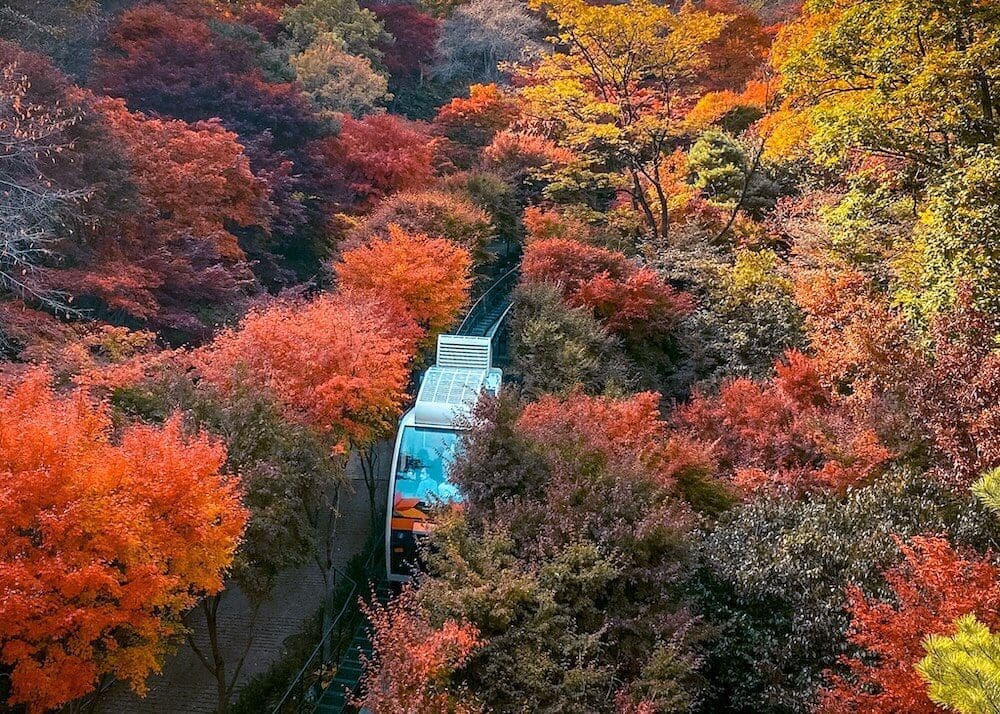
Because it gets so busy, getting inside requires a strict advance reservation that can sell out in minutes. I’ve broken down exactly how to get a ticket, navigate the monorail, and catch the best views in my dedicated Hwadam Botanic Garden guide.
HEADLINE: 🍁 Secure Your Sold-Out Autumn Admission to Hwadam DESC_START Hwadam Botanic Garden has strict online advance reservations for autumn, but it’s impossible to book tickets without a Korean ID. If you can’t secure an independent ticket slot, booking a small-group day trip that includes guaranteed garden entry tickets and direct transport from Seoul will save you a massive headache. DESC_END BTN_TEXT: Get all-inclusive Hwadam Ticket & Transport Packages here → BTN_URL: https://klook.tpk.ro/xP8x9fv7Haneul Park | 하늘공원
If you’ve seen older travel blogs telling you to head here for pink muhly, don’t make this mistake! Seoul actually pulled it all out because it’s an invasive species. However, Haneul Park is still one of the prettiest places to catch stunning autumn flowers in Seoul, along with its legendary silver grass fields.

While you’ll find cool patches of crimson kochia bushes and fields of pink and white cosmos planted to replace the pink muhly, the real showstopper at Haneul Park is the towering silver grass (억새).
Every October, the park hosts the Seoul Silver Grass Festival, where walking paths are cut directly through the giant fields. They look incredible at sunset when the late-afternoon light makes the entire hilltop glow in a warm, golden haze.
NAME: Haneul Park (하늘공원) DESCRIPTION_START Perched high above the Han River, this famous hilltop park features the legendary autumn Silver Grass Festival, rolling waves of golden Eulalia reeds, and bright crimson changing Kochia bushes. DESCRIPTION_END TRANSIT_LABEL: Getting There: TRANSIT_TEXT: Take Seoul Subway Line 6 to World Cup Stadium Station (Exit 1), then enjoy a 15-minute walk to the park base and ride the paid Chidugi toad electric shuttle bus to the summit. ENG_LABEL: Address: ENG_TEXT: 95, Haneulgongwon-ro, Mapo-gu, Seoul KOR_TEXT: 서울 마포구 하늘공원로 95Local Tip: Save your legs for exploring the actual flower fields at the top. Haneul Park sits at the summit of a steep hill, requiring either a climb up 291 stairs or a long walk up a boring asphalt slope. If you don’t feel like hiking up all those stairs to the silver grass plateau, you can use the paid “Frog shuttle bus” or pre-arrange a Seoul Autumn Tour that makes stops at gorgeous autumn spots around the city (including Haneul Park).
Olympic Park Wildflower Garden (Deulgkot Maru) | 올림픽공원 들꽃마루
Olympic Park is a sprawling green space in Jamsil, but you’ll want to head straight for a hidden slope called the Wildflower Garden. From late September into early October, the entire hillside transforms into a dense sea of orange and yellow cosmos. They’ve built walking paths right through the middle of these Korean autumn flowers, so you can get right into the blooms for photos.
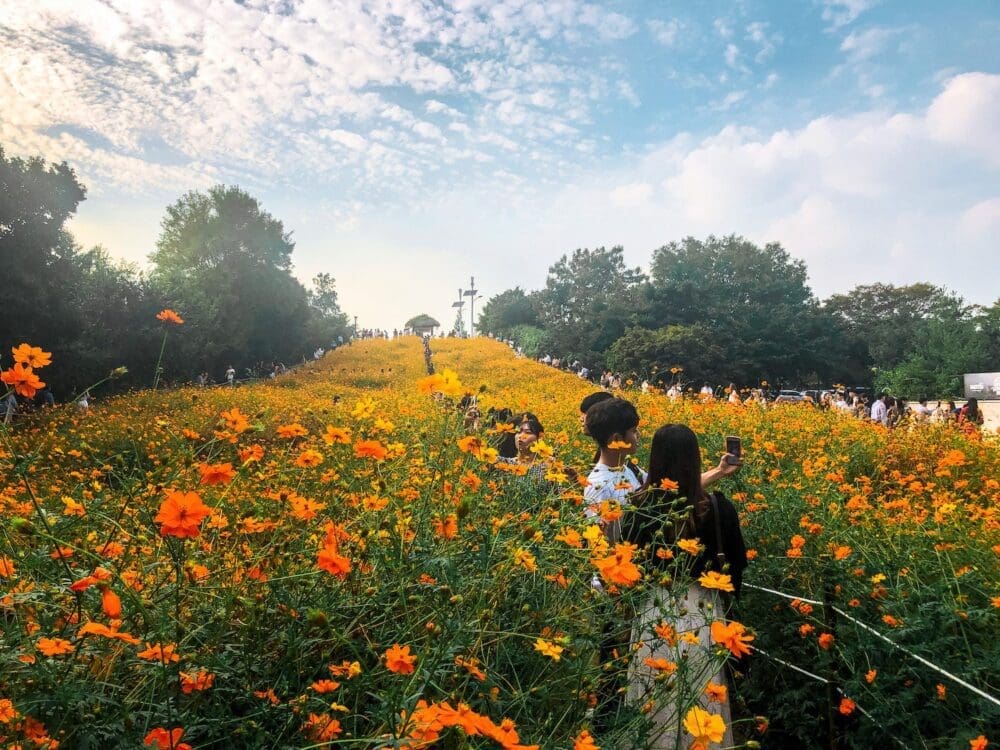
If you stand at the very bottom of the trail and shoot looking up, the steep incline completely hides all the surrounding Songpa skyscrapers, making it look like you’re out in the countryside.
At the very top of the hill sits a wooden shade pavilion. Once you hike up to catch your breath, look over the backside of the hill too. Depending on the year’s planting rotation, the reverse side of the hill could have either contrasting rows of white and pink cosmos or vibrant red flowers, giving you two completely different views in a single place.
NAME: Olympic Park Wildflower Garden (올림픽공원 들꽃마루) DESCRIPTION_START Located in southeastern Seoul near Jamsil and the Lotte World Tower, this steep, rolling inner-city walking ridge transforms into a fiery sea of vibrant yellow and orange cosmos blooms from late September through October. DESCRIPTION_END TRANSIT_LABEL: Getting There: TRANSIT_TEXT: Take Seoul Subway Line 5 or Line 9 to Olympic Park Station (Exit 3) and walk directly past the Rose Garden to reach the base of the Wildflower Garden hill slope. ENG_LABEL: Address: ENG_TEXT: 424 Olympic-ro, Songpa-gu, Seoul KOR_TEXT: 서울 송파구 올림픽로 424Seoul Forest | 서울숲
Seoul Forest is famous for cherry blossoms in the spring, but it’s just as good in October and November. It’s completely flat and right in the city close to happening Seongsu-dong, making it a super easy walk if you don’t feel like hiking up steep hills.
There’s a dedicated wildflower section here that fills up with classic pink and white cosmos, along with plenty of native wild chrysanthemums. But the real trick is timing your visit for late October to mid-November so you can see these autumn flowers in Seoul and their gorgeous ginkgo forest at the same time.

This grove of ginkgo trees is planted in perfect, uniform rows that turn a bright golden yellow, allowing you to walk straight from the colourful flower beds right into an incredible yellow tree tunnel.
NAME: Seoul Forest (서울숲) DESCRIPTION_START A massive urban oasis featuring a dedicated wildflower garden that bursts with autumn cosmos, alongside towering groves of golden Ginkgo trees and deep red maple walking paths. DESCRIPTION_END TRANSIT_LABEL: Getting There: TRANSIT_TEXT: Take the Suin-Bundang Line to Seoul Forest Station (Exit 3 or 4) and walk directly into the main park entrance plaza. ENG_LABEL: Address: ENG_TEXT: 273, Ttukseom-ro, Seongdong-gu, Seoul KOR_TEXT: 서울 성동구 뚝섬로 273Reality Check: Outdated Autumn Flowers in Seoul to cross off your list
If you’re reading lazy travel blogs or checking outdated monthly guides that recommend hunting for autumn flowers along Seoul’s major riverbanks—be very careful. The city’s waterfronts have gone through massive redevelopments over the last few years for the Hangang Renaissance Project, and several viral photo spots have been permanently removed.

- Ichon & Jamwon Hangang Parks (Missing Cosmos): While the Seoul Metropolitan Government used to plant temporary seasonal cosmos fields along these specific banks back in the early 2010s, those spaces have since been transitioned into permanent sports complexes and concrete bike paths. Heading there today expecting waves of autumn blooms will leave you staring at basketball courts.
- Anyangcheon Stream at Omokgyo (Ghost Buckwheat): Many online blogs still heavily promote the Anyangcheon riverbanks near Omokgyo Station for snowy white fields of autumn buckwheat flowers. The local district completely stopped planting buckwheat crops years ago to focus on green eco-forests. If you visit today, you’ll find nice, small patches of local neighbourhood cosmos, but the massive multi-acre white flower fields are entirely gone.
The Fix: If you’re after that swimming in autumn flowers in Seoul feeling, skip these ghost locations and use your valuable travel time for Guri Hangang Park instead.
Guri Hangang Park: The Real Riverside Cosmos Field | 구리시민한강공원
If you still want that iconic riverside cosmos experience, look just past the eastern edge of Seoul’s city limits into the neighbouring city of Guri in Gyeonggi-do. This is where the official annual Guri Cosmos Festival takes place every autumn in Korea.
The local municipality seeds a park with Korean autumn cosmos flowers right along the edge of the water, creating a sea of pink, white, and purple blooms that peak throughout late September and early October.
NAME: Guri Hangang Park | 구리한강공원DESCRIPTION_START A highly accessible riverside park famous for its long walking paths along the water and massive seasonal cosmos fields.DESCRIPTION_END TRANSIT_LABEL: Getting There: TRANSIT_TEXT: Gyeongui-Jungang Line to Guri Station or Line 8 to Jangja Lake Park Station, then catch a direct festival shuttle bus or a quick 5-minute taxi ride to the park gates. ENG_LABEL: Address: ENG_TEXT: 329 Topyeong-dong, Guri-si, Gyeonggi-do KOR_TEXT: 경기 구리시 토평동 329Incredible Autumn Flower Festivals in Korea (Rural Day Trips)
Heading deeper into the Korean countryside will reward you with autumn flower festivals on a completely different scale. These destinations sit further out from Seoul, meaning they usually require an intercity bus, rental car, or dedicated day tour to reach easily.

Trust me, though — the mountain backdrops, dramatic river canyons, and lack of international tourist crowds makes the extra travel time to see these autumn flowers in South Korea totally worth it.
Goseokjeong Flower Garden in Cheorwon | 고석정 꽃밭
Making the journey up to Cheorwon brings you to one of the top autumn flower festivals in Korea. Sprawling across 24-acres of a valley, the Goseokjeon Autumn Flower Festival borders the rocky volcanic canyons of the Hantan River Geopark.
NAME: Goseokjeong Flower Garden (고석정 꽃밭) DESCRIPTION_START A massive 24-acre countryside floral valley bordering the dramatic Hantan River volcanic canyons in Cheorwon. This legendary autumn festival ground is packed with endless rows of blazing orange cosmos, thousands of round crimson kochia bushes, and brilliant pink zinnias. DESCRIPTION_END TRANSIT_LABEL: Getting There: TRANSIT_TEXT: Best accessed via a rental car or an organized autumn day tour from Seoul. Alternatively, take an intercity bus from Dong Seoul Bus Terminal north to Cheorwon (Gwasang-ri) and grab a local taxi to the park. ENG_LABEL: Address: ENG_TEXT: 10-2, Dongsong-ro, Dongsong-eup, Cheorwon-gun, Gangwon-do KOR_TEXT: 강원도 철원군 동송읍 동송로 10-2The scale here is incredible. You can walk through dense rows of blazing orange cosmos, thousands of round, crimson kochia bushes, and blankets of bright pink and yellow zinnias.

The local district adds quirky photo installations throughout the fields—including classic wooden country sheds, rows of colourful wind-chimes, and elevated platforms where you can look out over the blossoms. It takes a couple of hours just to walk the whole loop.
Local Tip: It can get surprisingly chilly up in Cheorwon, even when it’s warm in Seoul. Make sure you’re prepared with the right gear so you can enjoy the experience fully.
HEADLINE: 🚌 Skip the Three-Hour Public Transit Journey to Cheorwon DESC_START Because Goseokjeong Flower Garden sits all the way up near the Northern border, navigating the regional trains and local rural taxis can eat up over three hours of travel time each way. Jumping on a direct round-trip shuttle bus from Myeongdong or Hongdae gets you to the fields in half the time, giving you way more time with the autumn flowers in Korea. DESC_END BTN_TEXT: Look into Goseokjeong Flower Garden day tours here → BTN_URL: https://klook.tpk.ro/5ZZTVooVNonghyeop Anseong Farmland in Gyeonggi-do | 안성팜랜드
Social media feeds every October are always filled with photos of endless rolling hills covered in pink fluffy grass, and this is one of the places where those shots are taken. Since Seoul got rid of its pink muhly, Anseong Farmland in Gyeonggi-do is one of the places to find it relatively close to Seoul.

Anseong Farmland is a pastoral farm park with wide-open country views you just can’t get in downtown Seoul. The pink muhly fields here cover entire hills, and the dirt paths wind right over the crests, so you can get photos with nothing but a pink horizon behind you.
The rolling cosmos hills here are magnificent, and you can easily bundle your entry ticket with a seasonal visit to Anseong Farmland and Waujeongsa (one of my fave temples in Korea) to see the countryside without worrying about car rentals.
NAME: Nonghyeop Anseong Farmland (안성팜랜드) DESCRIPTION_START A sprawling, pastoral escape in Gyeonggi-do that features endless rolling green meadows completely transformed into a dreamy autumn landscape of fluffy Pink Muhly Grass, giant yellow cosmos fields, and cinematic photography backdrops. DESCRIPTION_END TRANSIT_LABEL: Getting There: TRANSIT_TEXT: Take an intercity bus from Seoul Express Bus Terminal to Anseong Terminal, then take a 15-minute local taxi directly to the farmland entrance. ENG_LABEL: Address: ENG_TEXT: 28, Daesindu-gil, Gongdo-eup, Anseong-si, Gyeonggi-do KOR_TEXT: 경기도 안성시 공도읍 대신두길 28Jarasum Island Flower Festa in Gapyeong | 자라섬 꽃페스타
Gapyeong’s Jarasum Island might be best known for hosting international music festivals, but every autumn the southern part transforms into a botanical playground. The local community covers the flat island shores in a carpet of autumn blooms.
NAME: Jarasum Island Flower Festa (자라섬 꽃페스타) DESCRIPTION_START A massive island park on the Bukhangang River in Gapyeong that transforms into a brilliant riverside tapestry of autumn zinnias, chrysanthemums, and towering pink pampas grass. DESCRIPTION_END TRANSIT_LABEL: Getting There: TRANSIT_TEXT: Take the ITX-Cheongchun train or Gyeongchun Line subway to Gapyeong Station (Exit 1), then take a short 5-minute taxi or enjoy a 20-minute flat walk to the island bridge. ENG_LABEL: Address: ENG_TEXT: 1-1, Jarasum-ro, Gapyeong-eup, Gapyeong-gun, Gyeonggi-do KOR_TEXT: 경기도 가평군 가평읍 자라섬로 1-1It’s one of the most unique places to see autumn flowers in Korea, with fields of vibrant, multi-coloured zinnias, marigolds, and chrysanthemums. But what makes Jarasum really special is its pink pampas grass. These are tall, feathery plumes that catch the river breeze and look amazing next to the bright autumn flower beds.
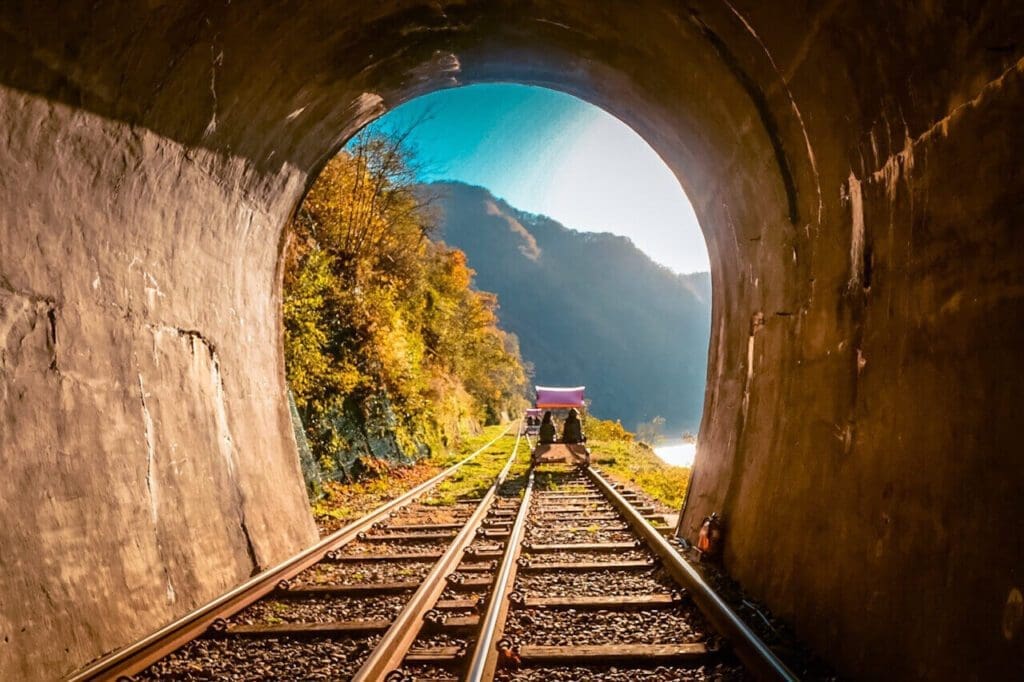
Because Jarasum Island is right on the Gapyeong train line, it’s incredibly easy to turn this into a day trip with Nami Island or the Gangchon Rail Bike. If you prefer a more traditional, manicured landscape over Jarasum’s open river fields, you can also look into the autumn chrysanthemum festival running at the nearby Garden of Morning Calm during October.
HEADLINE: 🦙 The Ultimate Jarasum Flower & Alpaca Day Tour DESC_START Trying to coordinate public transit between Alpaca World, Nami Island, and the Jarasum Flower Festa will completely eat up your limited daylight in transit. During peak autumn weeks, this direct shuttle bus lets you hit all three back-to-back without any logistics stress. It’s the absolute easiest way to feed the alpacas, stroll under Nami’s golden autumn trees, and wander through Jarasum’s riverside flower fields in a single, comfortable day trip from Seoul. DESC_END BTN_TEXT: Book the Jarasum Flower, Nami Island & Alpaca World Tour Here → BTN_URL: https://klook.tpk.ro/KXaCllT2Cheongsan Arboretum in Taean | 태안 청산수목원
If you want to see giant pampas grass that grows as tall as a person, you’ll want to schedule a day trip out to Korea’s west coast to visit Taean-gun. While some Seoul travel blogs lump all silver grass together under the same category, true pampas grass has a different plant texture. You’ll know it by its thick, massive feathery plumes that resemble giant stalks of cotton. The peak in Korea around mid-October.

The absolute best place to find them is Cheongsan Arboretum in Taean. The owners have designed dedicated walking paths that cut straight through towering grass walls, so you can walk deep inside the stalks for amazing pictures. As a bonus, they also plant fields of pink muhly grass right next to the pampas, giving you an incredible pink-and-silver colour crossover in a single afternoon.
NAME: Cheongsan Arboretum (청산수목원)DESCRIPTION_STARTPrivate botanical garden in Taean famous for giant autumn pampas grass fields and pink muhly trails DESCRIPTION_END TRANSIT_LABEL: Getting There: TRANSIT_TEXT: Take an intercity bus from Central City Terminal to Taean Intercity Bus Terminal, then grab a quick 15-minute local taxi to the main gates. ENG_LABEL: Address: ENG_TEXT: 70 Sinjang-ri, Nam-myeon, Taean-gun KOR_TEXT: 충남 태안군 남면 신장리 70Tips for Chasing Autumn Flowers in South Korea
Chasing the perfect autumn blooms across South Korea is an incredible experience, but it takes a little bit of strategy to avoid the crowds and navigate the terrain. Before you head out the door with your camera gear, here are a few honest, practical tips I’ve learned from 15 years of exploring the Korean countryside.

Ditch Google Maps and Use Local Navigation Apps Instead
Google Maps does not work for walking directions or local bus transit in South Korea due to national security laws. Before you leave your hotel, download Naver Maps or KakaoMap. When navigating, copy and paste the exact Korean names and addresses I’ve provided in each section to find the right locations more easily.
Arrive Early for the Best Light (and Fewer Crowds)
Popular flower spots near Seoul get incredibly packed by mid-afternoon. If you want to photograph the pink muhly grass or orange cosmos without a billion other travellers in your picture frame, aim to arrive by 10:00AM at the latest. The morning sun provides a soft, golden light that makes the autumn colours pop beautifully, while letting you beat the tourist buses.

Midday Countryside Fields Will Melt You (and Your Photos)
If you’re planning a day trip out to Yangju Nari Park or my absolute favourite hidden gem, the Goseokjeong Flower Garden in Cheorwon, keep in mind that these autumn flower festivals in South Korea are mostly completely exposed to the elements. There’s virtually zero tree canopy or shade out in the flower fields.
Arriving at high noon means the blinding sun could wash out your colours, overheat you, and potentially turn unpaved dirt pathways into a dusty glare. Aim to be inside the gardens before 10:00 AM or after 4:00 PM for the best lighting, or aim for a day that’s slightly overcast.

Respect the Autumn Flower Field Barricades
It can be tempting to step directly into a sea of pink muhly for that perfect angle, but always stick to the designated walking paths and designated photo zones. You can easily achieve that “buried in flowers” look by playing with your camera’s zoom lens and angles without crushing the delicate root systems.
TITLE: 🎒 FIELD ESSENTIALS: WHAT TO BRING VS. BUY LOCALLY COL1_TITLE: Throw in Your Daypack COL2_TITLE: Grab Near Flower Fields PACK_ITEM: Sturdy Walking Sneakers: Many wildflower trails are unpaved dirt and require climbing steep staircases, slopes, or loose gravel. PACK_ITEM: Portable Power Bank: Taking photos of Pink Muhly, cosmos, and silver grass will drain your phone battery incredibly fast. PACK_ITEM: A Compact Windbreaker or Layer: Open flower fields can get windy and chilly the absolute second the sun dips below the horizon. BUY_ITEM: Hot Packs (핫팩): Buy these at the convenience store before heading to rural northern spots like Cheorwon, where the wind gets freezing. BUY_ITEM: Local Snacks: Pack a few small treats to keep your energy up, though major city parks usually have vending machines for drinks nearby. BTN_TEXT: Read my complete guide to Korea’s October Weather, Festivals & Packing Tips here → BTN_URL: https://travel-stained.com/korea-in-october-weather-festivals/Carry Cash for Korean Autumn Flower Festival Food Tents
While your T-Money card will handle regional train and bus routes perfectly across the country, you’ll still want to keep small physical cash on hand for rural areas.
Autumn flower festivals in Korea usually have incredible local food stalls selling roasted chestnuts, fresh pajeon (scallion pancakes), and regional treats. Many of these temporary tents won’t accept foreign credit cards, and operating strictly on cash or local bank transfers.

Autumn Flowers in Seoul and South Korea FAQs
LABEL: 🙋 People Also Ask FAQ_START Q: Where can I see Pink Muhly grass in Seoul? A: There’s currently no pink muhly grass inside the city centre of Seoul. The local government completely uprooted the fields at Haneul Park, Jamwon Hangang Park, and Olympic Park because the plant was designated as a potentially invasive alien species. To see pink muhly, you must head just outside the city border to Gyeonggi-do spots like Yangju Nari Park, Hwadam Botanic Garden or Anseong Farmland. FAQ_END FAQ_START Q: When is the best time to see autumn flowers in South Korea? A: The absolute peak blooming window for Korea’s autumn flowers runs from late September through the end of October. This is when the yellow cosmos, pink muhly, globe amaranth, and buckwheat fields are at their most vibrant, overlapping perfectly with the start of the autumn foliage transformation. FAQ_END FAQ_START Q: Can I use Google Maps to find Korean flower parks and festivals? A: No, Google Maps does not work accurately for transit walking routes or driving navigation in South Korea due to local security mapping laws. To easily find these Korean flower festivals and navigate local subway or bus routes, you should download Naver Maps or KakaoMap and type in the local Korean name of the location. I’ve provided 1 button copy paste directions in hangul for you to make it easy! FAQ_END FAQ_START Q: Do I need to buy tickets for South Korea’s autumn flower festivals in advance? A: For major city parks like Olympic Park, Seoul Forest, and Guri Hangang Park, entry is completely free and no tickets are required. For regional parks like Yangju Nari Park or Goseokjeong Flower Garden, you can easily purchase admission tickets at the physical on-site ticket booths or automated kiosks on the day of your visit. FAQ_END FAQ_START Q: What should I wear when going to autumn flower festivals in Korea? A: Autumn weather in Korea is gorgeously sunny but crisp, with temperatures dropping rapidly as soon as the sun goes down. It’s highly recommended to wear comfortable walking sneakers—as spots like Haneul Park and Goseokjeong require plenty of walking across dirt trails—and pack a light jacket or windbreaker, especially if you are heading out to coastal pampas fields like Cheongsan Arboretum where the sea breeze picks up quickly. FAQ_END FAQ_START Q: Can I see autumn flowers in South Korea and peak fall foliage at the same time? A: Yes, but you have to time it right. The ideal crossover window is the last week of October, and the first week of November. During this period, late-season autumn flower fields (like cosmos and pink muhly) are still in full, vibrant bloom, while the early mountain foliage and city ginkgo trees are just beginning to show their iconic bright yellow and deep red autumn colours. FAQ_END HEADING: 🍁 Planning Your Trip: The Ultimate Korea Autumn Guide & Forecast TEASER_START Once you finish exploring spectacular autumn flowers in South Korea, the seasonal magic doesn’t stop there. To catch the country’s breathtaking kaleidoscope of deep red maple leaves and golden ginkgo rows, you need to time your travel route perfectly to matcn with the changing weather. TEASER_END BTN_TEXT: Read my complete autumn in Korea fall foliage guide here → BTN_URL: https://travel-stained.com/autumn-in-korea-fall-foliage-forecast/I originally researched, wrote & published this guide on July 15, 2026. I review & update my content for accuracy regularly. Watch out for copycats.This post was last updated on July 17, 2026. Copyright © 2026 Travel-Stained. All rights reserved.


