Winter in Korea is amazing, but challenging. Gale force Siberian winds and sub-zero temperatures make it tempting to sit inside, binge-watch Netflix and drink coffee all day long. At least that’s what I want to do most winter days in Seoul.
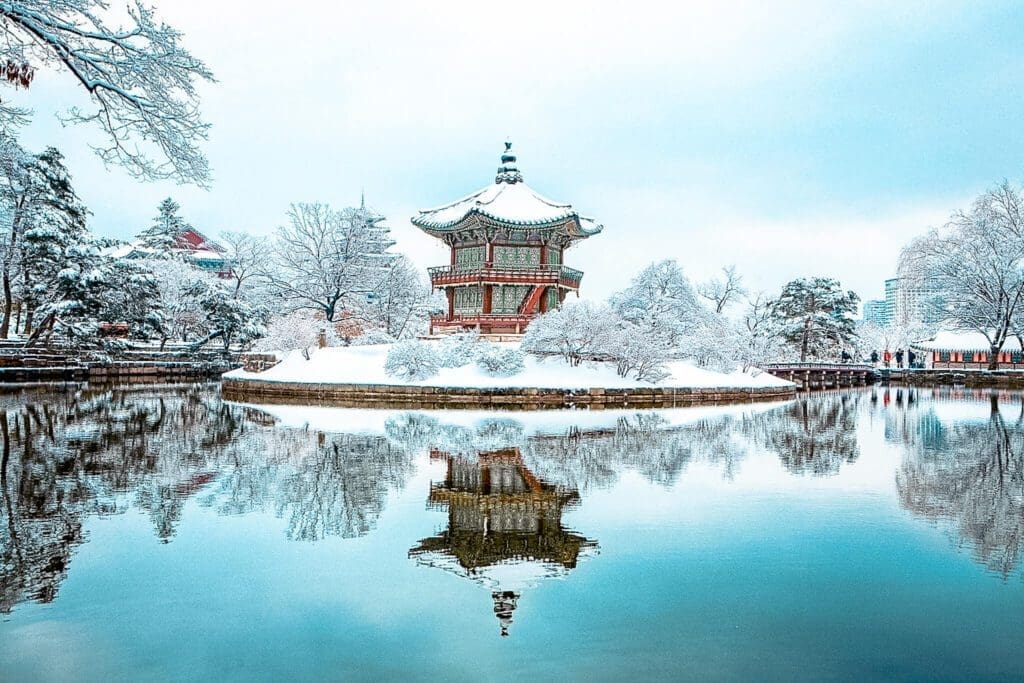
You definitely shouldn’t hibernate till the cherry blossoms bloom though, (no matter how tempting it is). There’s plenty of snowy weather activities and interesting places to visit in Korea during winter. So, throw on your long padding coat, equip yourself with hot packs, and venture forth bravely into the frostiest of Korea’s seasons.

*Any purchases made through affiliate links here help run this site. Support my blog here.
What is winter in Korea really like?
In Korea’s winter months of December, January, and February, the colourful vistas and cobalt skies of autumn transform into snowy landscapes, barren trees, and freezing temperatures. Ski resorts open across the country, festivals light up the night sky, and juicy strawberries are in season.

From mid-December onwards, it gets REALLY cold, at exactly the same time that masses of visitors descend upon Korea for Christmas vacations. If you’re planning to travel at this time, it’s important to book hotels and other accommodation in Seoul as early as possible.
Unique activities like riding the Tornado sled at Snowy Land sledding park, ice fishing at one of Gangwon-do’s snow festivals, or taking in the gorgeous sparkling lights at the Garden of Morning Calm, only take place during winter in Korea, so be sure to check those out.
When is winter in Korea?
Winter in South Korea spans the months of December, January, and February, lasting for approximately 3 months. Typically, we expect cold weather from about late November to the end of February.

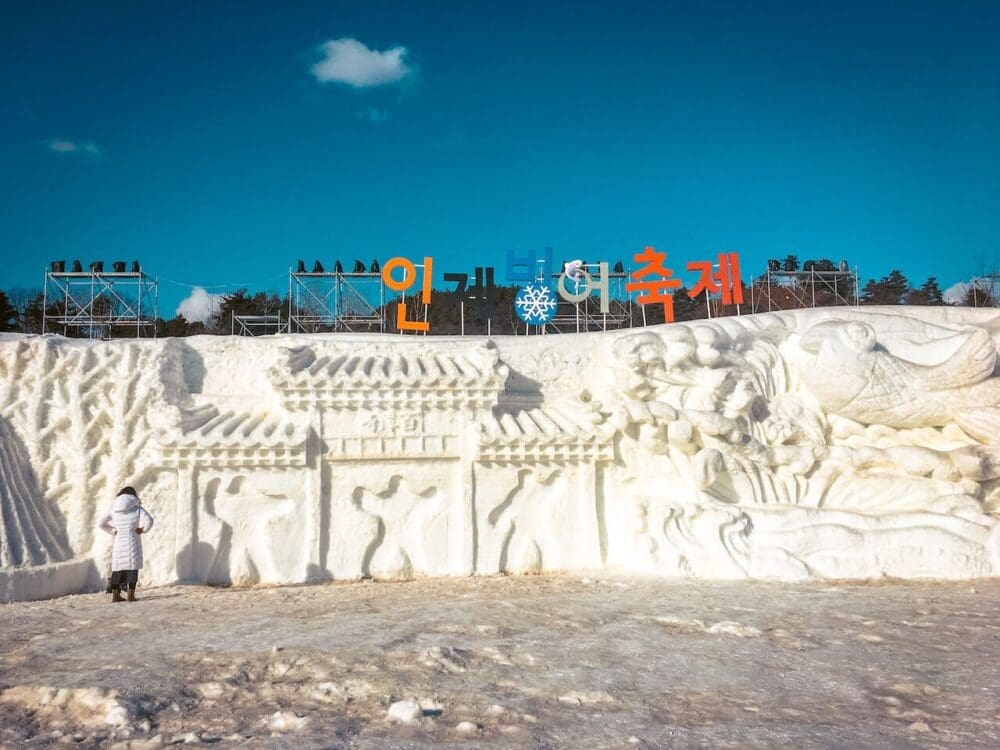
All of Korea experiences the deep-freeze of winter, but Gangwon-do Province in the northeast corner is typically the coldest part of the country. This is where you’ll find the most snowfall, the best ski resorts, and the typical wintry scenes you’re dreaming of.
Not surprisingly, as you head further south, winter in Korea gets shorter and ever so slightly warmer.
How cold is Korea in winter REALLY?
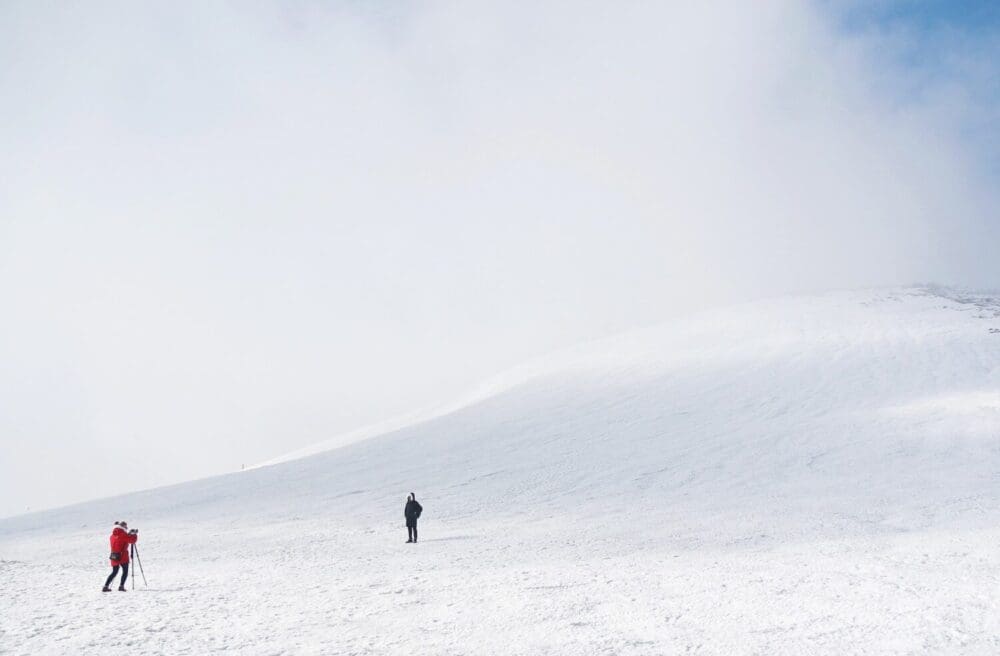
In Seoul, average winter temperatures range from a low of -7°C (19°F) to a high of 5°C (41°F). It’s colder in Gangwon-do, and warmer near Busan. And while those temperatures might not seem TOO cold from a strict degrees point of view, I must warn you that it feels a heck of a lot colder.

Before moving to Seoul 15 years ago, I lived in Canada. Yes, that’s the land of 6 month winters, colossal piles of snow and temperatures as low as -40°C (-40°F). Yet I found winter in Korea with its much milder temperatures to be insanely cold.
There’s a brutal wind from Siberia that blows into Korea in winter, and the cold just seeps into your bones. It’s totally unexplainable and painfully shocking. You definitely need to be prepared with appropriate winter gear to survive a winter in Korea.
Korea Travel Essentials
Don’t board that plane to Seoul until you’ve sorted out accommodation, transport from the airport, and your data on the ground.
What to Wear for Winter in Korea?
I can’t reiterate this enough. The winter months in Korea are freezing cold. If you live in a hot climate like Singapore or Thailand, you will feel like an icicle twice frozen. Guaranteed.
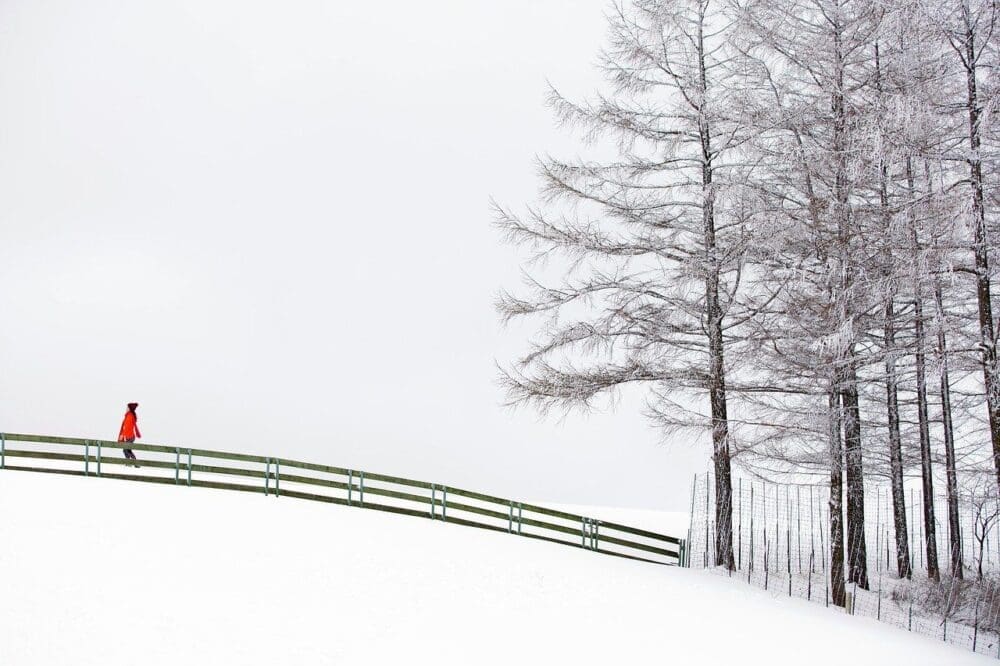
While the temperatures aren’t actually that low, it can feel significantly colder with strong, icy winds and humidity.
If you’re not used to cold temperatures, dressing in layers is the secret to surviving it. If you forget anything (or realize halfway through your trip that your coat isn’t warm enough), you can easily pick up long padding coats, and disposable hot packs once you land. There’s a rush on Uniqlo heattech products during winter in Korea for good reason.
Here’s a quick breakdown of what to bring from home versus what to buy on the ground:
TITLE: 🧥 PACKING & TRAVEL BLUEPRINT FOR WINTER IN KOREA COL1_TITLE: What to Pack COL2_TITLE: Buy In Korea PACK_ITEM: Travel Documents: Passport, itineraries, hotel reservations, plane tickets, travel visas, insurance PACK_ITEM: Power adaptor / plug (Type C or F, 220V) PACK_ITEM: Thermal base layers (tops & leggings) for layering under outfits PACK_ITEM: Warm sweaters, fleece pullovers, and hoodies PACK_ITEM: Heavy winter parka or down puffer coat (windproof is key!) PACK_ITEM: Lined pants, jeans, or thick wool trousers PACK_ITEM: Warm beanie/hat, scarf, and touchscreen-friendly gloves PACK_ITEM: Thick wool socks and insulated, waterproof boots with good grip for icy sidewalks PACK_ITEM: Deodorant, feminine hygiene items, and any prescription medications BUY_ITEM: Disposable hand & body hot packs (핫팩) at any convenience store, Daiso, or Olive Young BUY_ITEM: Extra Uniqlo Heattech layers or an affordable Korean long padding coat BUY_ITEM: Hydrating Korean sheet masks and barrier creams at Olive Young BUY_ITEM: Disposable masks (great for blocking icy Siberian winds!) BUY_ITEM: Lip balm and heavy-duty moisturizer (Korean winter air is extremely dry) BUY_ITEM: Sunscreen (there’s still UV!) BTN_TEXT: Got Your Gear? Jump to the Best Winter Activities in Korea ↓ BTN_URL: #best-winter-festivals-in-south-koreaKorean Winter: December’s Weather
December is the first and warmest month of winter in Korea, with average temperatures ranging from -3°C (26°F) to 4°C (40°F).

The first few weeks of the month can feel reasonably comfortable during daylight hours, but you’ll need to reach for warm winter clothing the moment the sun goes down. The nights feel significantly colder than the thermometer reading would suggest.
The first snow of Korean winter usually happens this month, but doesn’t tend to stick around long – particularly in Seoul.
TITLE: PLANNING A DECEMBER TRIP TO KOREA? BODY_START From sparkling Christmas light displays and New Year’s Eve fireworks to the season’s first snowfall, there’s plenty to see and do across Korea in December → BODY_ENDKorean Winter: January’s Weather
January is the coldest month of winter in Korea, with average temperatures ranging from 1.5°C (35°F) to -6°C (21°F). Nightfall comes to Korea early in January, with the latest sunset occurring around 6:00PM.
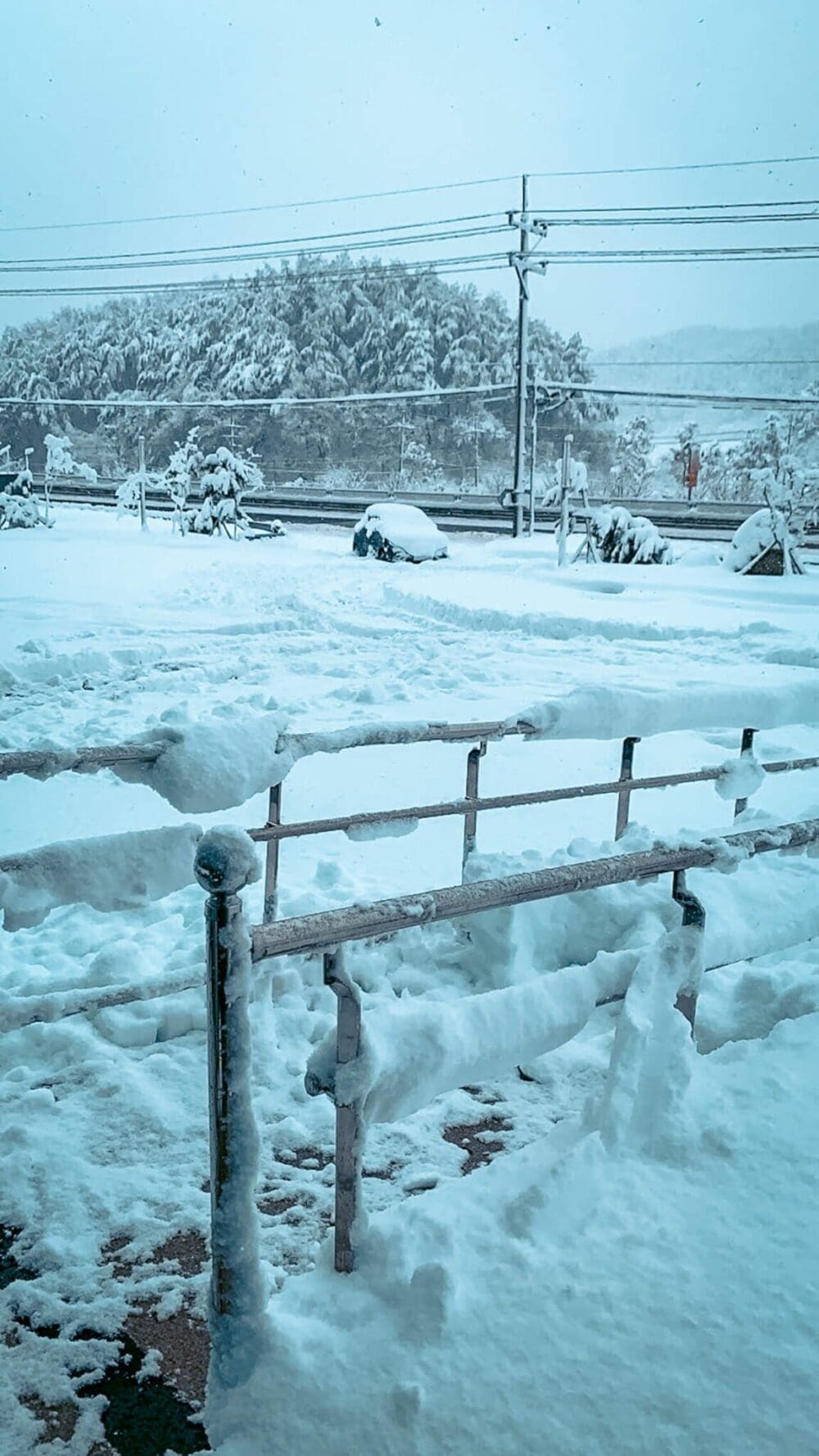
If you’re planning a winter wonderland trip, hoping to see blankets of snow – this is the month to do it! Historically, January is the month with the most snowfall in Korea, with 7 snowfall days over the course of the month, accumulating about 11 cm of snow.
TITLE: VISITING KOREA IN JANUARY? BODY_START With the deepest snowfall, frozen ice-fishing festivals, and peak ski conditions of the season, Korea in January is the ultimate time to experience a true Korean winter wonderland → BODY_ENDKorean Winter: February’s Weather
February is the last month of Korean winter. It gets ever so slightly warmer with temperatures falling in the -3°C (26°F) to 5°C (41°F) range. There isn’t as much snowfall in February, but still enough for a quality day of skiing at resorts like Yongpyong and Alpensia.

The days get a bit longer in February, with the sun setting around 6:30PM. The balmy temperatures and pretty flowers of Korea’s spring season are finally within sight.
TITLE: HEADING TO KOREA IN FEBRUARY? BODY_START Late-season skiing, snowy mountain festivals, and Lunar New Year celebrations make Korea in February a great month to catch the tail end of winter before temperatures start to thaw → BODY_ENDDoes it Snow in South Korea?
It snows all over Korea in winter, though how much sticks depends heavily on where you go. If you’ve got your heart set on experiencing snow, head northeast to Gangwon-do Province between late December and February for the best chances of catching deep powder.

If you’re staying in Seoul, your timing has to be pretty lucky to catch snow. Snowfall is actually fairly rare in the capital region, and when it does snow, it tends to melt just about as fast as it appears—so get outside right away to enjoy it before it’s gone.
TITLE: RIDE A CABLE CAR TO ONE OF KOREA’S SNOWIEST PEAKS BODY_START If you want deep snow and sweeping mountain views in Pyeongchang, the Balwangsan Cable Car is one of the snowiest places in Korea—taking you right up to the peak for frosted trees, wooden skywalk trails, and gorgeous winter scenery → BODY_ENDWhere to See Snow in Korea
You’re guaranteed to see snow at any of the ski resorts around Korea. Even if you don’t ski or snowboard, most resorts have snow-making machines running all winter and dedicated snow sledding hills for non-skiers.

Outside the ski resorts, popular snowy destinations near Seoul include Nami Island, Eobi Ice Valley, Daegwallyeong Sheep Ranch, and Wondae-ri Birch Forest. Because it takes a long time to reach most of these rural spots using public transit, booking an all-inclusive winter day tour from Seoul is by far the easiest way to see snow without freezing at rural bus stops.

5 Top Winter Tours in Korea
I’ve gone to all of these winter spots in Korea, and recommend them whole-heartedly. Most are quite challenging to get to using public transit, due to their rural locations, so it’s easiest to visit on a day tour. Make sure to dress extra-warm for any of these day trips. Winter in Korea is fun, but also beyond freezing.
H1: Winter Tour H2: Best For H3: Region H4: Approx. Cost H5: Why Join This Tour H6: Check Info ROW_START NAME: Vivaldi Park Snowy Land Sledding & Ski Tour TYPE: Families & Beginners LOC: Hongcheon, Gangwon-do PRICE: ~71,000 KRW PERK: Korea’s top snow tubing park with optional ski or snowboard lessons URL: https://klook.tpk.ro/VJv2jXt2 ROW_END ROW_START NAME: Eobi Ice Valley + Nami Island + Garden of Morning Calm TYPE: Lights & Photo Spots LOC: Gapyeong, Gyeonggi-do PRICE: ~82,000 KRW PERK: Massive frozen ice walls, snowy island paths & twinkling night lights URL: https://klook.tpk.ro/aMdzWDuR ROW_END ROW_START NAME: Hwacheon Sancheoneo Ice Fishing Festival Tour TYPE: January Bucket List LOC: Hwacheon, Gangwon-do PRICE: ~60,000 KRW PERK: Frozen river trout fishing, indoor ice sculpture village & fresh grilled fish URL: https://klook.tpk.ro/xSEQVc9F ROW_END ROW_START NAME: Balwangsan Cable Car + Sheep Ranch Tour TYPE: Deep Snow & Views LOC: Pyeongchang, Gangwon-do PRICE: ~95,000 KRW PERK: Gondola ride to snow-covered peaks & hoarfrost trees without skiing URL: https://klook.tpk.ro/tZkWQ8az ROW_END ROW_START NAME: Strawberry Picking + Snow Sledding or Ice Valley Combo TYPE: Sweet Winter Treats LOC: Gyeonggi-do PRICE: ~85,000 KRW PERK: Warm greenhouse strawberry picking paired with snow play or ice walls URL: https://klook.tpk.ro/GTRYP0Fh ROW_ENDBest Winter Festivals in South Korea
There’s no doubt Korea loves its festivals and during winter, there’s a huge variety to choose from. From festive light events to ice fishing and snow festivals, the cold, snowy season brings unique festivals that are only possible during winter in Korea.

Attending one of these outdoor events is undoubtedly one of the most popular things to do during a Korean winter, for residents and travellers alike.
I’ve highlighted some of the best winter festivals in Korea here, but for an extensive list, be sure to check out my monthly guides.
Twinkle Miracle Winter at Lotte World Adventure (롯데월드)
NAME: Lotte World Adventure Winter & Christmas Season | 롯데월드 어드벤처 DESCRIPTION_START Lotte World Adventure transforms into a festive winter wonderland with indoor Christmas parades, castle projection mapping, holiday photo zones, and thrilling rides out of the cold. DESCRIPTION_END DATES_LABEL: Festival Dates: DATES_TEXT: November 21st, 2026 – March 1st, 2027 (Christmas season through Dec 27th) ENG_LABEL: Address: ENG_TEXT: 240, Olympic-ro, Songpa-gu, Seoul KOR_TEXT: 서울특별시 송파구 올림픽로 240 START_DATE: 2026-11-21 END_DATE: 2027-03-01Lotte World Adventure is a popular theme park in the middle of Seoul. With both indoor and outdoor spaces, it’s the perfect place to visit during winter in Korea with kids, if you need somewhere to escape the cold.
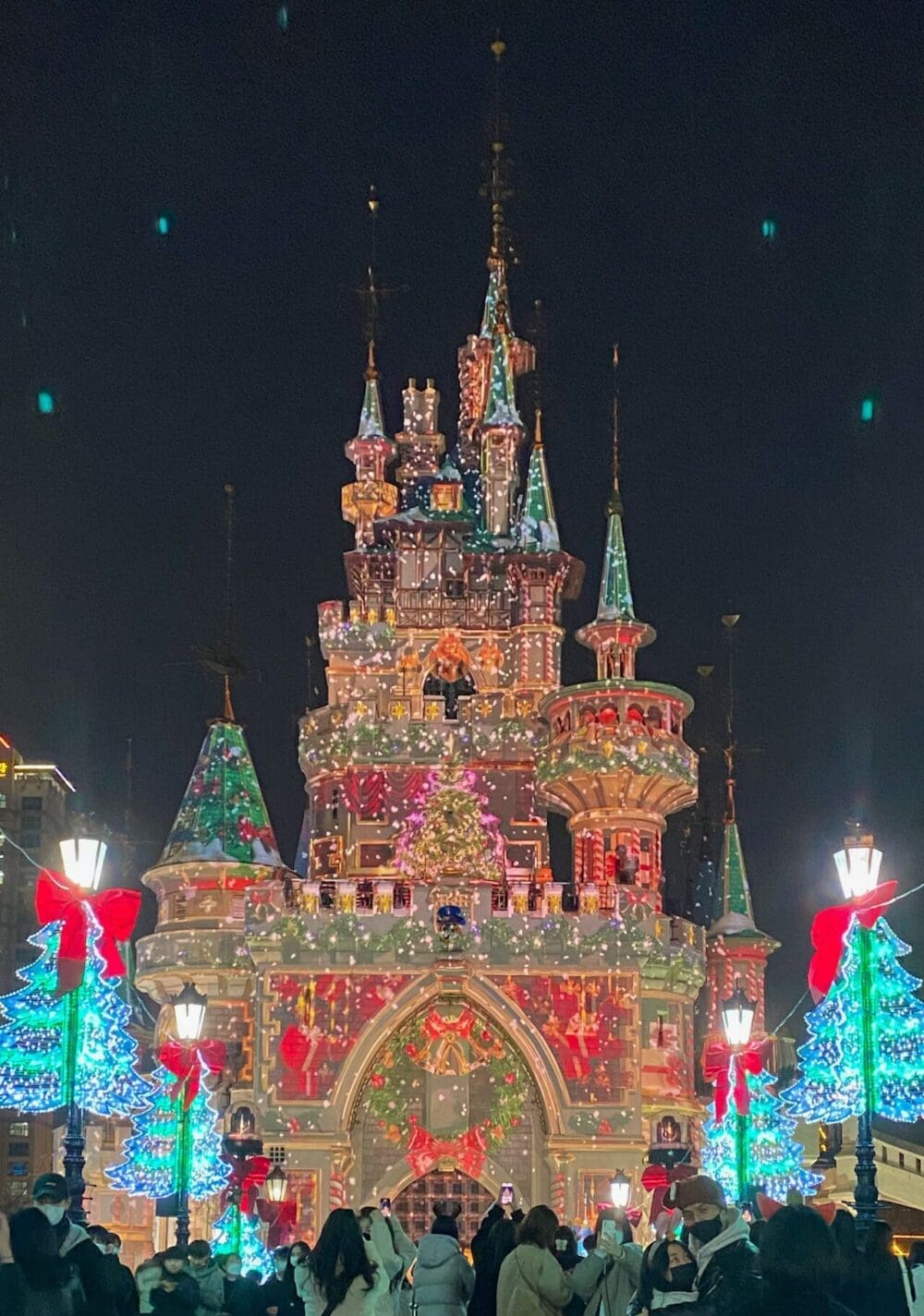
You can enjoy a special Christmas parade and performance, white winter village, special photo zones, and a ton of thrilling rides and attractions.
TITLE: DISCOUNTED LOTTE WORLD PASSES BODY_START If you’re a foreign passport holder, make sure to grab discounted Lotte World passes in advance. You can also bundle your entry with the Lotte World Aquarium or add a Magic Pass to skip long lines at the rides of your choice. BODY_ENDHaeundae Light Festival (해운대 빛축제)
NAME: 13th Haeundae Light Festival | 해운대 빛축제 DESCRIPTION_START Busan’s Haeundae Beach and Gunam-ro Street light up every evening with glowing oceanfront light sculptures, media art installations, and festive holiday displays. DESCRIPTION_END DATES_LABEL: Festival Dates: DATES_TEXT: November 28th, 2026 – January 10th, 2027 ENG_LABEL: Address: ENG_TEXT: 280, Haeundaehaebyeon-ro, Haeundae-gu, Busan KOR_TEXT: 부산광역시 해운대구 해운대해변로 280 (구남로·해운대해수욕장 일원) START_DATE: 2026-11-28 END_DATE: 2027-01-10While Haeundae Beach in Busan is known more for sand, sun, and surf, it gets a brilliant makeover every winter in Korea.
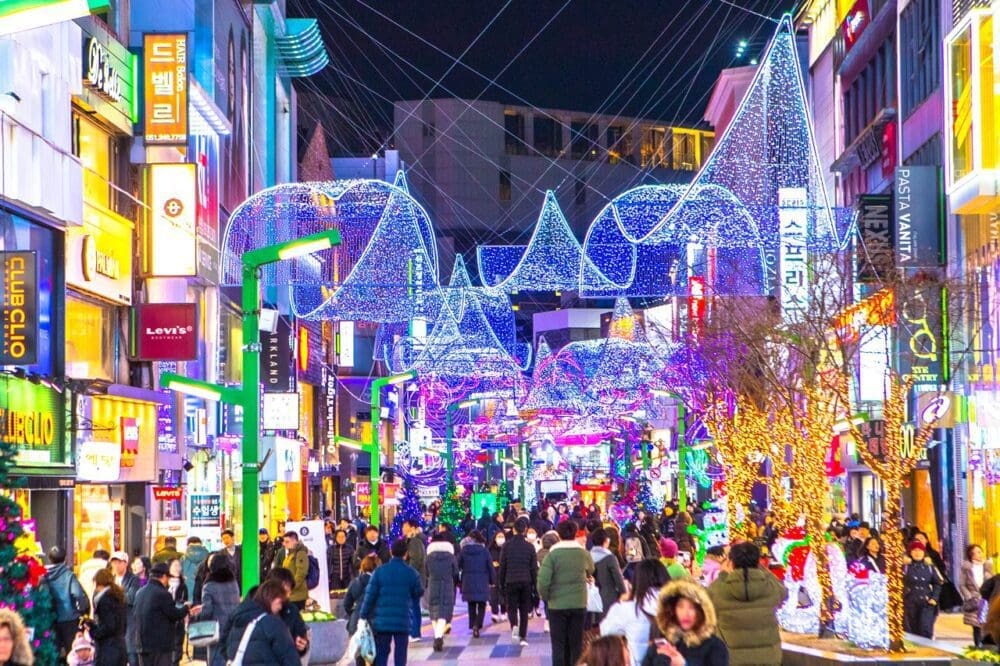
This unique lighting festival adorns the road from the beach, up to Haeundae Market and Hot Spring Road in a long line of sparking lights. Special activities include a Carolling Competition, 100 Santa Ceremony, and Wishing Tree Festival.
Of course, you’ll need something to do before the sun goes down and the lights switch on. With free admission to over 30 top attractions plus discounts 77 more, grabbing a Visit Busan Pass is one of the easiest ways to explore the city.
The Garden of Morning Calm (아침고요수목원 오색별빛정원전)
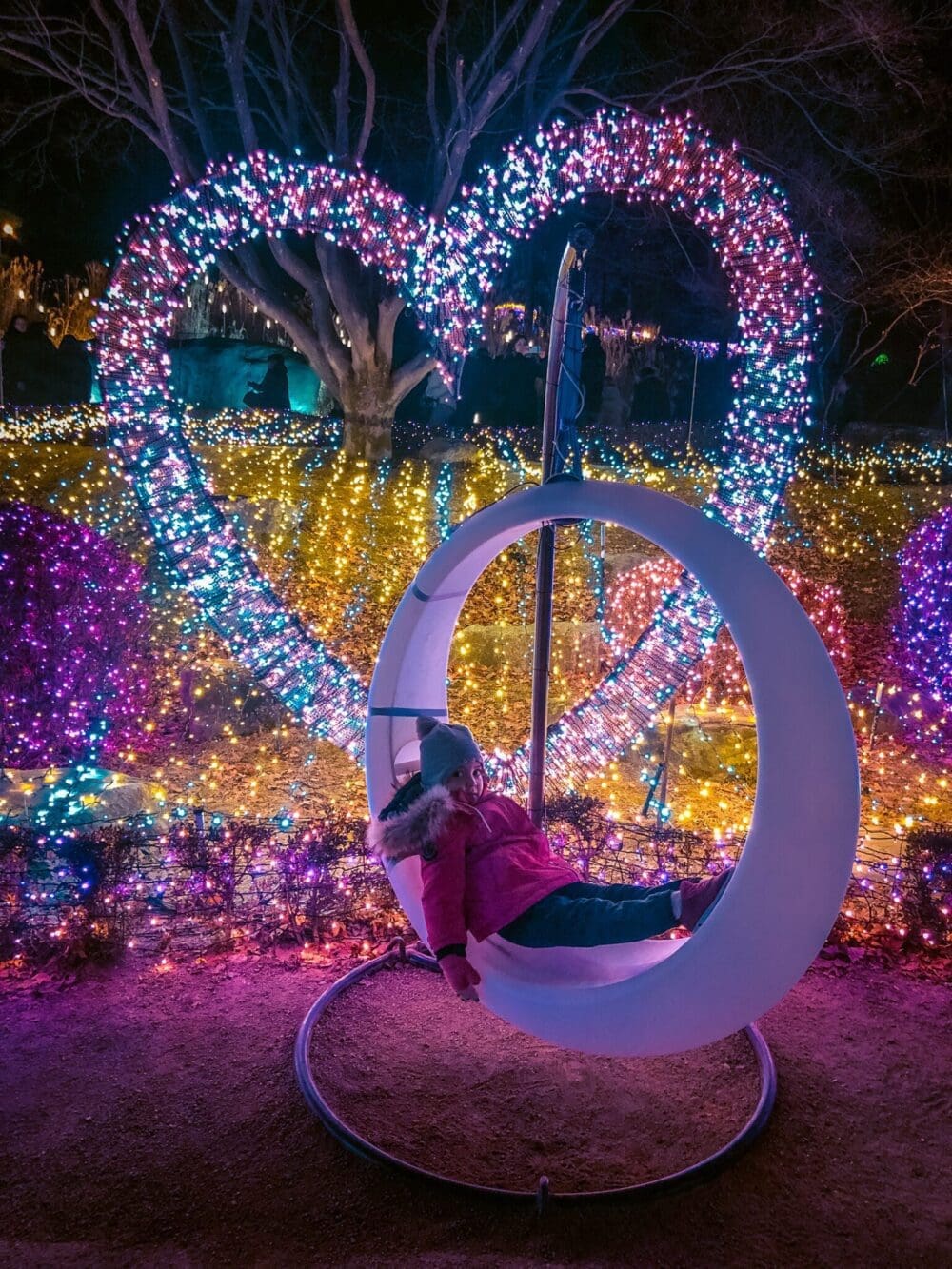
Every winter from early December through mid-March, the Garden of Morning Calm Lighting Festival transforms Korea’s largest botanical garden in Gapyeong into a glowing wonderland of millions of colourful LED displays. Evening hours run well past sunset, making it one of the most popular winter day trips from Seoul.
Seoul Winter Festa (서울윈터페스타)
NAME: Seoul Winter Festa (Seoul Winter Festival) | 서울윈터페스타 DESCRIPTION_START Seoul’s largest winter festival unites seven downtown landmarks—including Gwanghwamun Square, Cheonggyecheon Stream, Seoul Plaza, DDP, and Bosingak—with media art light shows, Christmas markets, outdoor ice skating, and New Year’s Eve countdowns. DESCRIPTION_END DATES_LABEL: Festival Dates: DATES_TEXT: December 11th, 2026 – January 31st, 2027 ENG_LABEL: Address: ENG_TEXT: 172, Sejong-daero, Jongno-gu, Seoul (Gwanghwamun Square & downtown venues) KOR_TEXT: 서울특별시 종로구 세종대로 172 (광화문광장 외 도심 일대) START_DATE: 2026-12-11 END_DATE: 2027-01-31If you’re in the city over the holidays, you can’t miss this one. It’s one of Seoul’s biggest winter festivals, linking six major downtown spots for almost 2 full months.
There are some incredible events planned that will light up the city during the festive Christmas season, including several media art and light events.
Seoul Lantern Festival (서울빛초롱축제)
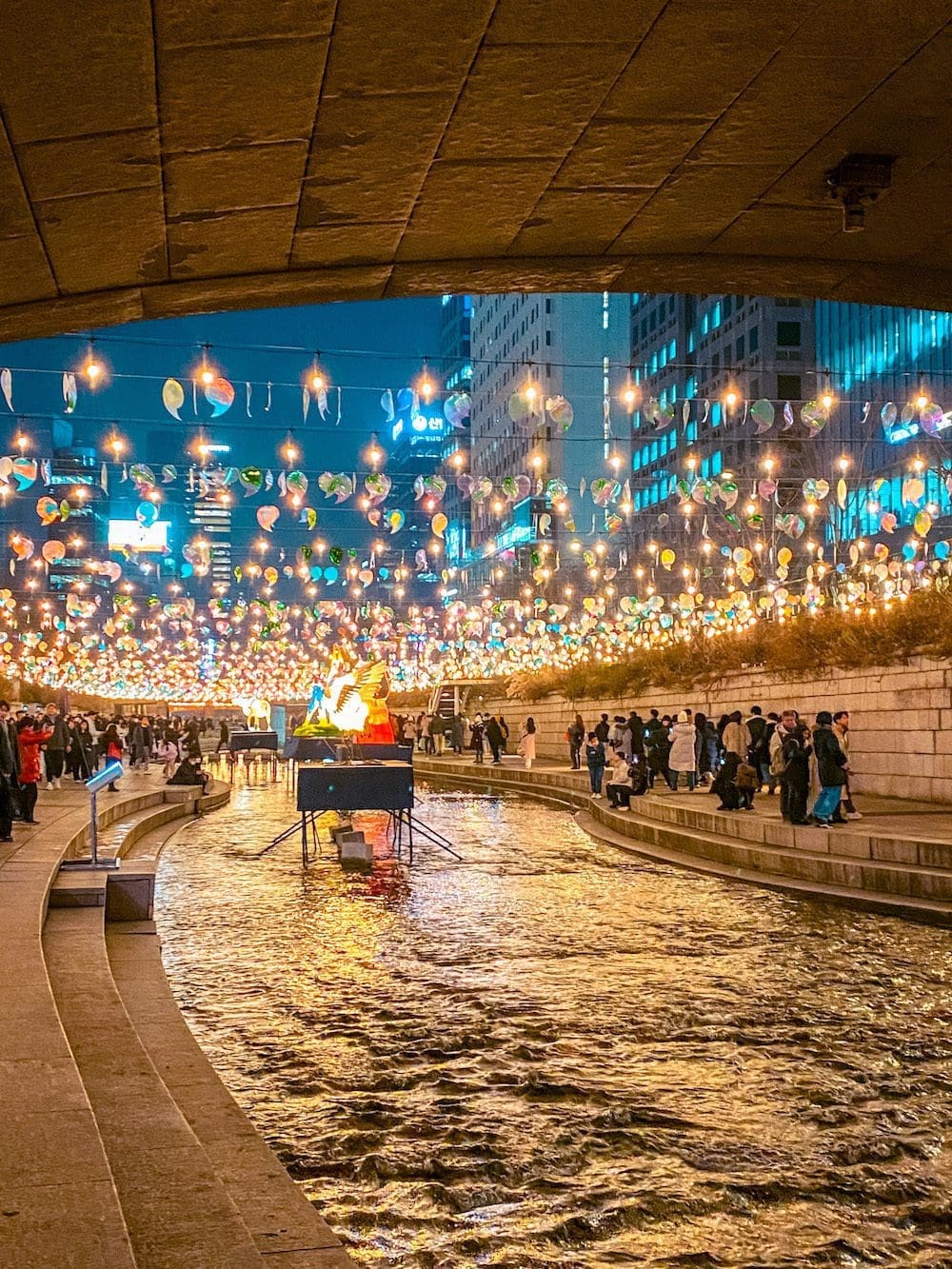
From mid-December through January, the annual Seoul Lantern Festival lights up Cheonggye Plaza and Cheonggyecheon Stream, with gorgeous LED light installations, traditional hanji paper lanterns, and fun photo zones.

I covered the best walking routes, photo zones, and how to get there in my dedicated guide, so make sure to check that out if you plan to go. This is definitely a can’t miss event if you’re visiting South Korea in winter.
Sanjeongho Lake Sledding Festival (포천 산정호수 썰매축제)
I have to say that the Sanjeong Lake Sledding Festival is probably one of my all-time favourite winter festivals in Korea. We easily spent hours and hours on top of that frozen lake, with breaks for fresh odeng and hot chocolate to warm up.
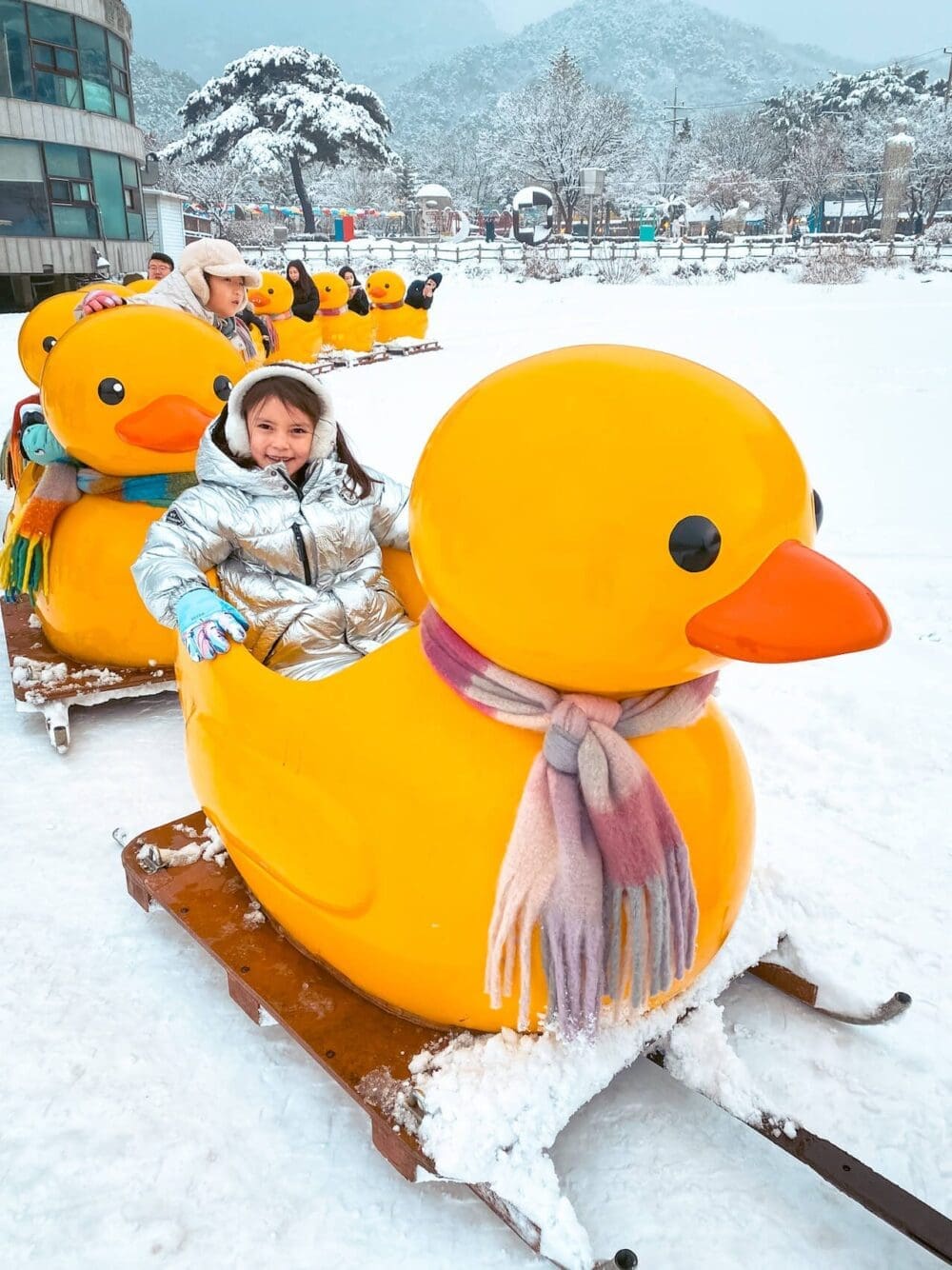
With super-cute ducky sleds, penguin bicycles, a nearby amusement park, and enough snow to build a massive snowman, this is the perfect festival for families looking for a wonderful winter day out.
Chilgapsan Ice Fountain Festival (칠갑산얼음분수축제)
Every winter in Korea, Alps Village near Cheongyang holds an ice fountain festival with fantastical sculptures made out of ice. Aside from the huge ice sculptures, there’s also snow sledding, ice fishing, bobsleigh, ice sledding, a zip line, and more.
NAME: Chilgapsan Ice Fountain Festival | 칠갑산얼음분수축제 DESCRIPTION_START Alps Village in Cheongyang transforms into a winter wonderland featuring towering 10-metre frozen ice fountains, snow sculptures, ice sledding, tubing hills, and a zip line. DESCRIPTION_END DATES_LABEL: Festival Dates: DATES_TEXT: January – February 2027 (Tentative; soft opening typically late December) ENG_LABEL: Address: ENG_TEXT: 223-35, Cheonjangho-gil, Jeongsan-myeon, Cheongyang-gun, Chungcheongnam-do KOR_TEXT: 충청남도 청양군 정산면 천장호길 223-35 (알프스마을) START_DATE: 2027-01-01 END_DATE: 2027-02-21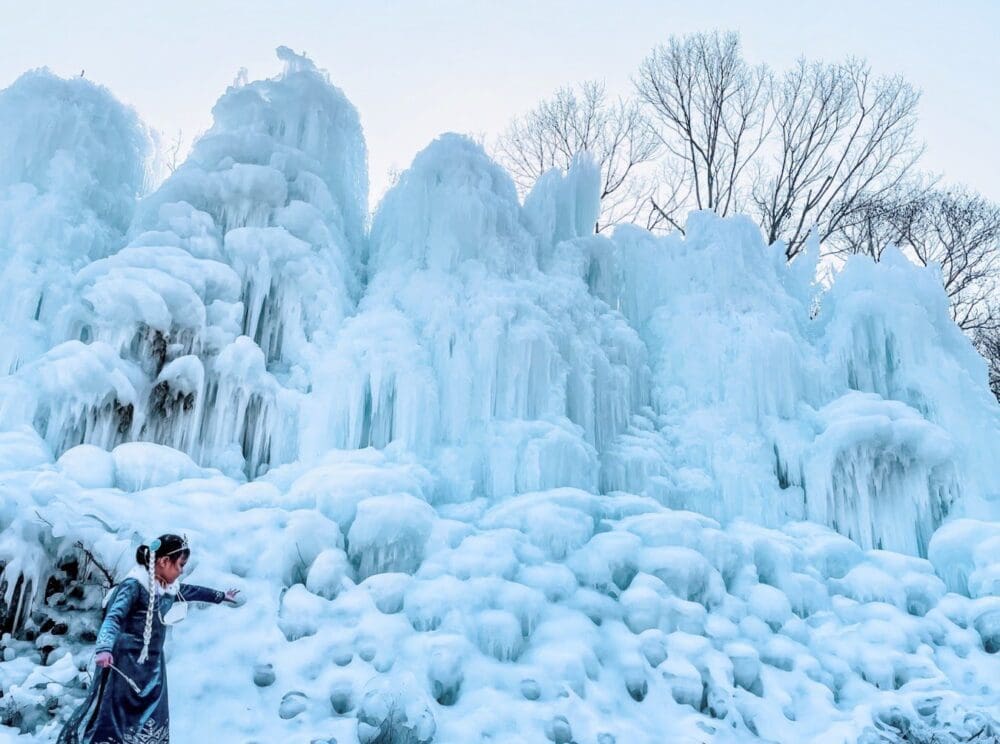
For ideal conditions, I recommend visiting when it’s really cold out, so that all the ice and snow sculptures are completely intact. Bundle up!
Hwacheon Sancheoneo Ice Festival (얼음나라 화천산천어축제)
Each year, Hwacheon is the first place to freeze over in Korea in winter, with Hwacheon Stream becoming a thick sheet of ice perfect for fishing, skating, hockey, bobsledding and much more. If you’re brave enough, you can even try bare-handed fishing.
NAME: Hwacheon Sancheoneo Ice Festival | 얼음나라 화천산천어축제 DESCRIPTION_START Korea’s largest winter ice festival takes over frozen Hwacheon Stream with mountain trout ice fishing, bare-handed trout catching, snow sledding, and the world’s largest indoor ice sculpture plaza. DESCRIPTION_END DATES_LABEL: Festival Dates: DATES_TEXT: January 9th – January 31st, 2027 ENG_LABEL: Address: ENG_TEXT: 137, Sancheoneo-gil, Hwacheon-eup, Hwacheon-gun, Gangwon-do KOR_TEXT: 강원특별자치도 화천군 화천읍 산천어길 137 START_DATE: 2027-01-09 END_DATE: 2027-01-31
The prime catch at the Hwacheon Ice Festival is the Sancheoneo fish. Full of vitamins, amino and fatty acids, it only survives in super clean, super cold water.
HEADLINE: SKIP THE RURAL BUS DRAMA TO HWACHEON DESC_START I’ve been to this festival twice, and had a blast. It’s the biggest ice fishing festival in Korea, with much more to do than ice fishing, but getting out there is a headache is you don’t have a car. Definitely recommend booking a day tour from Seoul – particularly if you don’t have experience driving in winter conditions. DESC_END BTN_TEXT: See Hwacheon Ice Fishing Tours → BTN_URL: https://klook.tpk.ro/zR472gvF40th Haeundae Polar Bear Swimming Festival | 북극곰 수영대회
If you’re just a little bit crazy, you can become one of 5,000 Busan Polar Bears, by diving into the icy cold waters off Haeundae Beach, during the 40th Polar Bear Swim.
NAME: 40th Haeundae Polar Bear Festival | 제40회 해운대 북극곰축제 DESCRIPTION_START Named one of the world’s top 10 unusual winter sports by the BBC, Busan’s iconic winter festival invites thousands of participants to plunge into the freezing ocean at Haeundae Beach alongside live music and beachside events. DESCRIPTION_END DATES_LABEL: Festival Dates: DATES_TEXT: January 16th – January 17th, 2027 ENG_LABEL: Address: ENG_TEXT: 264, Haeundaehaebyeon-ro, Haeundae-gu, Busan (Haeundae Beach) KOR_TEXT: 부산광역시 해운대구 해운대해변로 264 (해운대해수욕장) START_DATE: 2027-01-16 END_DATE: 2027-01-17
Considered one of the best festivals to participate in for winter in Korea, it costs 30,000KRW, and it looks like you get some really cute souvenirs out of it.
The website is still being updated, and registration details haven’t been updated yet. If you want to join, keep checking for more details here.
Daegwallyeong Snow Festival (대관령 눈꽃축제)
With rolling hills 700-m above sea level, Daegwallyeong is known as the “Asian Alps. Running every winter since 1993, it’s Korea’s longest-running snow festival and one of the best places to experience deep mountain snow.
NAME: 35th Daegwallyeong Snow Festival | 대관령 눈꽃축제 DESCRIPTION_START Held in Pyeongchang’s high-altitude highlands, Korea’s longest-running snow festival features massive snow and ice sculptures, snow tunnels, sledding hills, and traditional winter games. DESCRIPTION_END DATES_LABEL: Festival Dates: DATES_TEXT: January 30th – February 9th, 2027 (Tentative) ENG_LABEL: Address: ENG_TEXT: 135-9, Daegwallyeong-ro, Daegwallyeong-myeon, Pyeongchang-gun, Gangwon-do KOR_TEXT: 강원특별자치도 평창군 대관령면 대관령로 135-9 (송천 일원) START_DATE: 2027-01-30 END_DATE: 2027-02-09
Taebaeksan Snow Festival (태백산 눈축제)
The Taebaeksan Snow Festival takes over tiny former coal boom town Taebaek City, and its namesake mountain Taebaeksan, with non-stop winter activities.
NAME: 34th Taebaeksan Mountain Snow Festival | 태백산 눈축제 DESCRIPTION_START Taebaeksan National Park in Gangwon-do turns into a massive winter playground with giant illuminated snow sculptures, an igloo cafe, snow sledding hills, and a winter mountain hiking contest. DESCRIPTION_END DATES_LABEL: Festival Dates: DATES_TEXT: January 31st – February 8th, 2027 ENG_LABEL: Address: ENG_TEXT: 168, Cheonjedan-gil, Taebaek-si, Gangwon-do (Danggol Square, Taebaeksan National Park) KOR_TEXT: 강원특별자치도 태백시 천제단길 168 (태백산국립공원 당골광장 일원) START_DATE: 2027-01-31 END_DATE: 2027-02-08
I finally checked this one out last winter, and grabbing a hot drink inside the igloo cafe was easily my favourite part. Between that, the massive snow sculptures, sledding, and winter hiking, it’s well worth the trip out to Taebaek.
Places in Korea for Winter Vibes
The following places don’t really have a specific festival, but they’re still wonderful to visit for a great winter feeling.

Edelweiss Swiss Village (에델바이스 테마파크)
There isn’t an actual festival at Edelweiss Swiss Village, but it’s definitely an excellent place to feel some winter in Korea vibes. Nestled in the gorgeous mountains of Gapyeong, you can hear yodelling, eat Swiss fondue, and roast marshmallows over an open fire!
NAME: Edelweiss Swiss Theme Park | 에델바이스 스위스 테마파크 DESCRIPTION_START Swiss-themed mountain village in Gapyeong featuring chalet-style architecture, winter snow views, fondue, and live yodelling performances. DESCRIPTION_END TRANSIT_LABEL: Getting There: TRANSIT_TEXT: Take the ITX-Cheongchun train or Gyeongchun Line subway to Cheongpyeong Station, then take a 20-minute local taxi to the park ENG_LABEL: Address: ENG_TEXT: 226-57, Darakjae-ro, Seorak-myeon, Gapyeong-gun, Gyeonggi-do KOR_TEXT: 경기도 가평군 설악면 다락재로 226-57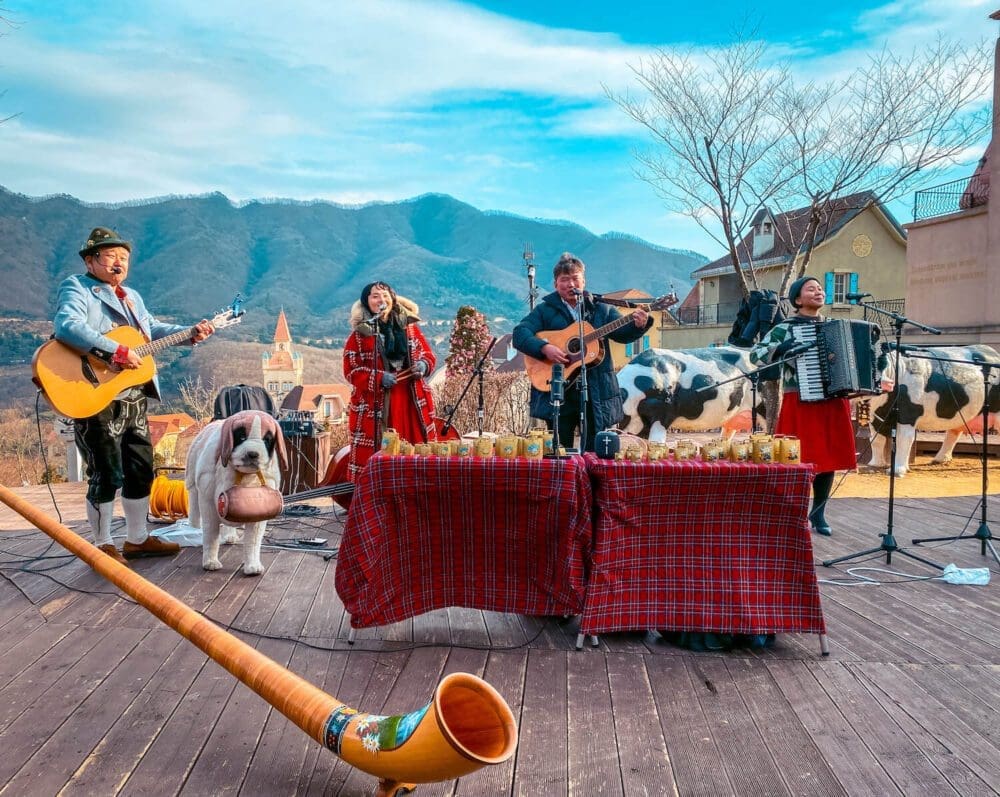
Live yodeling performances run on weekends at 12:30 PM and 1:30 PM, complete with cowbells, singing, and a chance to learn how to yodel yourself. Just make sure to visit on a Saturday or Sunday if you want to catch the show!
Sangso-dong Forest Park (상소동 산림욕장)
Sangso-dong Forest Park is another place to visit in cold weather, that doesn’t have exact festival dates. Come December in South Korea however, this totally FREE park in Daejeon transforms into an icy wonderland, with amazing ice towers, and snowy landscapes.
Trust me – this place is an Instagram dream come true.
NAME: Sangso-dong Forest Park | 상소동 산림욕장 DESCRIPTION_START Free recreational forest park in Daejeon famous in winter for its dramatic frozen ice walls, ice towers, and stone wish pagodas. DESCRIPTION_END TRANSIT_LABEL: Getting There: TRANSIT_TEXT: Take Daejeon Subway Line 1 to Panam Station (Exit 3), then transfer to Bus 501 directly to the Sangso-dong Forest Park stop ENG_LABEL: Address: ENG_TEXT: San 1-1, Sangso-dong, Dong-gu, Daejeon KOR_TEXT: 대전광역시 동구 산내로 714 (상소동 산 1-1)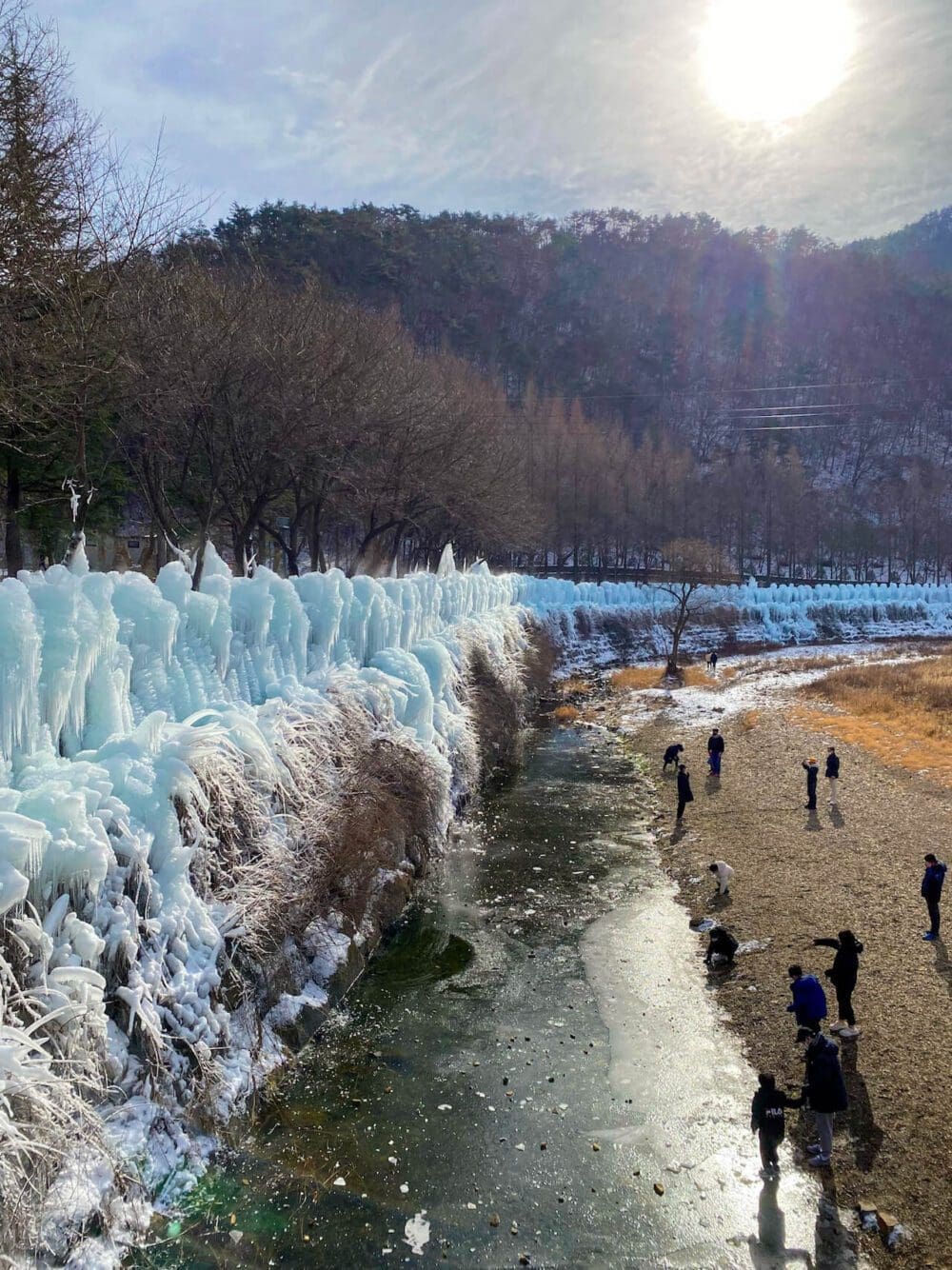
Aside from the fantastic ice sculptures, there are unique stone pagodas throughout Sangso-dong Forest Park that are incredibly photogenic. Add a stone and make a wish!
Winter in Korea: Activities & Sports
Don’t turn into a couch potato watching Pyeongchang Winter Olympics re-runs when there’s tons of sporting options you can get involved in yourself. Winter in Korea is the perfect time to try something new!

Skiing and Snowboarding
Many people don’t realize that Korea is absolutely covered in mountains. Once snow blankets the ground in Gangwon-do Province, snowboarding and skiing become super popular activities during winter in Korea.
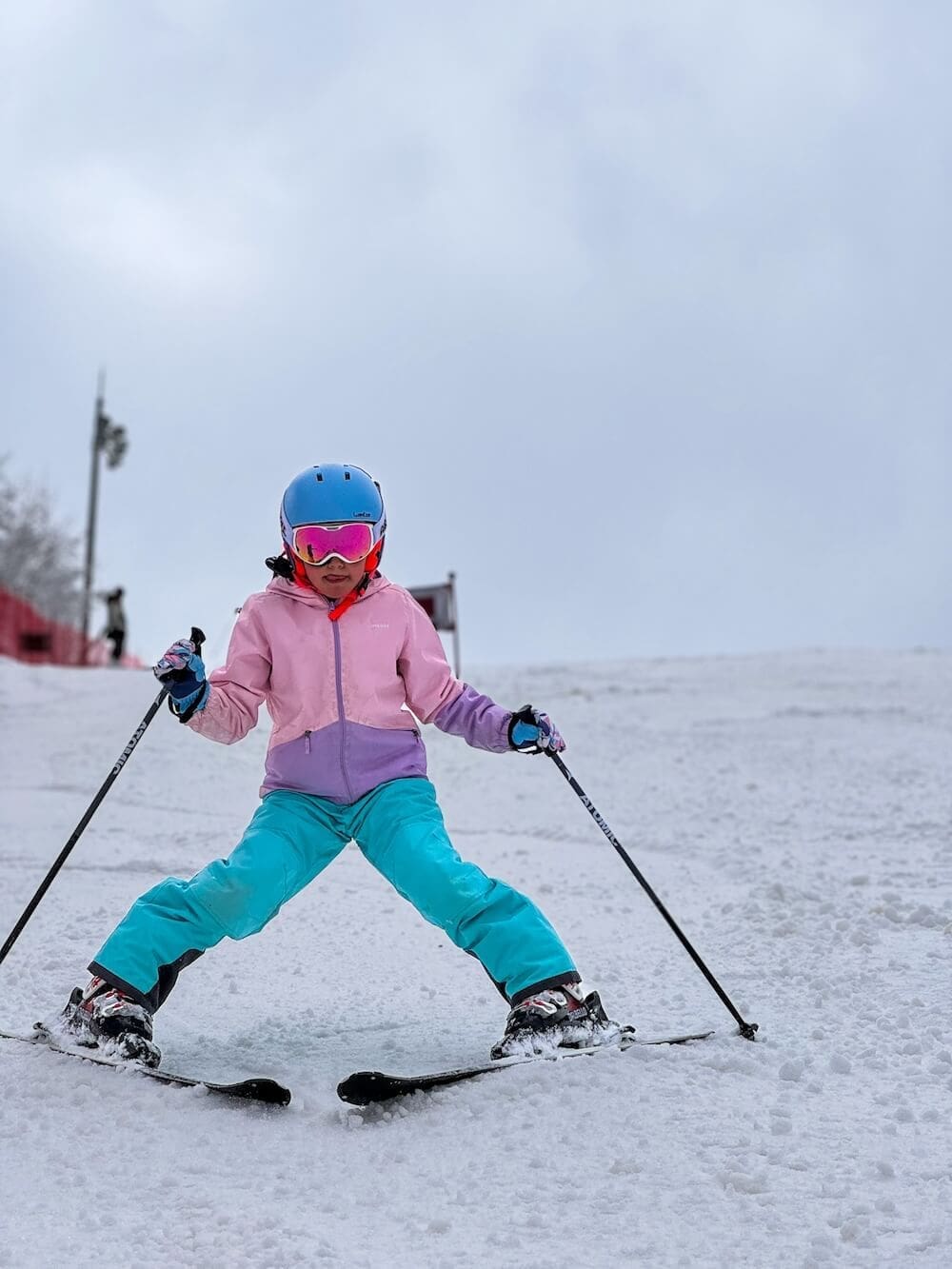
You don’t need any experience or gear to go – every winter resort rents out clothing and equipment, and English lessons are easy to book. My daughter first learned to ski at Yongpyong Resort, and all her instructors spoke English, the rental gear was solid, and she’s absolutely adored all her teachers.
TITLE: PLANNING A SKI TRIP IN SOUTH KOREA? BODY_START Whether you want to compare top mountains across the country among the best ski resorts in Korea or pick one of the closest ski resorts in Seoul for an easy day trip, you’ll find shuttles, gear rentals, and beginner-friendly slopes all winter long → BODY_END
Snow Sledding
If you don’t ski or snowboard, sledding is a great alternative – and you don’t even have to leave Seoul to find a hill. If you want a bigger snow park setup outside the city, Snowy Land at Vivaldi Ski Park is the most popular spot, with thrilling raft-style tube runs for ages 36 months and up.

Hahahoho Sled Park (하하호호 눈썰매장)
Winter in Seoul means flying down hills of snow at top speed. Fortunately, there are a lot of very affordable places to go sledding.
The Hahahoho Sled Park moved over to Garden 5 from Jamsil Olympic Park last year, and it’s completely free. Aside from snow sledding, you can also enjoy ice sculptures, a games zone, food carts, and snow play.
NAME: Songpa Hahahoho Sled Park | 송파 하하호호 눈썰매장 DESCRIPTION_START Free seasonal snow sledding park at Garden 5 in Songpa-gu featuring snow hills, ice sculptures, food stalls, and family winter play zones. DESCRIPTION_END TRANSIT_LABEL: Getting There: TRANSIT_TEXT: Subway Line 8, Jangji Station, Exit 4 (direct underground access to Garden 5 Central Plaza) ENG_LABEL: Address: ENG_TEXT: 66, Chungmin-ro, Songpa-gu, Seoul (Garden 5 Central Plaza) KOR_TEXT: 서울특별시 송파구 충민로 66 가든파이브 중앙광장 (문정동)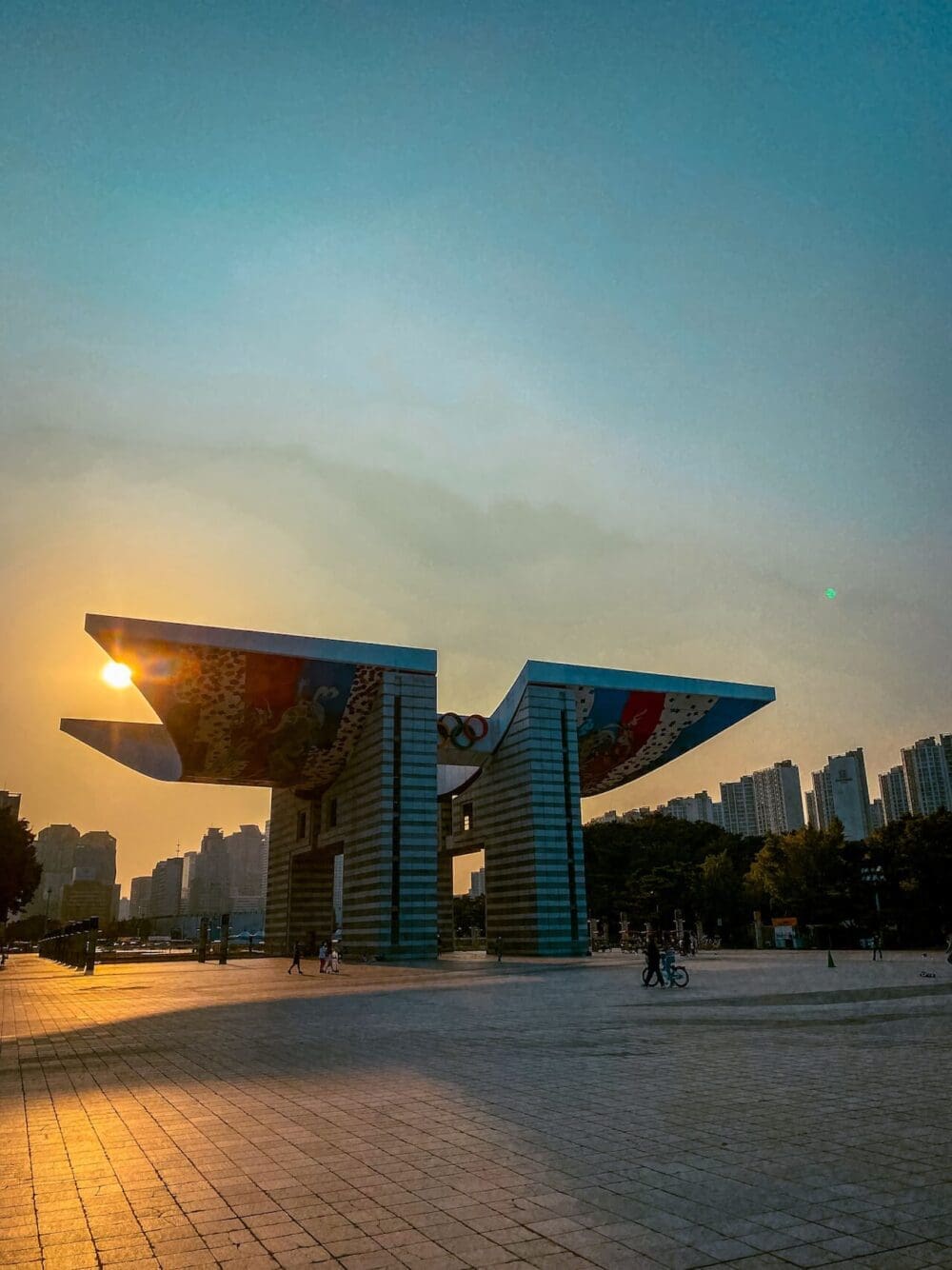
Hangang Park Sledding Hills
If you’re staying in Seoul for winter, the city sets up seasonal snow sledding hills at Ttukseom, Jamwon, and Yeouido Hangang Parks from mid-December through February. They’re cheap to enter and usually pack in extras like smelt ice fishing, bumper cars, and dalgona making – perfect for an easy afternoon out with kids without leaving the city.
NAME: Hangang Park Snow Sledding Hills | 한강공원 눈썰매장 (뚝섬·잠원·여의도) DESCRIPTION_START Seasonal winter snow sledding hills operating at Ttukseom, Jamwon, and Yeouido Hangang Parks in Seoul, featuring snow tubing slopes, smelt ice fishing, mini rides, and snack stalls. DESCRIPTION_END TRANSIT_LABEL: Getting There: TRANSIT_TEXT: Ttukseom: Line 7 Jayang Station (Exit 2/3) | Jamwon: Line 3 Jamwon Station (Exit 4) | Yeouido: Line 9 National Assembly Station (Exit 1) ENG_LABEL: Address: ENG_TEXT: 139, Gangbyeonbuk-ro, Gwangjin-gu, Seoul (Ttukseom Hangang Park & other Han River locations) KOR_TEXT: 서울특별시 광진구 강변북로 139 (뚝섬한강공원 외 잠원·여의도한강공원)Ice climbing
There are a plethora of options for sledding, snowboarding and skiing in the country, but how about trying ice climbing for something new. With its mountainous terrain, Korea has climbs for all levels where you can try this challenging sport.

Sanirang offers beginner ice climbing courses for individuals who have never climbed before. It’s pricey, but it might start you on a lifetime of adventure, scaling heights you never thought possible.
Ice Skating
In Seoul, you can take your pick from a huge range of municipal, university, indoor, or hotel skating rinks that open during winter in Korea. Prices range from totally free to upwards of 40,000 KRW for admission (skate rentals not included).
Just make sure to bring your own gloves – they’re mandatory on the ice at every rink in Korea, and you’ll have to buy a pair at the counter if you forget (they are cheap, so it’s not that big of a deal).
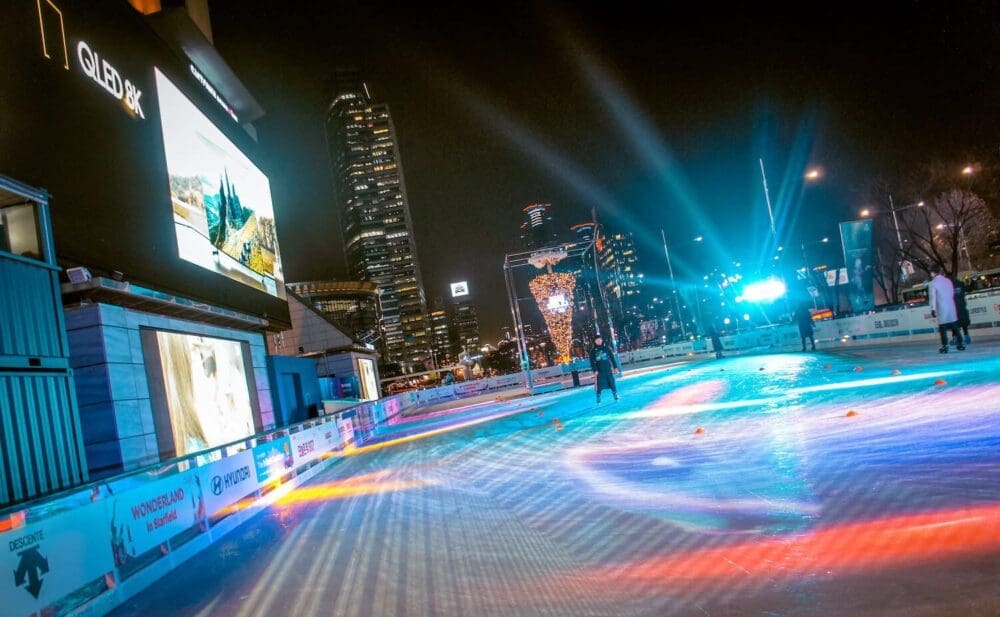
Here are four great skating rinks to check out in Seoul in winter:
- Seoul Plaza Ice Rink: Right in front of City Hall, this iconic outdoor rink runs from December 18, 2026 to February 9, 2027, and costs just 1,000 KRW for a one-hour session (including skates and a helmet).
- Mokdong Ice Rink: A great budget-friendly indoor alternative in western Seoul that’s open year-round. Admission is 4,000 KRW on weekdays (5,200 KRW on weekends) plus 4,000 KRW for skate rentals.
- Lotte World Indoor Skating Rink: Open year-round inside the Lotte World complex in Jamsil, it’s a perfect backup if it’s freezing outside – admission plus skate rental runs around 13,000 KRW.
- Grand Hyatt Seoul Ice Rink: If you’re after a splurge-worthy winter date spot, this outdoor hotel rink in Itaewon has great views over the city and runs all winter for around 30,000–45,000 KRW including skate rentals. It opens December 4th, 2026.
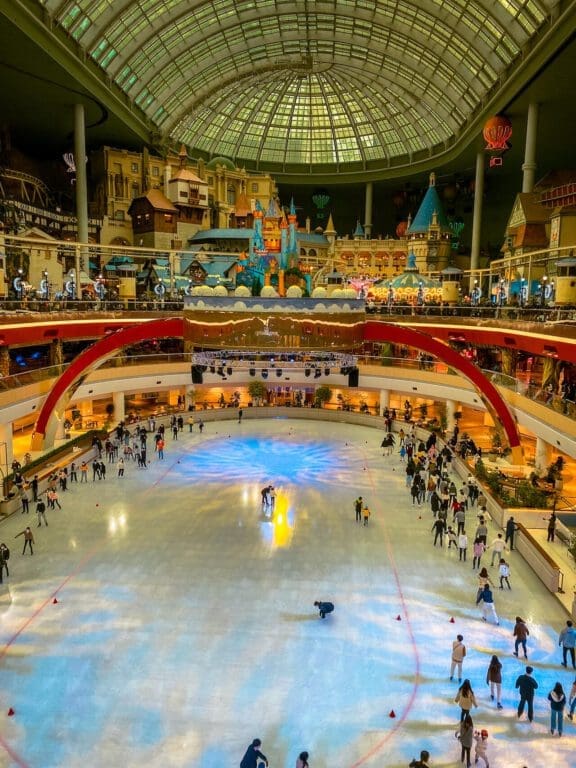
Winter in Korea: Rejuvenation
The changing of seasons in Korea is so definitive, it’s violent. And the transition from autumn’s crisp, blue skies, warm days, and gorgeous leaves to the freezing winds and negative temperatures of Korea’s insanely cold winter might be the worst of all.
Here’s what you can do to rejuvenate mind and body from the brutality of winter in Seoul.
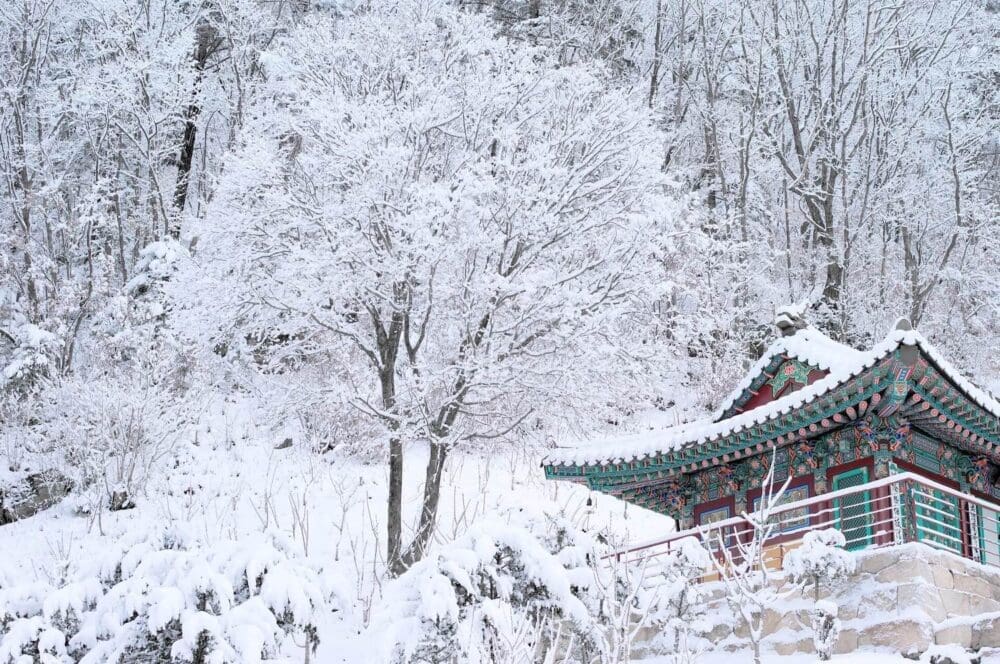
Relax in a Korean Oncheon
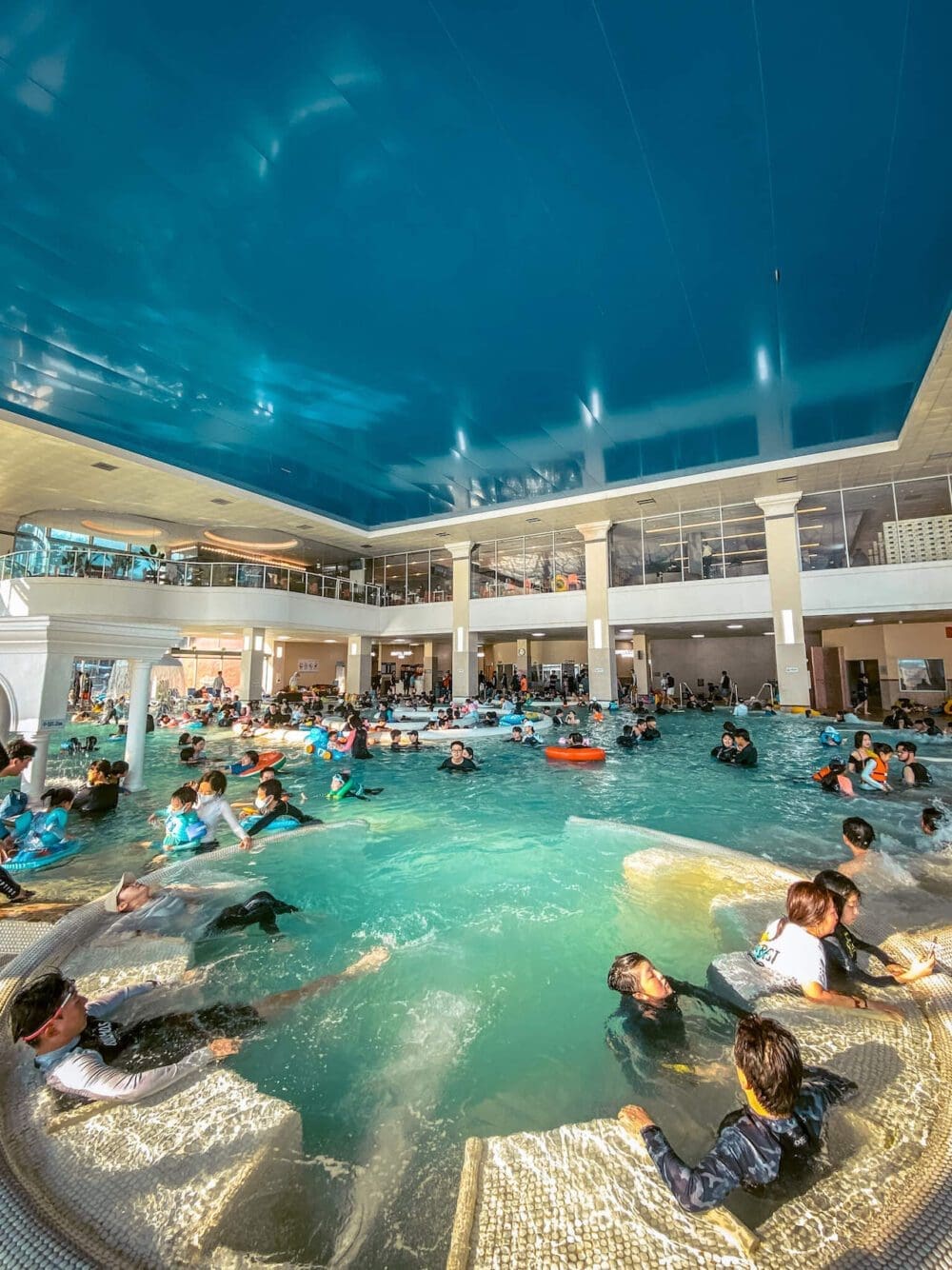
If your idea of winter in Korea relaxation is soaking in a steaming pool in the great outdoors, head to one of Korea’s oncheon or hot springs. The water in these springs is usually full of body soothing minerals, from deep below the surface of the earth.
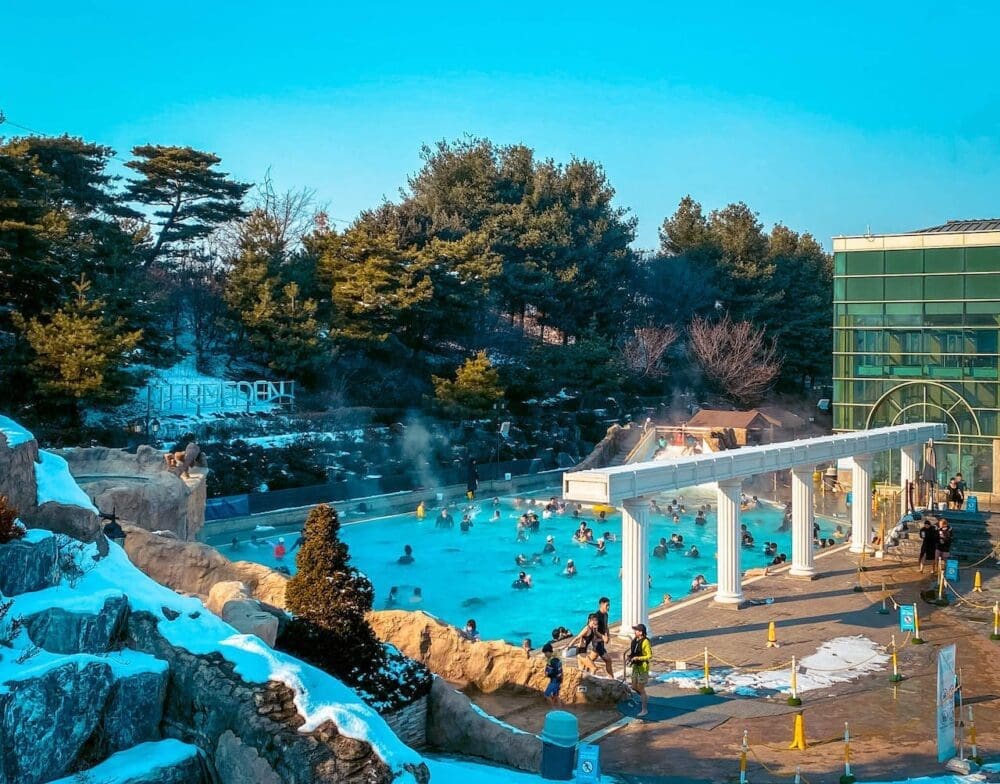
Some popular oncheon spots around the country include:
- Onyang Hot Springs | 온양온천지구: Onyang Hot Springs was founded over 1,300 year ago. It’s the oldest hot spring in Korea. Its alkaline water has a temperature around 57℃, and is known to be helpful for treating many diseases, including arthritis, skin problems, liver disease, and high blood pressure. There are over 120 hotels and motels in this area, but the Onyang Hot Spring Hotel is the original.
- Hurshimchung Grand Spa in Busan is supposed to be the largest hot spring fed spa in Asia. Its waters have high levels of magnesium, which is great for smooth skin. There are also a number of different pools of varying temperatures, as well as 40! seasonal baths.
- Termeden Spa in Icheon is a 30,000 square metre German-style spa resort located about 70-km south of Seoul. It features a ton of different outdoor pools, hot springs, jjimjilbang style saunas, Korean-style bathhouse, and much more. Be sure to find the jets shooting strong sprays of water for a revitalizing underwater massage.
Get a Korean facial
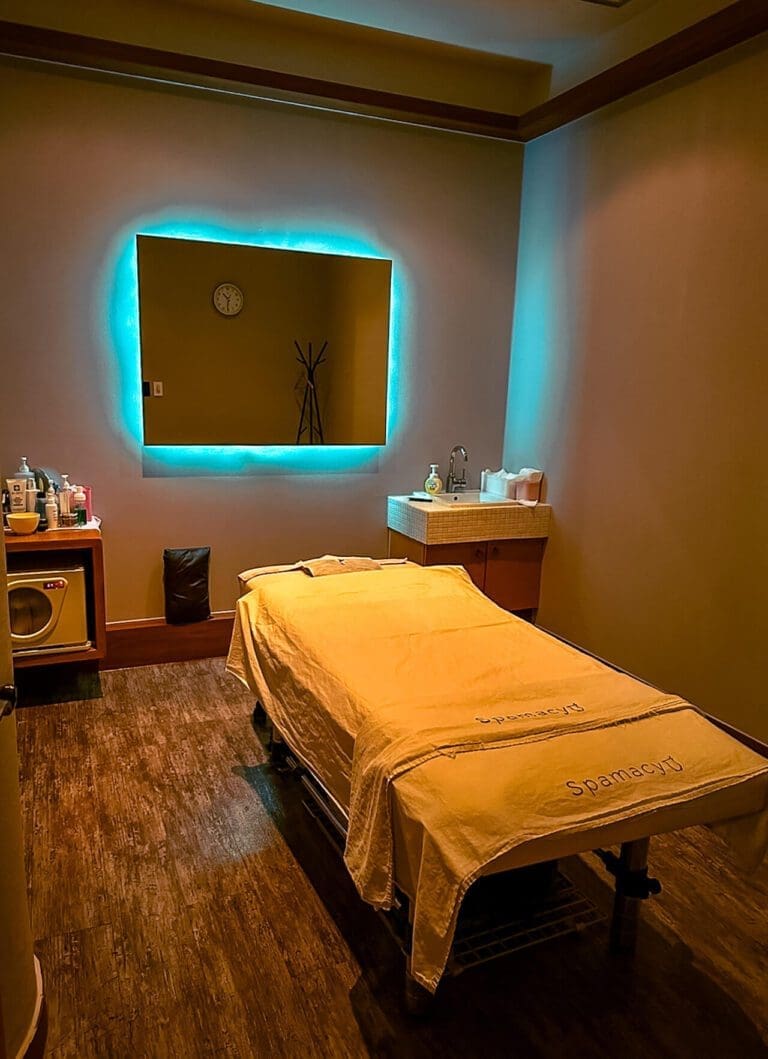
The dry air and freezing winds of Seoul’s winter are seriously bad for the skin. There’s no better time to hop on the K-beauty bandwagon and pamper yourself with a super moisturizing facial than now. Added bonus: the heated bed you get to lie on while your skin is getting spoiled.
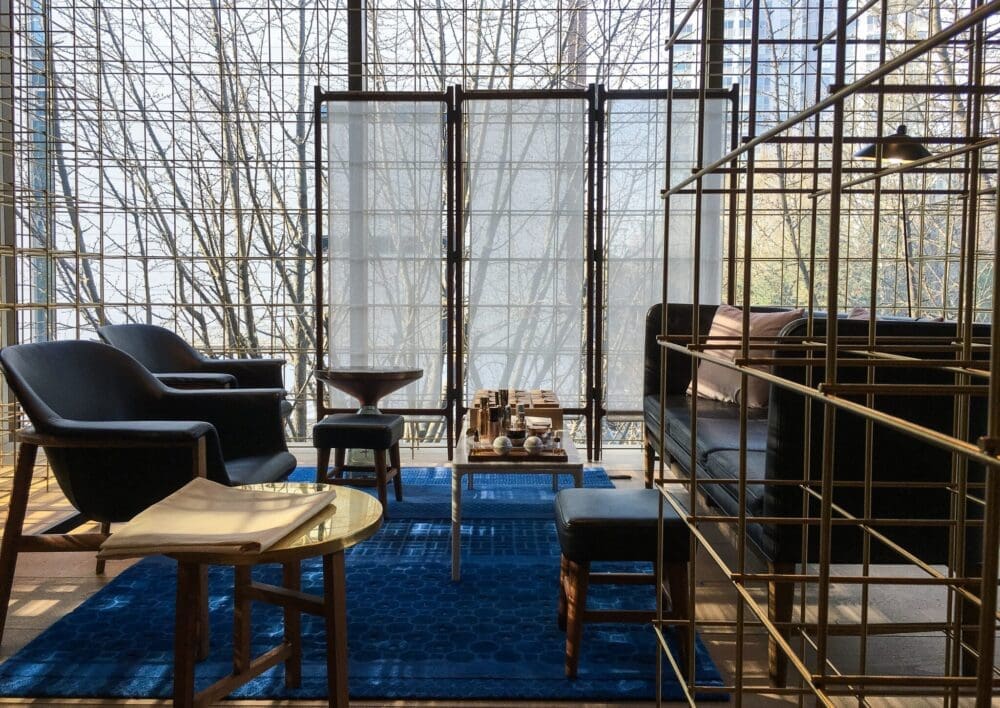
If you’re looking for customised skincare analysis, and facial treatments in Seoul, be sure to check out foreigner-friendly Inko Seoul in Gangnam. I’ve had a few treatments there and couldn’t be happier with the results.
If you’re more after a traditional spa facial, check out Cclime for their special facial contouring or Art de la Peau, which is conveniently locatedin Myeongdong.
Indulge in a Korean Head Spa
A Korean head spa is an utterly relaxing experience, and it’s good for your scalp too! It’s the perfect way to recharge from the bitter cold of a winter in Korea.

I’ve tried out a ton of head spas in Seoul, and while they’ve all been absolutely wonderful, my favourites have got to be Eco Jardin in Lotte World Mall, Parkjun Beauty Lab in Cheongdam, and Headspa Ongi. All have private rooms, and incredible service.
Visit a Jjimjilbang or Mogyoktang
A weekly visit to a humble neighbourhood mogyoktang or bathhouse is on most Koreans’ agendas, for relaxation, revitalization and a skin-bruising scrub. Consisting of hot tubs, saunas and a cold plunge pool, it’s an ideal way to recharge the body and spirit in the depths of a winter in Korea.
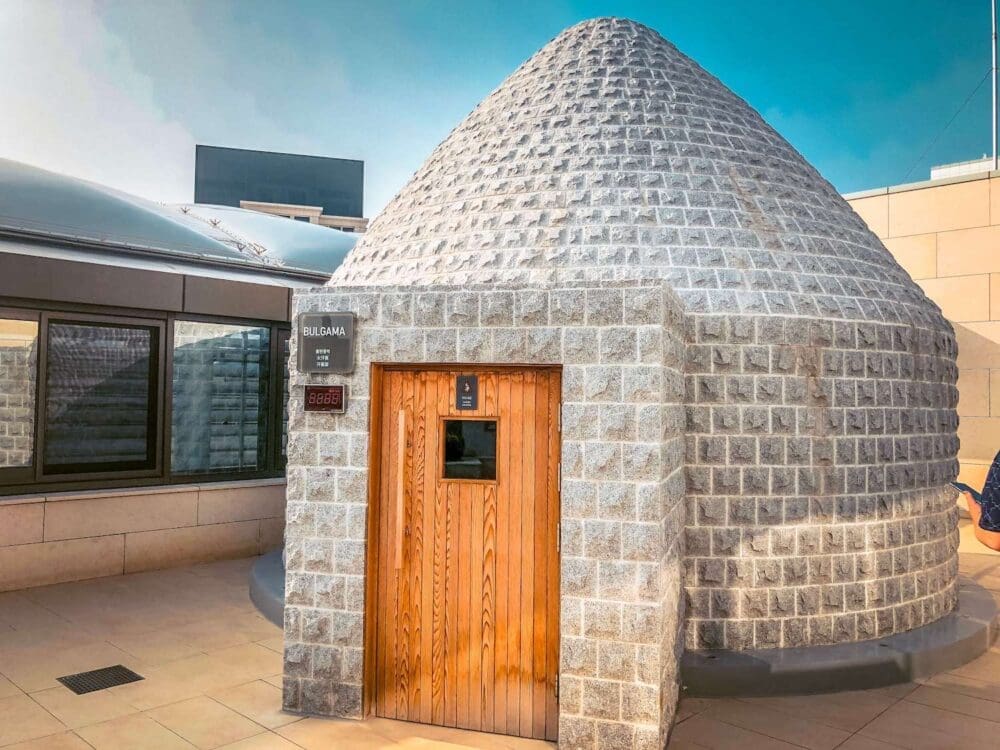
A visit there is not for the faint of heart though, since the entire experience is enjoyed completely in the buff. If that thought is too much for you, you can check out a jjimjilbang, which offers both the naked bath house area PLUS a clothed area with various dry saunas and entertainment areas. Make sure to learn about Korean sauna etiquette before you go.
If you’re in Seoul for winter, try out Aquafield Spa, and Spa Land Centum City if you’re in Busan. Both are foreigner-friendly jjimjilbangs that are worth a visit.

If you’re headed to Incheon Airport, a stop at Cimer Spa in the spectacular Paradise City might be just the jjimjilbang you need to heal your aching winter bones.
Get a Private Korean Body Scrub
If the thought of total public nudity feels like a bit too much to handle, going private is an excellent way to slough off all the dead, dry skin of winter in Korea.
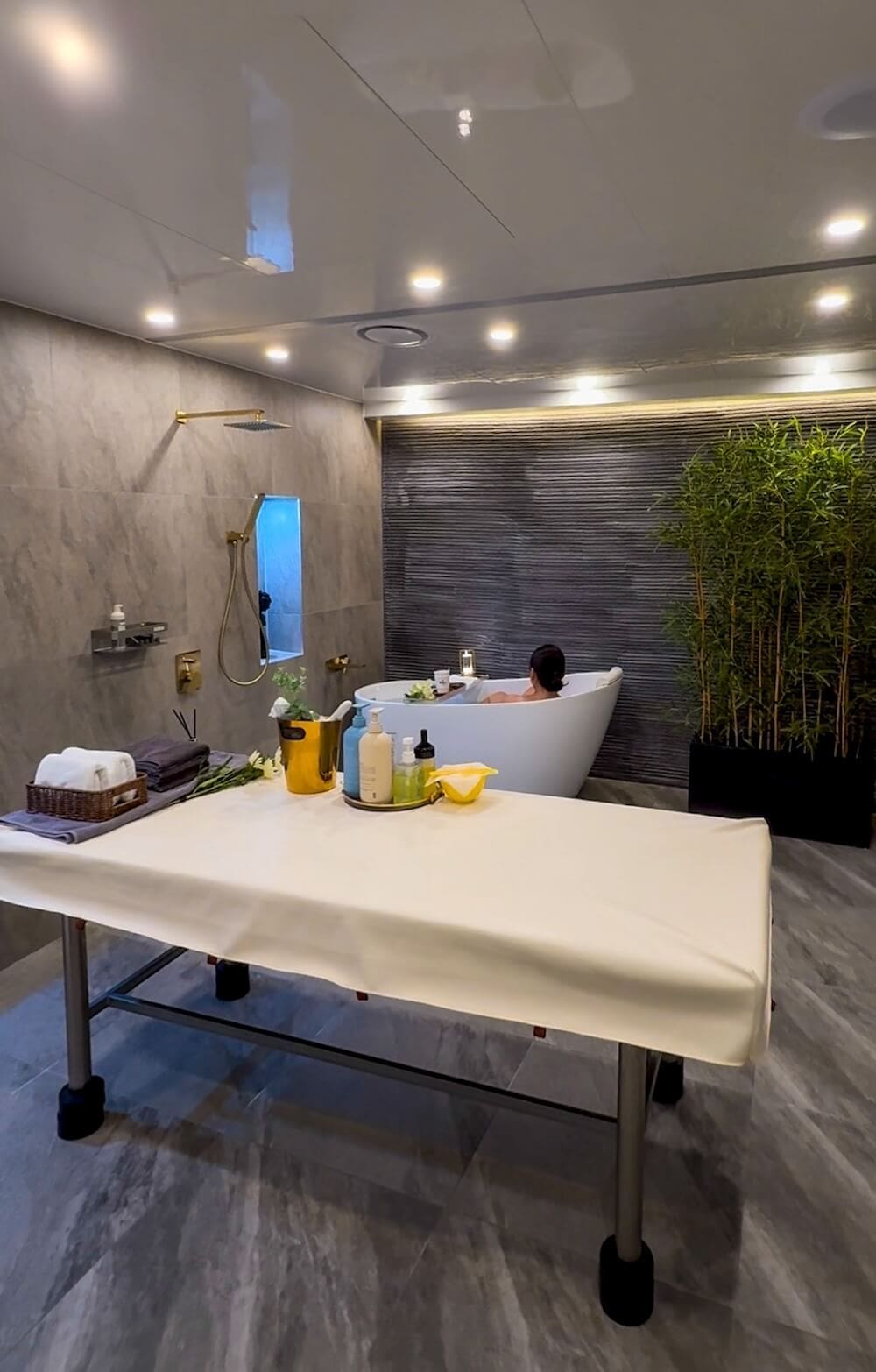
I had mine at Spa Bidan, and it was complete bliss, but if you’re looking for something a bit more central in Seoul, there are a ton of great options to look into.
Best Foods to Eat during Winter in Korea
No big surprise that some of the best Korean foods for winter are designed to warm you up from inside out. Here are the best meals to chase down in December, January, and February.
Bungeoppang (붕어빵)
You haven’t really done winter in Korea until you’ve eaten a piping hot bungeoppang – those fish-shaped pastries cooked in cast-iron moulds on street corners. They’re crispy on the outside, soft on the inside, and traditionally stuffed with sweet red bean paste, though custard cream (shu-cream) is just as popular now.

Dolsot Bibimbap (돌솥 비빔밥)
Dolsot bibimbap takes your basic mixed rice bowl, and elevates it into a winter in Korea classic. The bibimbap is served in a hot stone bowl that keeps all the ingredients toasty warm. The best part is the scorched rice stuck to the sides of that hot bowl. Yum!

Tteokguk (떡국)
Come January 1st, nearly every Korean household is enjoying a bowl of hearty and satisfying tteokguk, or rice cake soup. Consisting of a beef-based broth (usually), and sliced garaetteok, it’s customary to eat this on New Year’s Day for good luck. Incidentally, you also age a year from eating it…. apparently.

Kimchi Jjigae (김치 찌개)
Kimchi jjigae or Korean kimchi stew is one of my personal comfort foods. It will forever remind me of my mom’s kitchen on cold winter days, growing up in Canada. Made with ripe kimchi and pork belly, in its most classic version, this spicy, fortifying and truly delicious stew is sure to keep the sub-zero temps of winter in Korea at bay.

Hotteok (호떡)
Sweet, cinnamon-y, doughy pancakes pan-fried to crisp, golden perfection. There’s a reason why hotteok is one of the most popular street foods to grab during winter in Korea. This treat warms you from inside-out.

Contrary to popular belief, hotteok isn’t just a winter street food. You can find it year round, and it’s always delicious… though maybe just a little bit more delicious in cold weather.
Roasted Chestnuts (군밤: Gun Bam)
The second cold weather hits Korea, roasted chestnut vendors make their appearance. Not only are Korean chestnuts incredibly flavourful, they’re usually fully peeled for you to enjoy. No annoying shells to deal with.

Added bonus: Standing next to the fire used to roast chestnuts on the street.
Where to Escape the Cold of a Korean Winter
If you’re one of those people who can’t get warm, no matter what, here’s a few places to visit in winter, that are designed just for you.
Go Strawberry Picking
Are Korean strawberries the most delicious ones in the world? Possible, I think. And what better way to eat them, then by picking them yourself, while escaping winter in Korea in a super warm greenhouse. It also happens to be the perfect family-friendly activity.

We visited the 대가농원 farm in Namyangju, and ate a ton of delicious strawberries, but there are plenty of strawberry farms near Seoul to check out. It’s worth booking an all-inclusive tour that includes transport, because most of these farms are not exactly in public transit friendly locations.
TITLE: EASY STRAWBERRY PICKING DAY TOURS FROM SEOUL BODY_START Most farms near Seoul are tough to reach on public transit, so booking an all-inclusive day tour is the easiest way to go. Most bundle a warm greenhouse visit with other nearby winter spots. There are so many great options, like strawberry picking along with sledding & an ice valley→ BODY_ENDCatch a Live Show or Traditional Concert
Seeing an indoor performance is undoubtedly one of the best ways to escape the cold during winter in Korea. Whether it’s the longest running show in Korea, or a traditional gugak concert, you’re sure to enjoy your time.
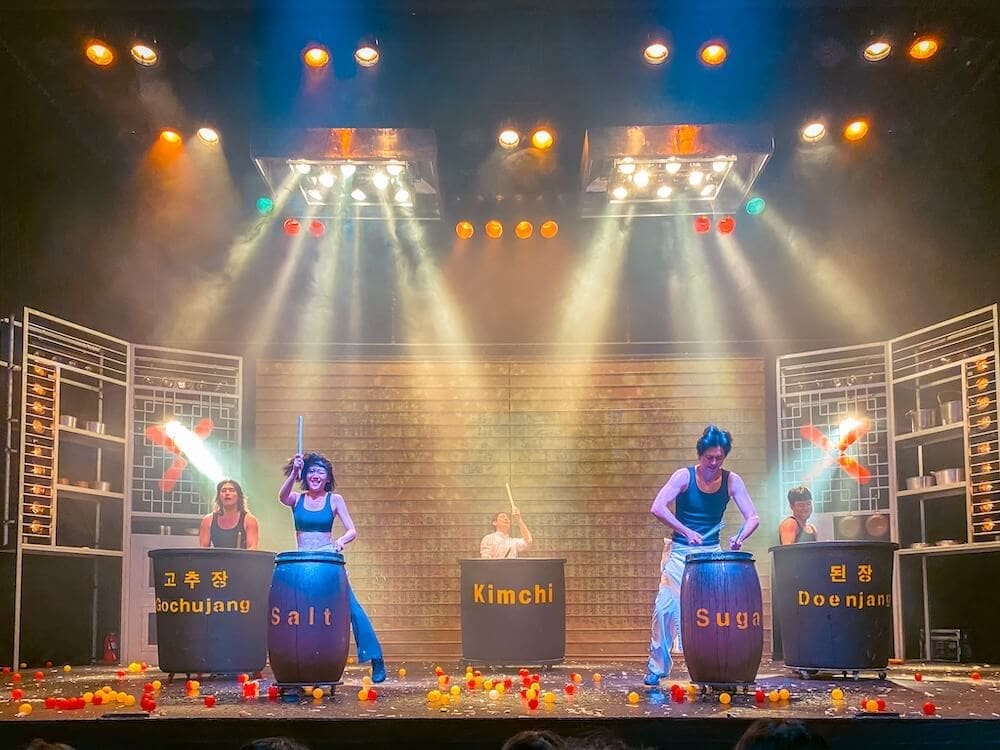
Here are some popular options:
- Nanta: an energetic show filled with acrobatics, comedy, and percussion using kitchen utensils! It’s non-verbal, so anyone can enjoy this show.
- Jump: Comic Martial Arts an unmissable Korean martial arts performance sure to thrill you, as much as it makes you laugh.
- The Painters: combines live action drawing with 3D visual effects, dance performances, and comedy. It’s been one of the top 5 most popular attractions in Korea for the last 5 years running.
- Saturday Gugak Performance: a traditional folk arts performance at the National Gugak Centre is a great way to learn about Korean culture, while staying warm. It’s incredibly affordable too!
Spend the day at the Aquarium
Don’t turn into a penguin yourself! Head into one of Seoul’s aquariums to admire them instead. There are several aquariums to choose from in Seoul, but the Lotte World Aquarium in Jamsil (discounted tix), and the Coex Mall Aquarium (discounted tix) are 2 of the most popular.

I’ve personally spent a ton of time at Lotte World Aquarium, and definitely recommend it – especially if you have children. However, the Aquarium at Starfield Coex Mall is also excellent, with the added bonus of being in the same mall as the Starfield Library.
HEADLINE: NEED A BACKUP PLAN FOR FREEZING DAYS IN SEOUL? DESC_START If it gets too cold to stay outside, you don’t have to sit in your hotel all day. From aquariums and digital art exhibits to themed cafes and Korean spas, here are 70 indoor things to do in Seoul – and plenty of them are free. DESC_END BTN_TEXT: 70 WONDERFUL INDOOR ACTIVITIES IN SEOUL → BTN_URL: https://travel-stained.com/things-to-do-indoors-in-seoul-korea/Winter in Korea: Watch a Sunrise
From December 31st to January 1st, thousands of people are standing on high mountains or lined up on a coast in the bitter cold waiting for the sun to rise.
Welcoming January this way, is one of the most popular things to do in Korea in winter, because Koreans believe that wishes made while witnessing the first sunrise of the year, are more powerful.

Homigot Sunrise Festival (호미곶 한민족 해맞이축전) is located at the easternmost point of mainland Korea near Pohang. This festival takes place right by the iconic Hands of Harmony sculpture in the sea.
Expect a sunrise concert, kite-flying, and free bowls of tteokguk (rice cake soup) for New Year’s Day. Make it easy by booking a New Year countdown and sunrise tour straight to Homigot Square.

Hyangiram Hermitage in Yeosu is one of my favourite places to visit during a Korean autumn, and it’s just as special for New Year’s Eve. The name literally means “hermitage facing the sun,” and the annual Yeosu Hyangiram Sunrise Festival (여수향일암일출제) draws huge crowds to watch the first sunrise of the year peek over the horizon and light up the sea.
HEADLINE: SPENDING NEW YEAR’S EVE IN SEOUL? DESC_START If you’re staying in the city instead of heading to the coast for sunrise, there’s plenty going on after dark. From the midnight Bosingak bell-ringing ceremony and fireworks to club nights and countdowns, here’s where to celebrate New Year’s Eve in Seoul. DESC_END BTN_TEXT: WHERE TO CELEBRATE NYE IN SEOUL → BTN_URL: https://travel-stained.com/new-years-eve-in-seoul-korea/Winter in Korea: Give Back
For me, the winter holiday season is about connecting with those we love and being grateful for everything the year has brought and taught us. I’ve been incredibly blessed in my life, and it’s important to remember that not everyone is so fortunate.
KUMFA Holiday Gift Drive
Being a single mother in Korea can be incredibly difficult, not just financially, but because of outdated ideas and social stigma.
Every winter, the Korean Unwed Mothers Foundation (KUMFA) holiday gift drive allows you to sponsor a family by buying a gift for the children of unwed mothers. There’s a list of wishes on their website, and most of the requests are so humble I couldn’t make it through the list without shedding a tear. Ok…a lot of tears.
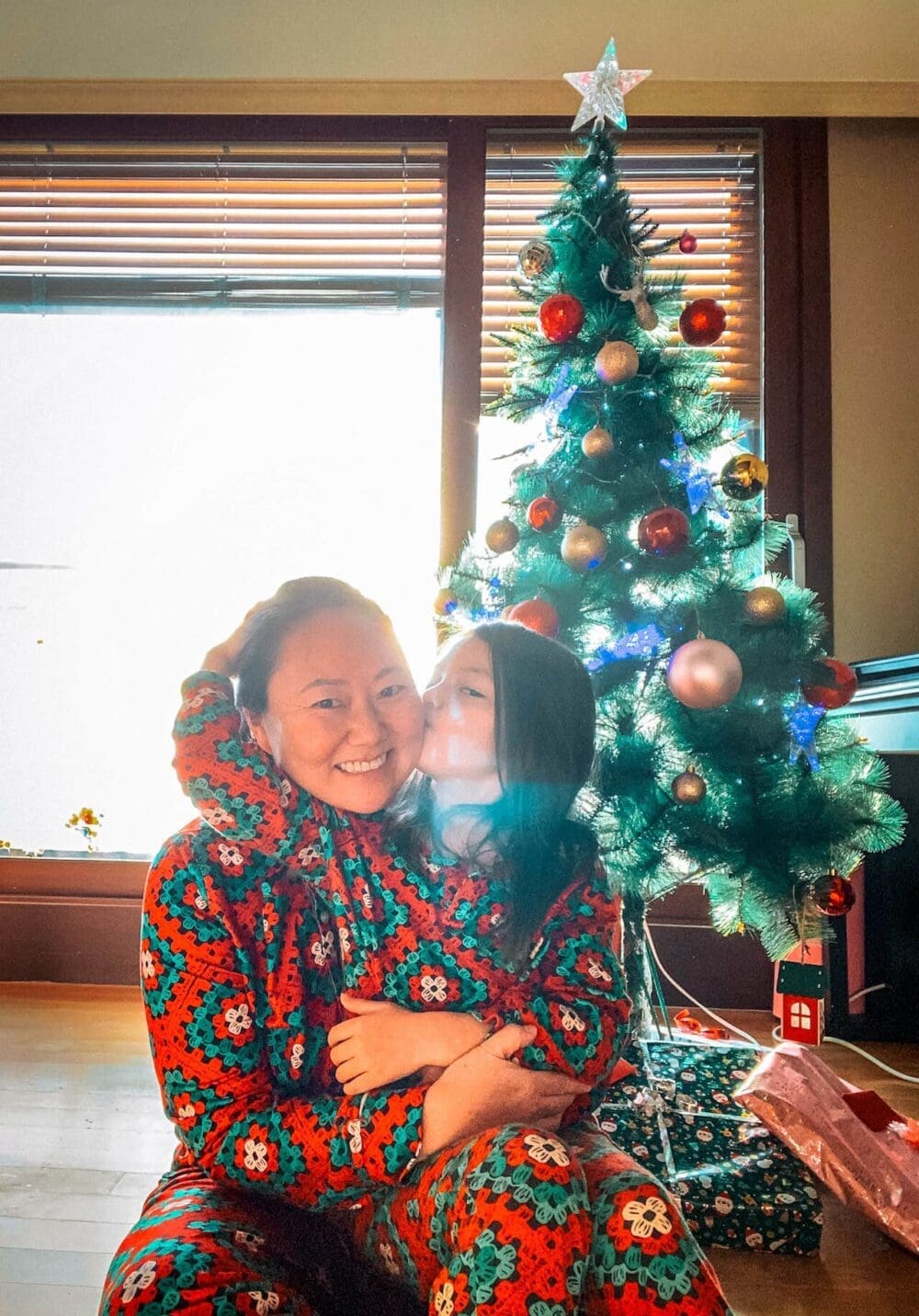
Detailed information about this year’s holiday gift drive has not been released yet, but in the meantime, you can DONATE HERE.
Feed the homeless
Sadly, the homeless population in Korea continues to rise… with little social safety net in place yet to help them make it through the long, bitterly cold winter in Korea.

There are organizations that meet up on weekends to provide food to the homeless congregated around Seoul Station, which you can find with a quick online search. However, you might find more value doing this independently, with ALL of your money being used to buy food and support the homeless – rather than collected as “administrative fees.”
Korea’s Cardboard Halmonis (Grannies)
If you walk the streets of any Korean city, you’ll inevitably see a “cardboard granny.” These elderly women (AND men), pick up used cardboard and other recyclable materials to earn a little bit of money to survive.
Often bent in half from malnutrition and osteoporosis, these old women push huge and heavy carts up and down the streets in the bitter cold and wind of winter in Korea. Every time I see one, my heart literally feels like it’s being ripped out of my chest, but I always feel powerless and frankly a little shy to approach them with help.

One day though, I came across a halmoni whose cardboard boxes were being blown off her cart by the wind, and stopped to help her pick them up. The total gratitude and humility with which she received this simple help sent me to the nearest bathroom in painful tears. I realized in that moment, that ANY help is appreciated, and my shyness was not only silly, but totally selfish.
If you see a cardboard granny on the street this winter in Korea, just walk up and lend a hand. Help push her cart, give her a pair of warm gloves, a hot drink, or cash if you feel inclined to do so. Whenever I have approached a granny with money, she inevitably refuses, but persist, and she will accept, because she really truly needs it.
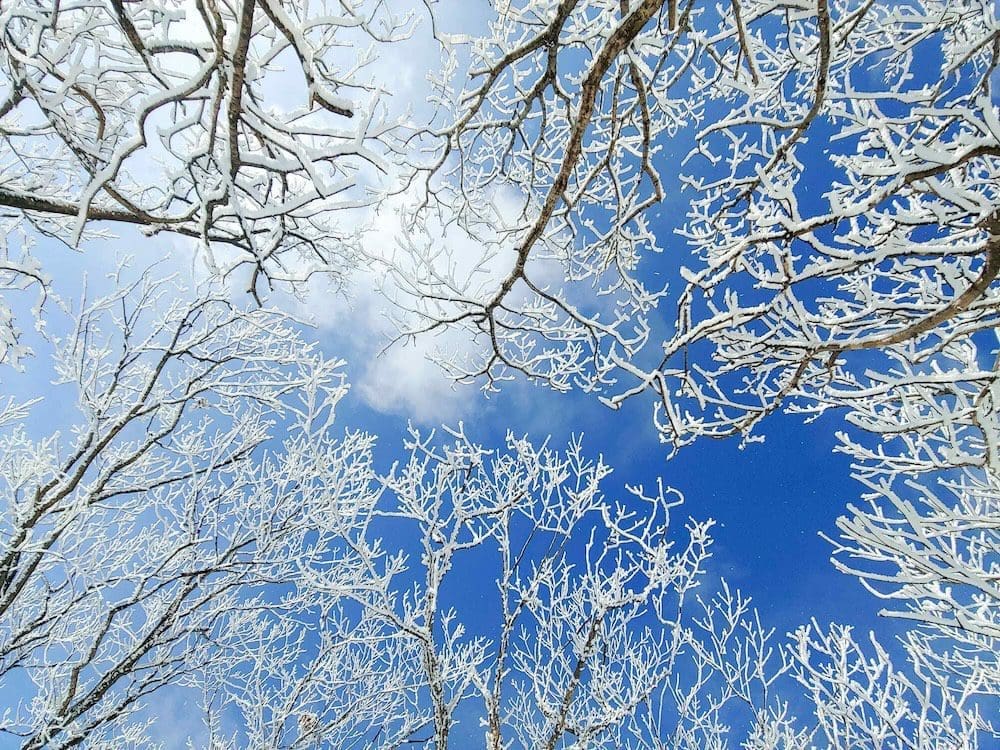
Winter in South Korea: FAQs
LABEL: ❄️ People Also Ask FAQ_START Q: What months are winter in Korea? A: The winter months in South Korea are December, January, and February, though chilly weather typically arrives in late November and lingers into early March. FAQ_END FAQ_START Q: What month is the coldest during winter in Korea? A: January is typically the coldest month in South Korea, with average temperatures in Seoul ranging from -6°C (21°F) to 1.5°C (35°F). Because of the icy Siberian winds, the wind chill often makes it feel much colder than the thermometer suggests. FAQ_END FAQ_START Q: Does it snow a lot in Seoul? A: Seoul actually doesn’t get heavy snowfall—usually just a few snowfalls each winter that melt within a day or two. If you want deep, guaranteed snow, head northeast to Gangwon-do Province, which gets the heaviest snowfall in the country. FAQ_END FAQ_START Q: What do Koreans do during winter? A: Skiing, snowboarding, and snow sledding are the most popular winter sports in Korea. Locals also love attending outdoor winter light festivals, ice fishing on frozen rivers, relaxing in jjimjilbang bathhouses, and warming up with hot street food like hotteok and roasted chestnuts. FAQ_END FAQ_START Q: How do Koreans stay warm in winter? A: A knee-length padded coat (long padding), Uniqlo Heattech thermal layers, and disposable sticky hot packs (핫팩) are essential parts of a Korean winter wardrobe. Because icy winds are the coldest part of winter in Korea, a warm beanie, scarf, and gloves are a must. FAQ_END FAQ_START Q: Is winter a good time to visit South Korea? A: Yes, winter is a fantastic time to visit South Korea if you bundle up properly. You get bright blue skies, festive Christmas and winter light displays, world-class ski resorts, frozen ice festivals, and sweet winter strawberries—often with fewer crowds than spring cherry blossom or autumn foliage seasons. FAQ_END FAQ_START Q: Where can you see snow in South Korea without skiing? A: Non-skiers can enjoy guaranteed snow at sledding parks like Vivaldi Park Snowy Land, ride the Balwangsan Cable Car in Pyeongchang, or take day tours to Nami Island, Eobi Ice Valley, Daegwallyeong Sheep Ranch, and Wondae-ri Birch Forest. FAQ_END FAQ_START Q: Are tourist attractions open in Korea during winter? A: Yes, almost all palaces, museums, theme parks, shopping malls, and restaurants stay open throughout winter in Korea. The only major closure window to watch out for is Seollal (Korean Lunar New Year, usually in late January or February), when some smaller family-run restaurants and shops close for two to three days. FAQ_END FAQ_START Q: What shoes should I wear in Korea in winter? A: Wear warm, waterproof boots or insulated sneakers with good rubber grip. Sidewalks in Seoul and mountain towns can become very slick with black ice after snow melts and refreezes overnight, so avoid smooth-soled shoes or dress boots without traction. FAQ_END FAQ_START Q: Can you buy winter clothes and coats in Seoul? A: Yes, if you realize your coat isn’t warm enough after landing, Seoul has endless places to buy affordable winter gear. Uniqlo, SPAO, Top10, and underground shopping malls (like Express Bus Terminal Goto Mall) sell thermal innerwear, puffer coats, gloves, and hats, while convenience stores and Daiso sell disposable hot packs on every corner. FAQ_END HEADING: 🎄 PLANNING A DECEMBER TRIP TO SOUTH KOREA? TEASER_START If you’re visiting for Christmas lights, early ski season, or year-end festivals, December has its own quirks and crowd patterns. Here’s what to expect from the weather, what to pack, and the best things to do across Korea in December. TEASER_END BTN_TEXT: KOREA IN DECEMBER: FIRST SNOW, FESTIVALS & WINTER LIGHTS → BTN_URL: https://travel-stained.com/korea-in-december-weather-things-to-do/I originally researched, wrote & published this guide on November 25, 2020. I review & update my content for accuracy regularly. Watch out for copycats.This post was last updated on November 18, 2026. Copyright © 2020–2026 Travel-Stained. All rights reserved.